Department of Nutrition Research, National Institute for Health Development, 11619 Tallinn, Estonia.
Archaeological Research Collection, Tallinn University, 10130 Tallinn, Estonia.
Genes (Basel). 2021 Oct 28;12(11):1722. doi: 10.3390/genes12111722.
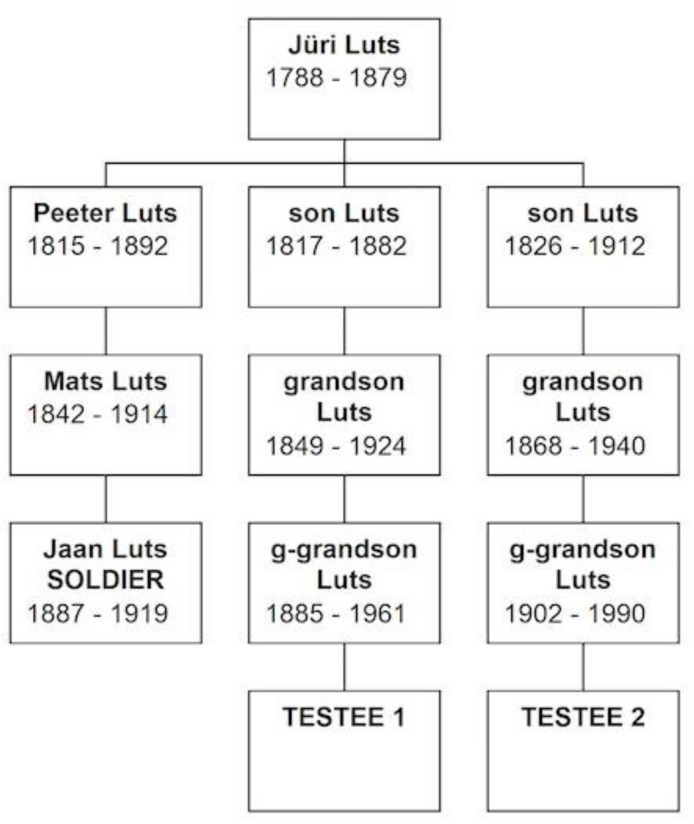
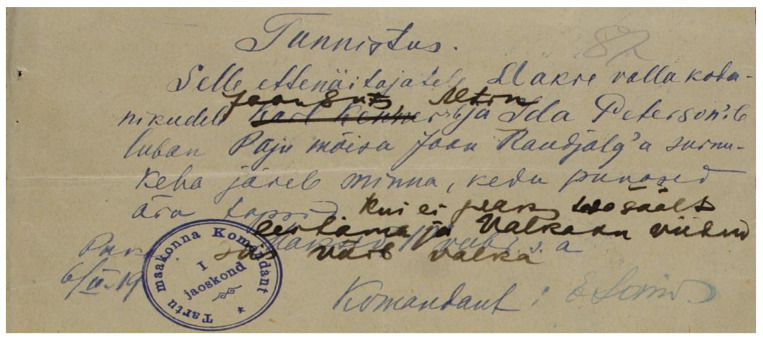
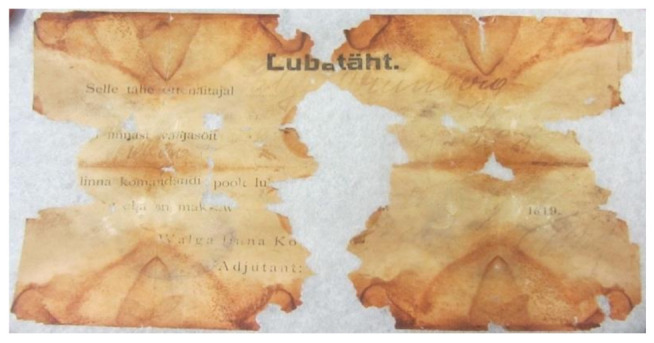
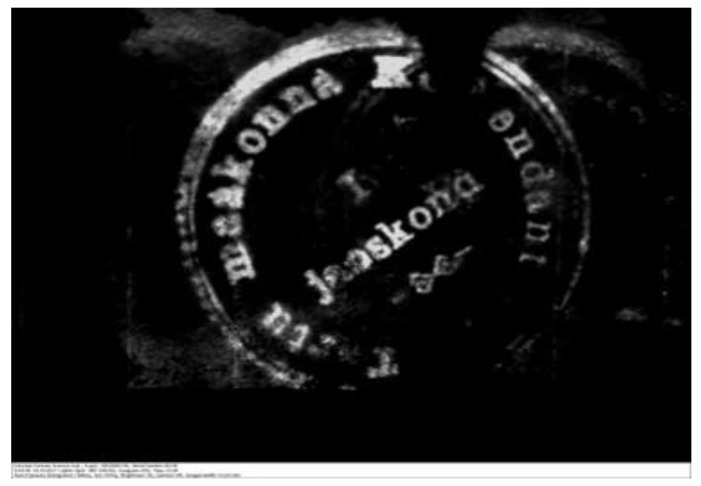
The identification of human remains is challenging mostly due to the bad condition of the remains and the available background information that is sometimes limited. The current case report is related to the identification of an unknown soldier from the Estonian War of Independence (1918-1920). The case includes an anthropological study of the remains, examinations of documents found with the exhumed remains, and kinship estimations based on archival documents, and DNA analyses. As the preliminary data pointed to remains of male origin, Y-chromosomal STR (short tandem repeat) analyses of 22 Y-STR loci were used to analyze the exhumed teeth. Reference samples from individuals from two paternal lineages were collected based on archival documents. Y-chromosomal STR results for the tooth samples were consistent with a patrilineal relationship to only one reference sample out of two proposed paternal lineages. Based on the provided pedigrees in the consistent case, the Y-STR results are approximately four million times more likely if the tooth sample originated from an individual related along the paternal line to the matching reference sample, than if the tooth sample originated from another person in the general population. Special considerations have to be met when limited evidence is available.
由于遗骸状况不佳以及可用的背景信息有时有限,因此识别遗骸具有挑战性。本案例报告涉及到对一名来自爱沙尼亚独立战争(1918-1920 年)的无名士兵的身份识别。该案例包括对遗骸进行人类学研究,对挖掘出的遗骸中发现的文件进行检查,并根据档案文件和 DNA 分析进行亲属关系估算。由于初步数据表明遗骸为男性,因此使用 22 个 Y-STR 短串联重复(STR)分析对挖掘出的牙齿进行了 Y 染色体 STR(短串联重复)分析。根据档案文件收集了来自两个父系血统的个体的参考样本。对牙齿样本的 Y 染色体 STR 结果与两个拟议父系血统中的一个参考样本一致,仅与一个参考样本存在父子关系。根据一致案例中提供的系谱,如果牙齿样本来自与匹配参考样本有血缘关系的个体,则 Y-STR 结果比来自一般人群中另一个人的可能性大约高出四百万倍。当证据有限时,必须考虑特殊情况。