Haldipur Ashrita C, Srividya Nagarajan
Department of Food and Nutritional Sciences, Sri Sathya Sai Institute of Higher Learning (Deemed to Be University), Anantapur 515001, Andhra Pradesh, India.
Foods. 2021 Nov 16;10(11):2818. doi: 10.3390/foods10112818.
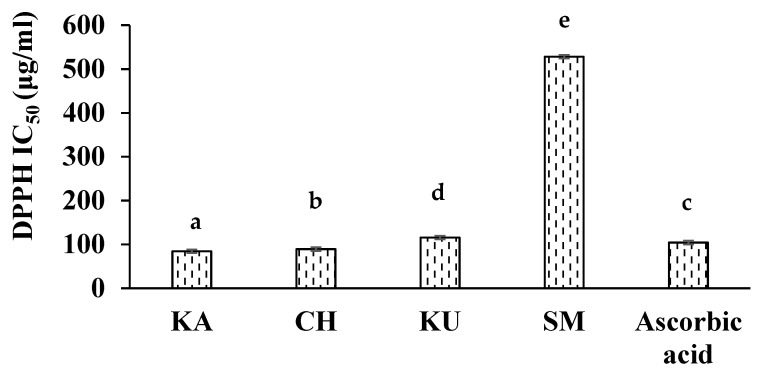
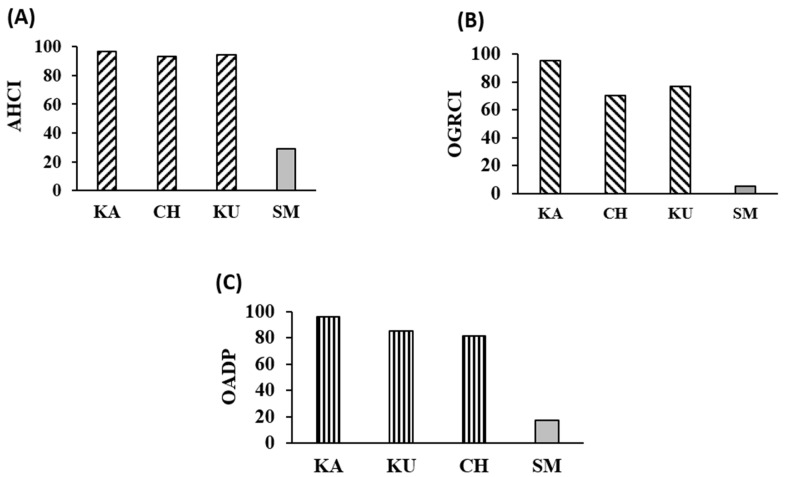
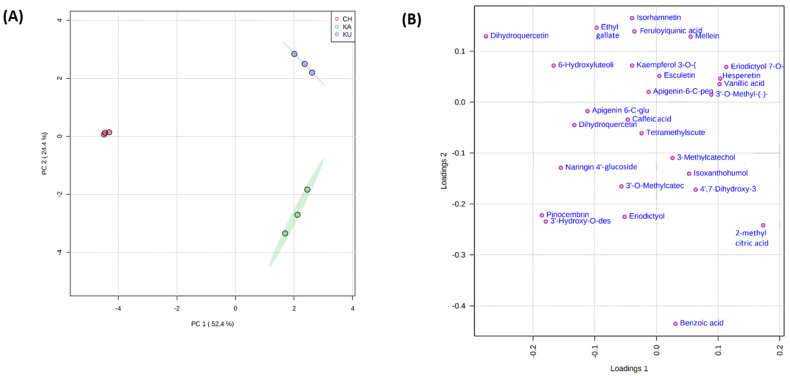
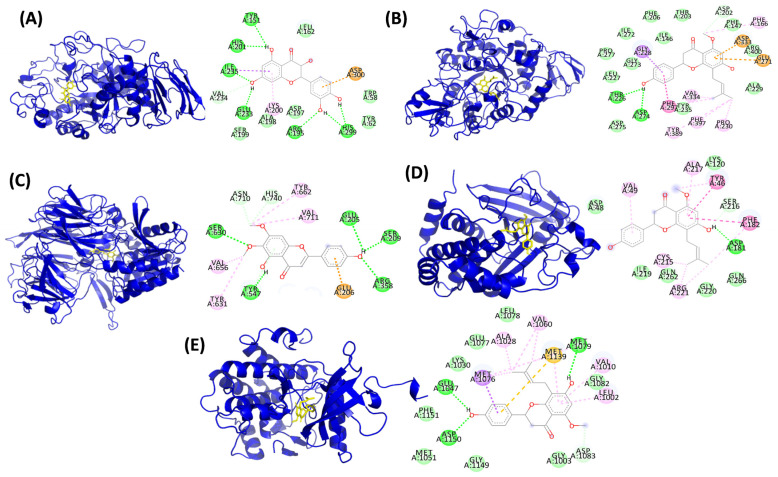
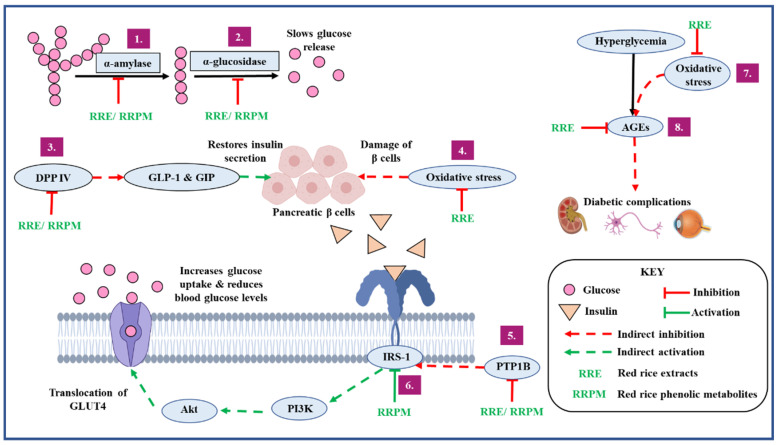
The study evaluated the antidiabetic potential of three traditional Indian red rice genotypes/RR (Kattuyanam/KA, Chennangi/CH & Karungkuruvai/KU) using a combination of in vitro, metabolomics (Quadrupole-Time of Flight-Liquid chromatography-Mass spectrometry/Q-TOF-LC-MS/MS) and in silico techniques. In terms of antihyperglycemic potential, KA exhibited the highest inhibitory activity against α-amylase; CH against α-glucosidase; and KU against DPPIV and PTP1B enzymes. KA exhibited the highest antioxidant activity (DPPH, FRAP, and ABTS) and greater inhibition of protein glycation compared to other RR indicating its potential to mitigate diabetic complications. The metabolomic analysis confirmed the presence of 99 phenolics in the sample extracts (KU-71, KA-70, CH-68). Molecular docking studies revealed seven metabolites to be good inhibitors of the four target enzymes and activators of insulin receptor substrate/IRS. The antihyperglycemic and oxidation-glycation reduction composite index revealed KA to have the highest overall antidiabetic potential. Hence, the RR could be utilized in functional foods with a multi-barrelled strategy for diabetes prevention/management.
该研究采用体外实验、代谢组学(四极杆-飞行时间-液相色谱-质谱联用/Q-TOF-LC-MS/MS)和计算机模拟技术相结合的方法,评估了三种传统印度红米基因型/RR(Kattuyanam/KA、Chennangi/CH和Karungkuruvai/KU)的抗糖尿病潜力。在降血糖潜力方面,KA对α-淀粉酶表现出最高的抑制活性;CH对α-葡萄糖苷酶;KU对二肽基肽酶IV(DPPIV)和蛋白酪氨酸磷酸酶1B(PTP1B)酶。与其他RR相比,KA表现出最高的抗氧化活性(DPPH、FRAP和ABTS)以及对蛋白质糖基化的更大抑制作用,表明其具有减轻糖尿病并发症的潜力。代谢组学分析证实样品提取物中存在99种酚类物质(KU-71、KA-70、CH-68)。分子对接研究表明,七种代谢物是四种靶酶的良好抑制剂和胰岛素受体底物/IRS的激活剂。降血糖和氧化糖基化减少复合指数显示KA具有最高的总体抗糖尿病潜力。因此,RR可用于功能性食品,采用多管齐下的策略预防/管理糖尿病。