Semenovich Dmitry S, Plotnikov Egor Yu, Titko Oksana V, Lukiyenko Elena P, Kanunnikova Nina P
Institute of Biochemistry of Biologically Active Substances, NAS of Belarus, 230030 Grodno, Belarus.
A.N. Belozersky Institute of Physico-Chemical Biology, Moscow State University, 119992 Moscow, Russia.
Antioxidants (Basel). 2021 Oct 27;10(11):1699. doi: 10.3390/antiox10111699.
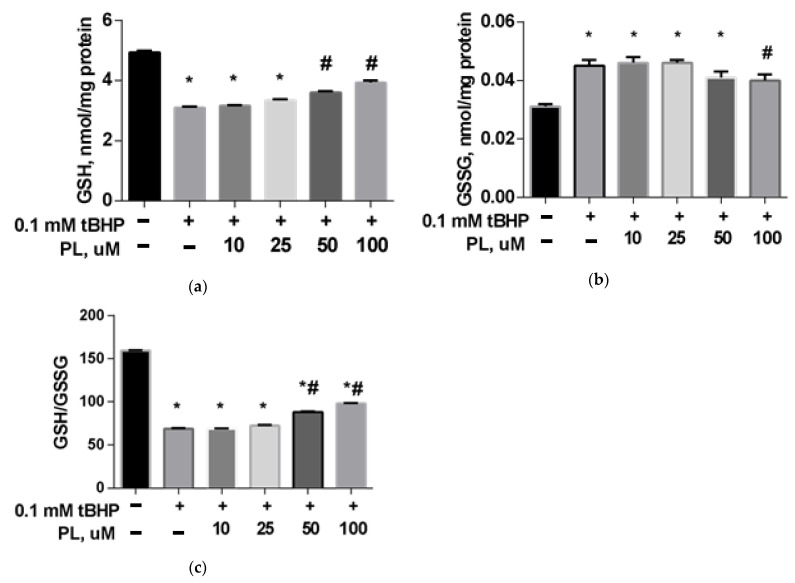
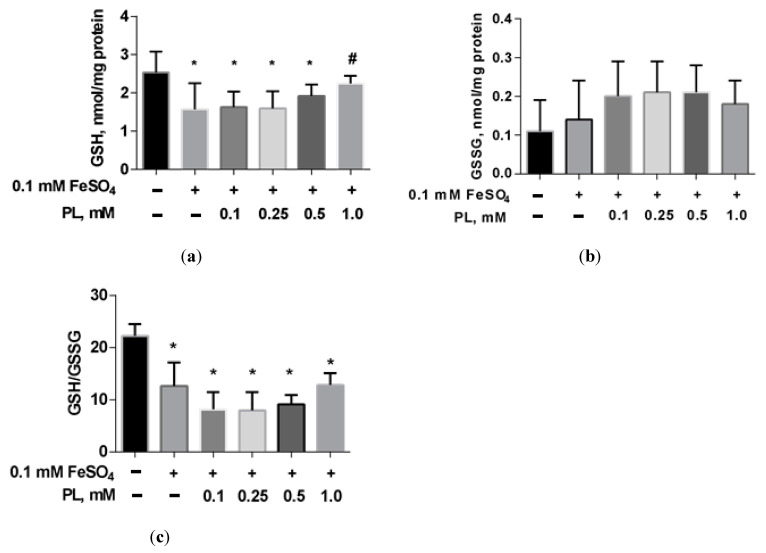
The glutathione system in the mitochondria of the brain plays an important role in maintaining the redox balance and thiol-disulfide homeostasis, whose violations are the important component of the biochemical shifts in neurodegenerative diseases. Mitochondrial dysfunction is known to be accompanied by the activation of free radical processes, changes in energy metabolism, and is involved in the induction of apoptotic signals. The formation of disulfide bonds is a leading factor in the folding and maintenance of the three-dimensional conformation of many specific proteins that selectively accumulate in brain structures during neurodegenerative pathology. In this study, we estimated brain mitochondria redox status and functioning during induction of oxidative damage in vitro. We have shown that the development of oxidative stress in vitro is accompanied by inhibition of energy metabolism in the brain mitochondria, a shift in the redox potential of the glutathione system to the oxidized side, and activation of S-glutathionylation of proteins. Moreover, we studied the effects of pantothenic acid derivatives-precursors of coenzyme A (CoA), primarily D-panthenol, that exhibit high neuroprotective activity in experimental models of neurodegeneration. Panthenol contributes to the significant restoration of the activity of enzymes of mitochondrial energy metabolism, normalization of the redox potential of the glutathione system, and a decrease in the level of S-glutathionylated proteins in brain mitochondria. The addition of succinate and glutathione precursor N-acetylcysteine enhances the protective effects of the drug.
大脑线粒体中的谷胱甘肽系统在维持氧化还原平衡和硫醇 - 二硫键稳态方面发挥着重要作用,其失衡是神经退行性疾病生化变化的重要组成部分。已知线粒体功能障碍伴随着自由基过程的激活、能量代谢的变化,并参与凋亡信号的诱导。二硫键的形成是许多特定蛋白质三维构象折叠和维持的主要因素,这些蛋白质在神经退行性病变过程中选择性地在脑结构中积累。在本研究中,我们评估了体外诱导氧化损伤期间脑线粒体的氧化还原状态和功能。我们已经表明,体外氧化应激的发展伴随着脑线粒体能量代谢的抑制、谷胱甘肽系统氧化还原电位向氧化侧的偏移以及蛋白质S - 谷胱甘肽化的激活。此外,我们研究了泛酸衍生物——辅酶A(CoA)的前体,主要是D - 泛醇,在神经退行性变实验模型中表现出高神经保护活性的作用。泛醇有助于显著恢复线粒体能量代谢酶的活性、使谷胱甘肽系统的氧化还原电位正常化,并降低脑线粒体中S - 谷胱甘肽化蛋白质的水平。添加琥珀酸和谷胱甘肽前体N - 乙酰半胱氨酸可增强该药物的保护作用。