Frontiñán-Rubio Javier, Rabanal-Ruiz Yoana, Durán-Prado Mario, Alcain Francisco Javier
Department of Medical Sciences, Faculty of Medicine, University of Castilla-La Mancha, 13071 Ciudad Real, Spain.
Oxidative Stress and Neurodegeneration Group, Regional Centre for Biomedical Research, University of Castilla-la Mancha, 13071 Ciudad Real, Spain.
Antioxidants (Basel). 2021 Nov 13;10(11):1806. doi: 10.3390/antiox10111806.
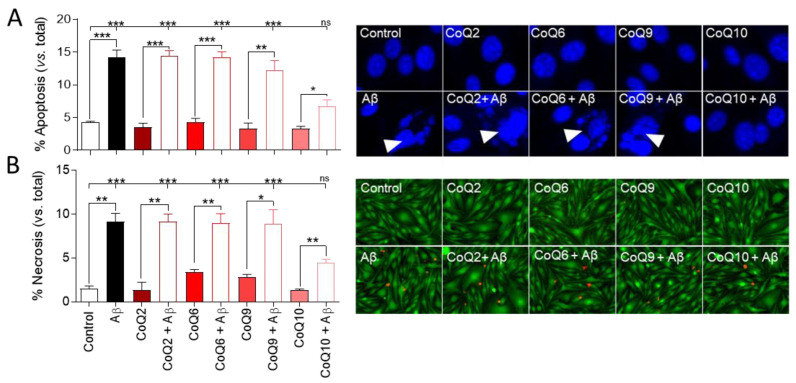
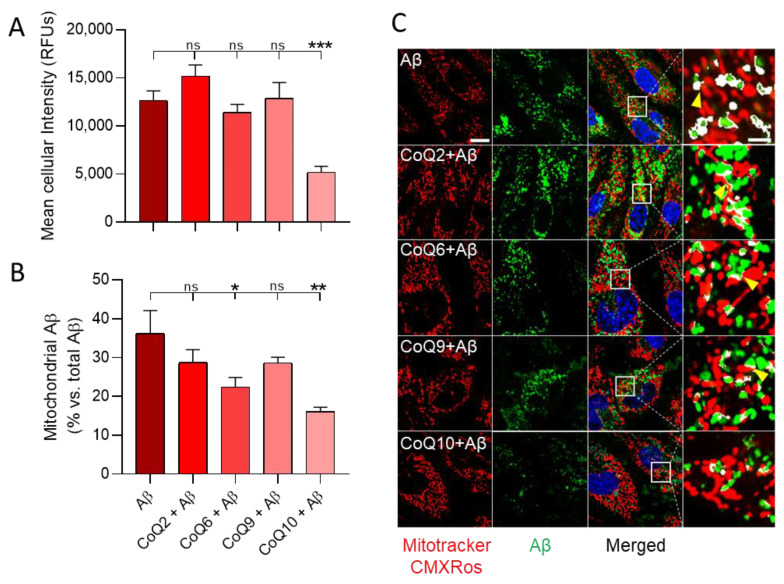
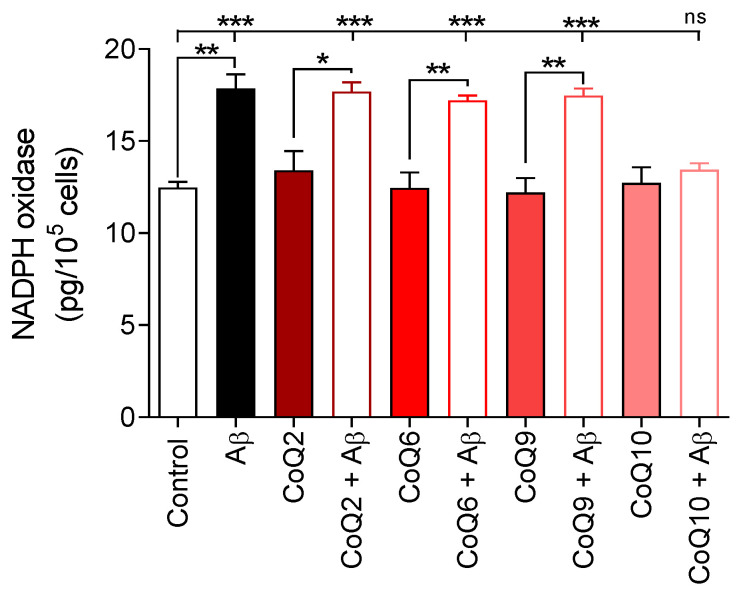
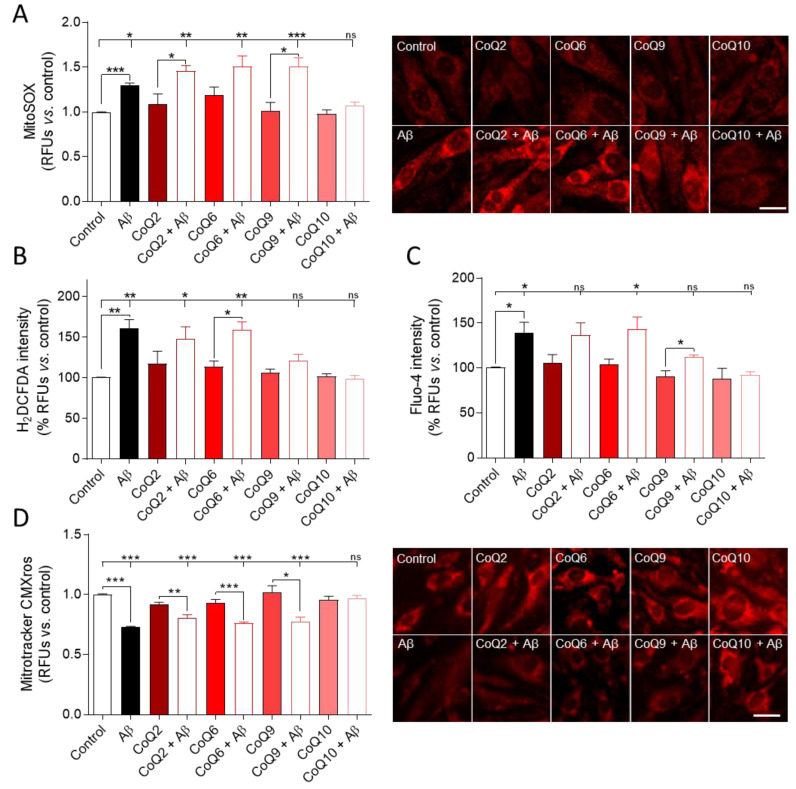
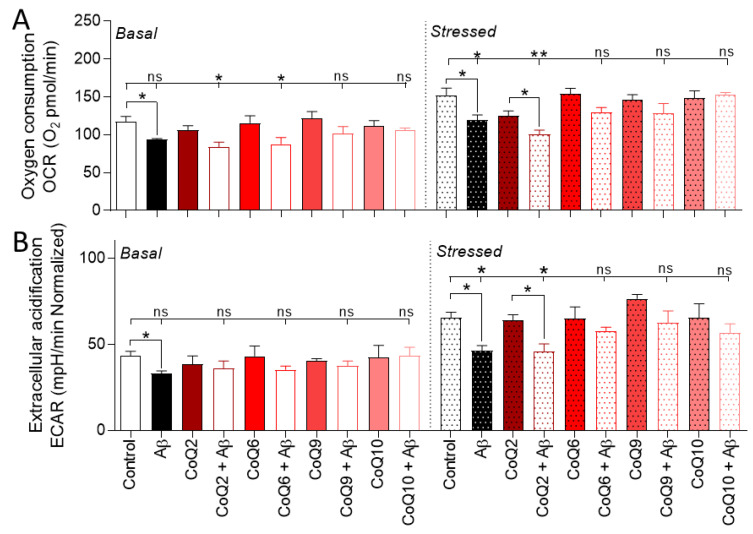
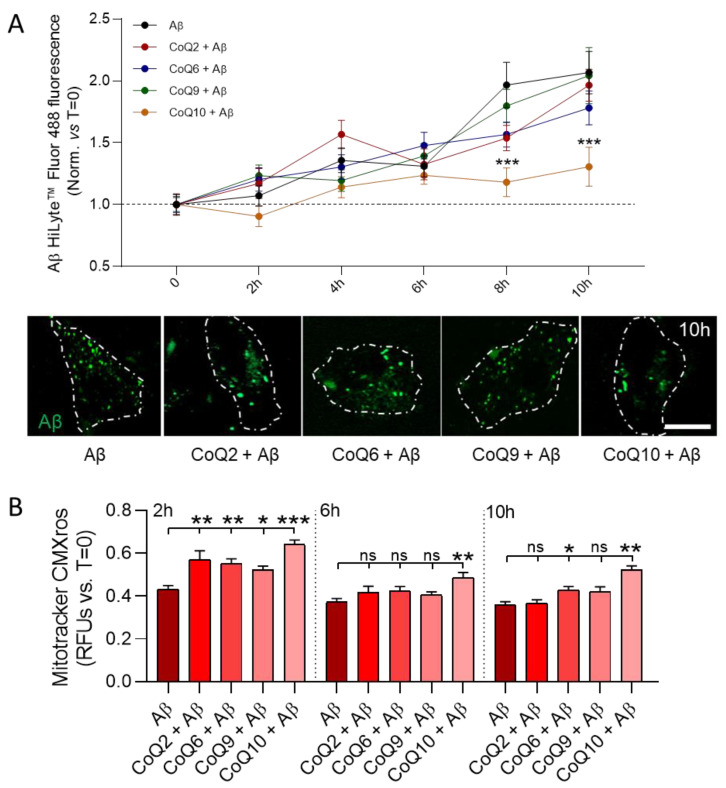
Vascular brain pathology constitutes a common feature in neurodegenerative diseases that could underlie their development. Indeed, vascular dysfunction acts synergistically with neurodegenerative changes to exacerbate the cognitive impairment found in Alzheimer's disease. Different injuries such as hypertension, high glucose, atherosclerosis associated with oxidized low-density lipoprotein or inflammation induce NADPH oxidase activation, overproduction of reactive oxygen species, and apoptosis in endothelial cells. Since it has been shown that pretreatment of cultured endothelial cells with the lipophilic antioxidant coenzyme Q10 (CoQ10) displays a protective effect against the deleterious injuries caused by different agents, this study explores the cytoprotective role of different CoQs homologues against Aβ-induced damage and demonstrates that only pretreatment with CoQ10 protects endothelial brain cells from Aβ-induced damage. Herein, we show that CoQ10 constitutes the most effective ubiquinone in preventing NADPH oxidase activity and reducing both reactive oxygen species generation and the increase in free cytosolic Ca induced by Aβ, ultimately preventing apoptosis and necrosis. The specific cytoprotective effect of CoQ with a side chain of 10 isoprenoid units could be explained by the fact that CoQ10 is the only ubiquinone that significantly reduces the entry of Aβ into the mitochondria.
脑血管病理是神经退行性疾病的一个共同特征,可能是其发病的基础。事实上,血管功能障碍与神经退行性变化协同作用,加剧了阿尔茨海默病中的认知障碍。高血压、高血糖、与氧化型低密度脂蛋白相关的动脉粥样硬化或炎症等不同损伤会诱导NADPH氧化酶激活、活性氧的过量产生以及内皮细胞凋亡。由于已表明用亲脂性抗氧化剂辅酶Q10(CoQ10)预处理培养的内皮细胞对不同因子引起的有害损伤具有保护作用,本研究探讨了不同CoQ同系物对Aβ诱导损伤的细胞保护作用,并证明只有用CoQ10预处理才能保护脑内皮细胞免受Aβ诱导的损伤。在此,我们表明CoQ10是预防NADPH氧化酶活性、减少活性氧生成以及减少Aβ诱导的游离胞质钙增加的最有效泛醌,最终防止细胞凋亡和坏死。具有10个异戊二烯单元侧链的CoQ的特定细胞保护作用可以用以下事实来解释:CoQ10是唯一能显著减少Aβ进入线粒体的泛醌。