Shiraz Parveen, Jehangir Waqas, Agrawal Vaibhav
Blood and Marrow Transplantation/Cell Therapy, Stanford University, Stanford, CA 94305, USA.
Avera Medical Group Hematology, Transplant & Cellular Therapy, Sioux Falls, SD 57105, USA.
Biomedicines. 2021 Nov 4;9(11):1621. doi: 10.3390/biomedicines9111621.
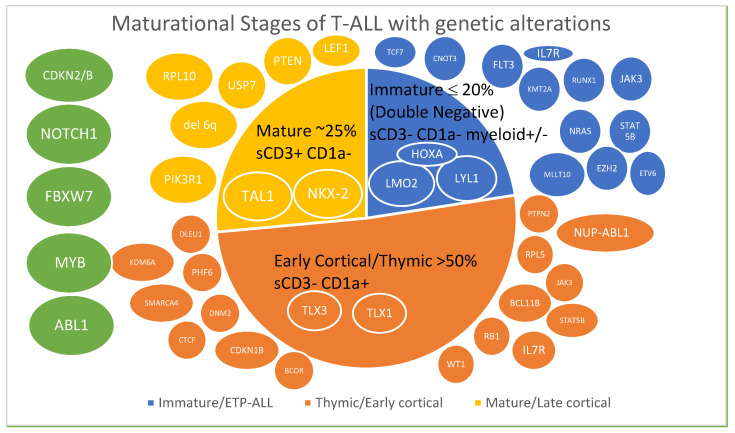
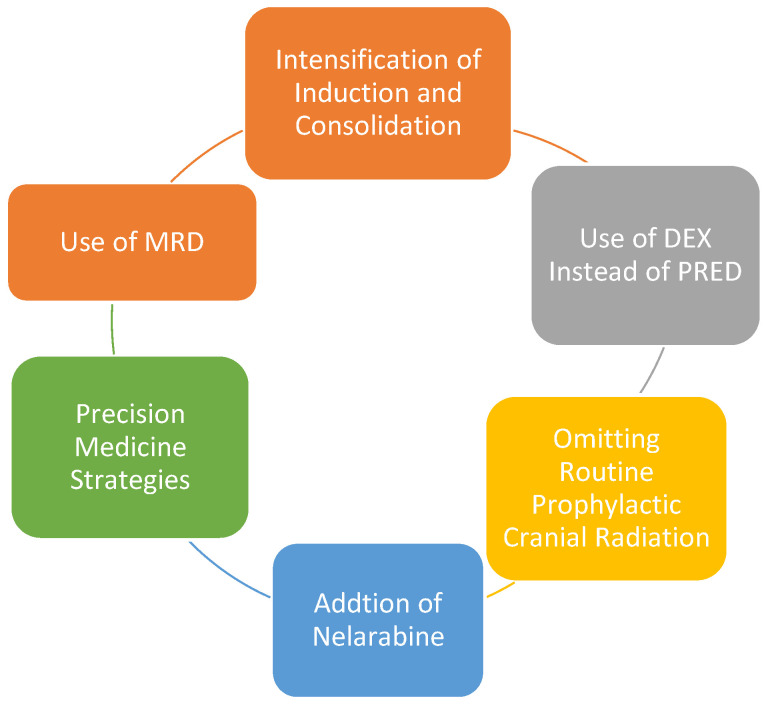
T-cell acute lymphoblastic leukemia (T-ALL) is an uncommon, yet aggressive leukemia that accounts for approximately one-fourth of acute lymphoblastic leukemia (ALL) cases. / and are the most common mutated genes in T-ALL. Children and young adults are treated with pediatric intensive regimens and have superior outcomes compared to older adults. In children and young adults, Nelarabine added to frontline chemotherapy improves outcomes and end of consolidation measurable residual disease has emerged as the most valuable prognostic marker. While outcomes for de-novo disease are steadily improving, patients with relapsed and refractory T-ALL fare poorly. Newer targeted therapies are being studied in large clinical trials and have the potential to further improve outcomes. The role of allogeneic stem cell transplant (HSCT) is evolving due to the increased use of pediatric-inspired regimens and MRD monitoring. In this review we will discuss the biology, treatment, and outcomes in pediatric and adult T-ALL.
T 细胞急性淋巴细胞白血病(T-ALL)是一种罕见但侵袭性强的白血病,约占急性淋巴细胞白血病(ALL)病例的四分之一。和是 T-ALL 中最常见的突变基因。儿童和年轻成人采用儿科强化方案治疗,与老年人相比预后更佳。在儿童和年轻成人中,一线化疗中加入奈拉滨可改善预后,巩固期末可测量残留病已成为最有价值的预后标志物。虽然初发疾病的预后在稳步改善,但复发和难治性 T-ALL 患者的预后较差。新型靶向治疗正在大型临床试验中进行研究,有可能进一步改善预后。由于越来越多地使用儿科启发的方案和微小残留病监测,异基因干细胞移植(HSCT)的作用正在不断演变。在本综述中,我们将讨论儿童和成人 T-ALL 的生物学特性、治疗方法和预后。