Thobe Kirsten, Konrath Fabian, Chapuy Björn, Wolf Jana
Mathematical Modelling of Cellular Processes, Max Delbrück Center for Molecular Medicine, 13125 Berlin-Buch, Germany.
Department of Hematology and Medical Oncology, University of Göttingen, 37075 Göttingen, Germany.
Biomedicines. 2021 Nov 10;9(11):1655. doi: 10.3390/biomedicines9111655.
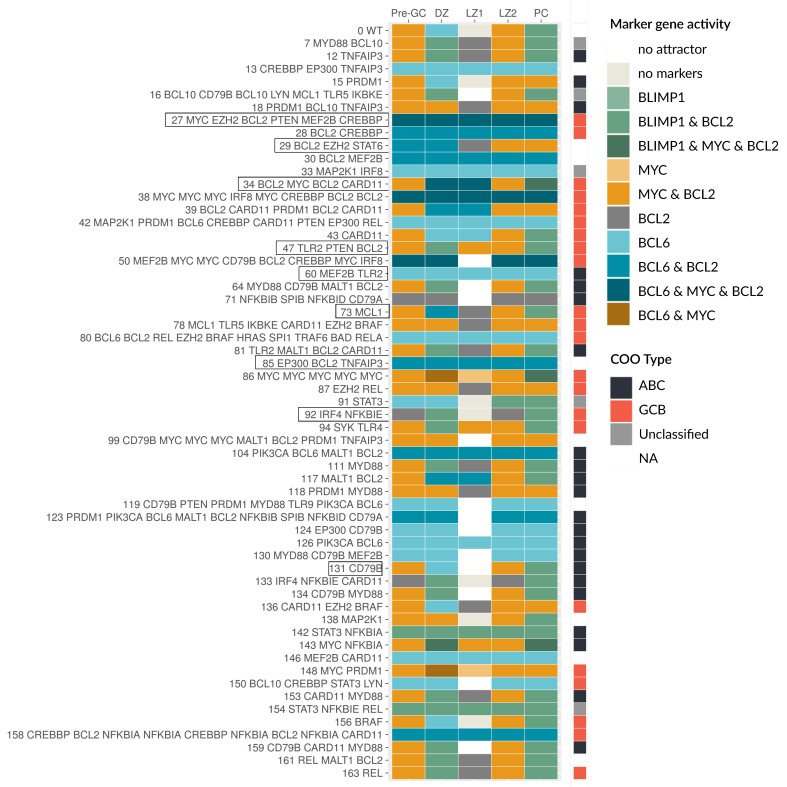
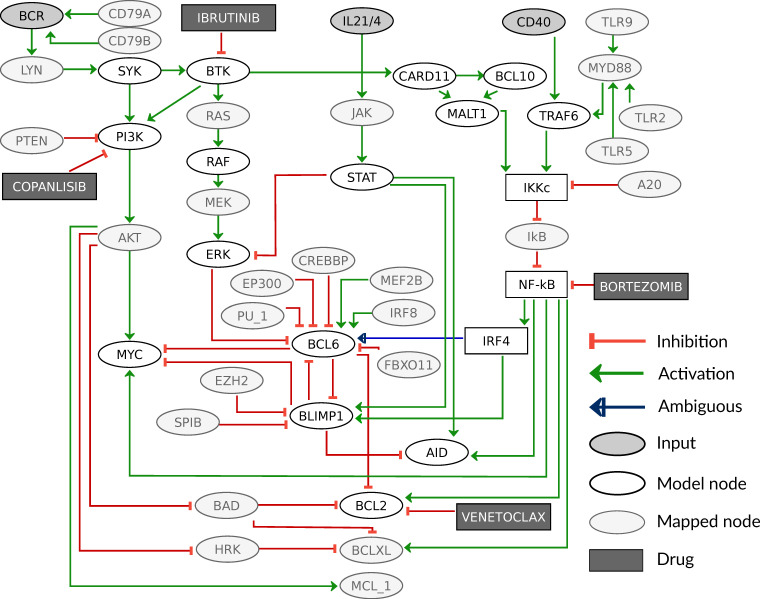
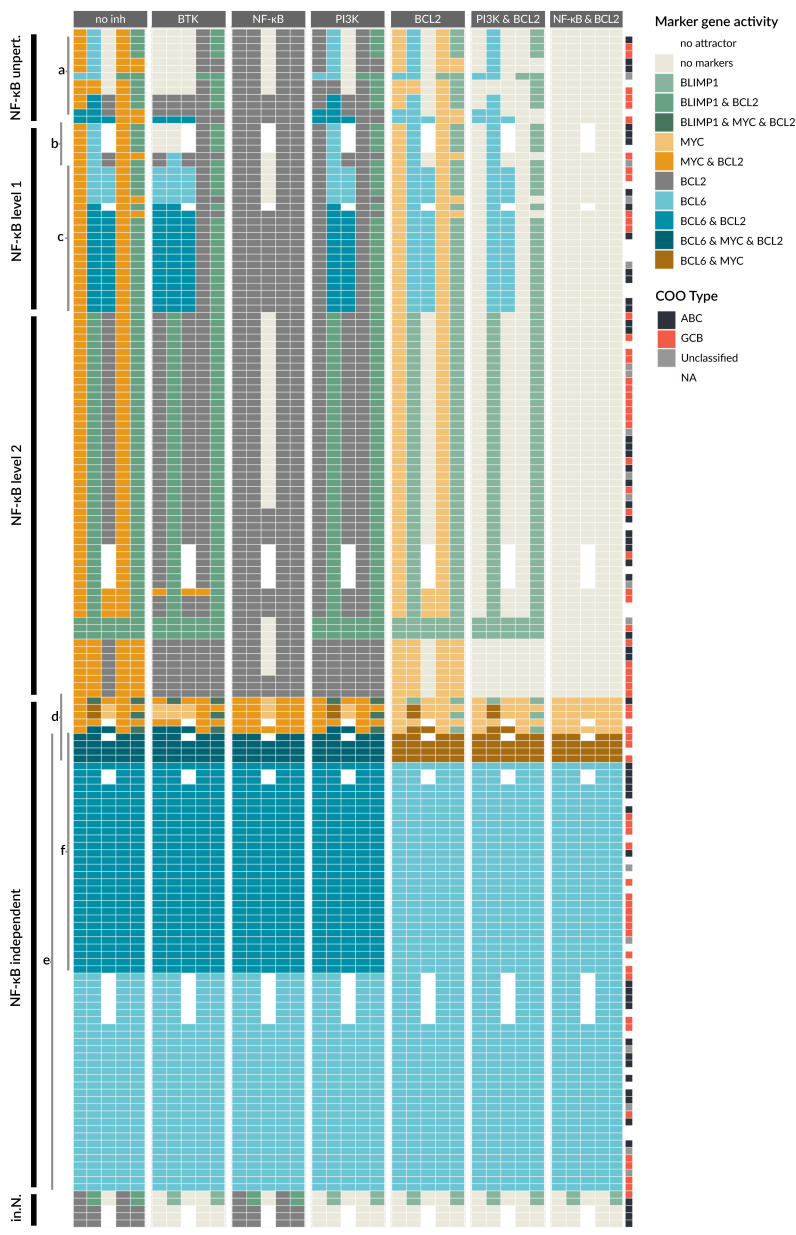
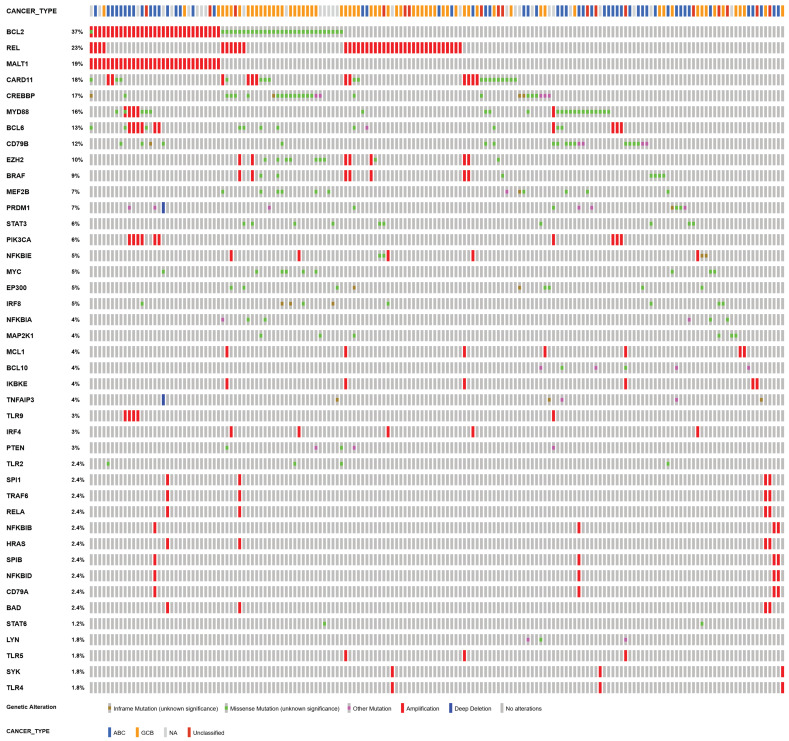
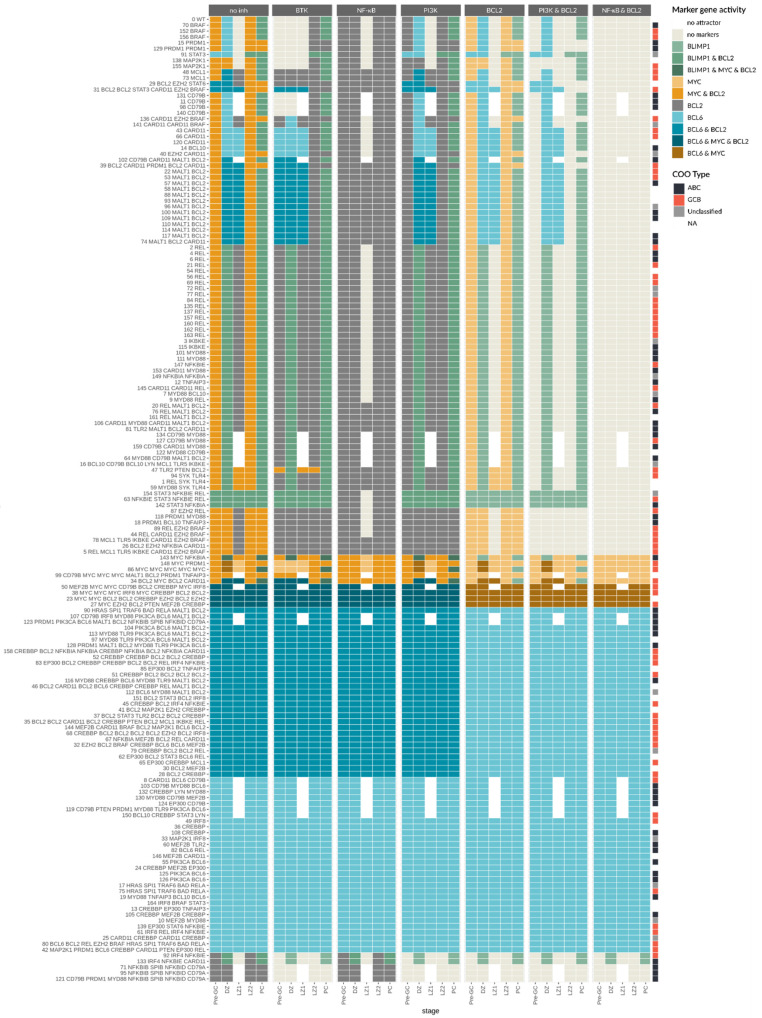
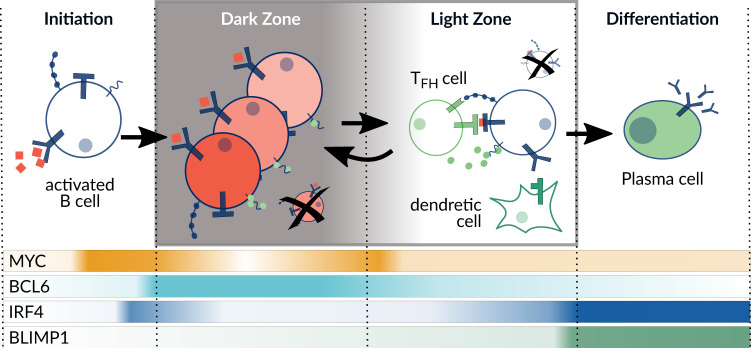
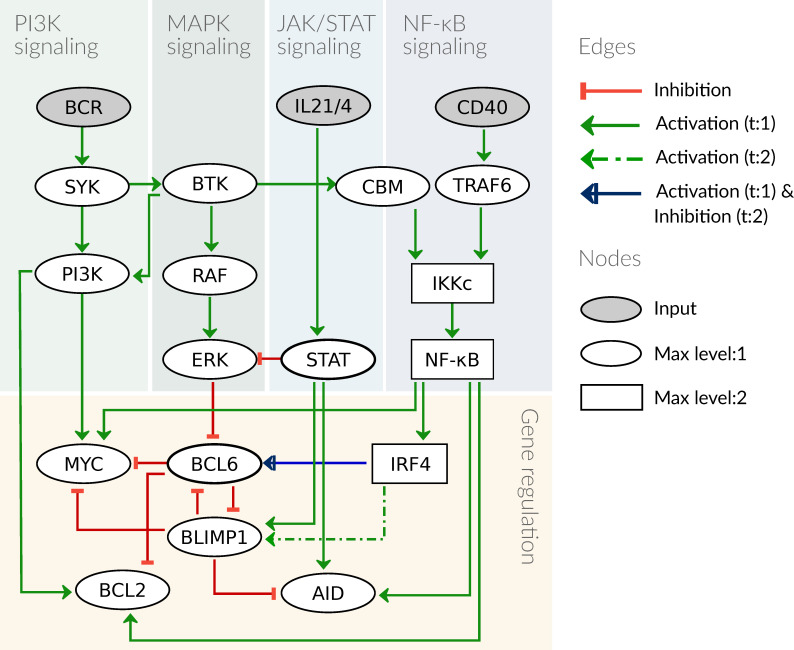
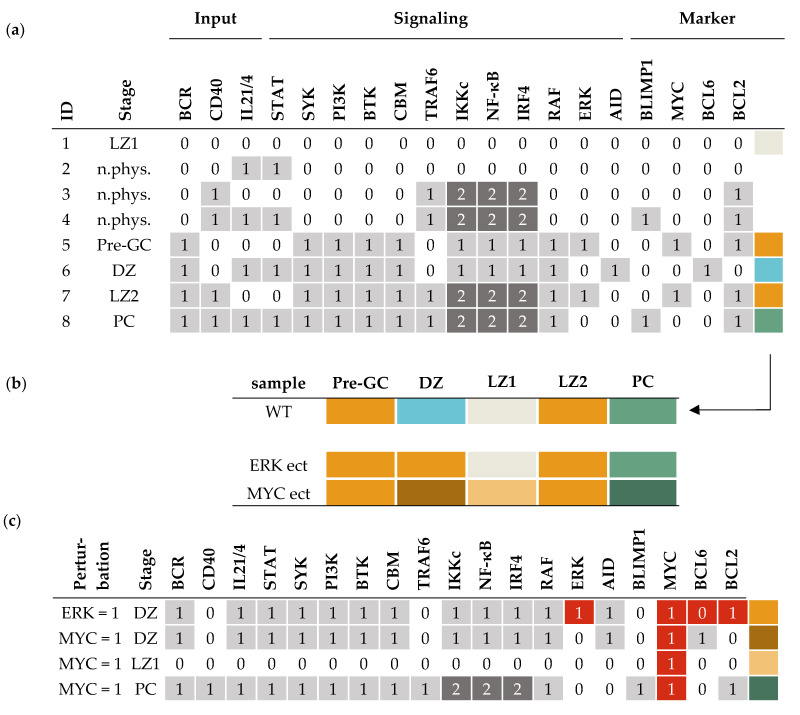
Personalized medicine aims to tailor treatment to patients based on their individual genetic or molecular background. Especially in diseases with a large molecular heterogeneity, such as diffuse large B-cell lymphoma (DLBCL), personalized medicine has the potential to improve outcome and/or to reduce resistance towards treatment. However, integration of patient-specific information into a computational model is challenging and has not been achieved for DLBCL. Here, we developed a computational model describing signaling pathways and expression of critical germinal center markers. The model integrates the regulatory mechanism of the signaling and gene expression network and covers more than 50 components, many carrying genetic lesions common in DLBCL. Using clinical and genomic data of 164 primary DLBCL patients, we implemented mutations, structural variants and copy number alterations as perturbations in the model using the CoLoMoTo notebook. Leveraging patient-specific genotypes and simulation of the expression of marker genes in specific germinal center conditions allows us to predict the consequence of the modeled pathways for each patient. Finally, besides modeling how genetic perturbations alter physiological signaling, we also predicted for each patient model the effect of rational inhibitors, such as Ibrutinib, that are currently discussed as possible DLBCL treatments, showing patient-dependent variations in effectiveness and synergies.
个性化医疗旨在根据患者个体的基因或分子背景为其量身定制治疗方案。特别是在具有高度分子异质性的疾病中,如弥漫性大B细胞淋巴瘤(DLBCL),个性化医疗有潜力改善治疗结果和/或降低对治疗的耐药性。然而,将患者特异性信息整合到计算模型中具有挑战性,且DLBCL尚未实现这一点。在此,我们开发了一个描述信号通路和关键生发中心标志物表达的计算模型。该模型整合了信号传导和基因表达网络的调控机制,涵盖50多个成分,其中许多携带DLBCL中常见的基因损伤。利用164例原发性DLBCL患者的临床和基因组数据,我们使用CoLoMoTo笔记本将突变、结构变异和拷贝数改变作为模型中的扰动因素。利用患者特异性基因型以及在特定生发中心条件下模拟标志物基因的表达,使我们能够预测每个患者模型中模拟通路的后果。最后,除了模拟基因扰动如何改变生理信号传导外,我们还为每个患者模型预测了合理抑制剂(如伊布替尼)的效果,伊布替尼目前被作为可能的DLBCL治疗药物进行讨论,结果显示其有效性和协同作用存在患者依赖性差异。