Chang Chia-Che, Chiu Chien-Chih, Liu Pei-Feng, Wu Chih-Hsuan, Tseng Yen-Chiang, Lee Cheng-Hsin, Shu Chih-Wen
Department of Oncology, Zuoying Branch of Kaohsiung Armed Forces General Hospital, Kaohsiung 81300, Taiwan.
Department of Biotechnology, Kaohsiung Medical University, Kaohsiung 80708, Taiwan.
Cancers (Basel). 2021 Nov 18;13(22):5779. doi: 10.3390/cancers13225779.
The selective molecules for targeted therapy of triple-negative breast cancer (TNBC) are limited. Several kinases play pivotal roles in cancer development and malignancy. The study aims to determine if any kinases confer to malignancy of TNBC cells, which could serve as a theranostic target for TNBC.
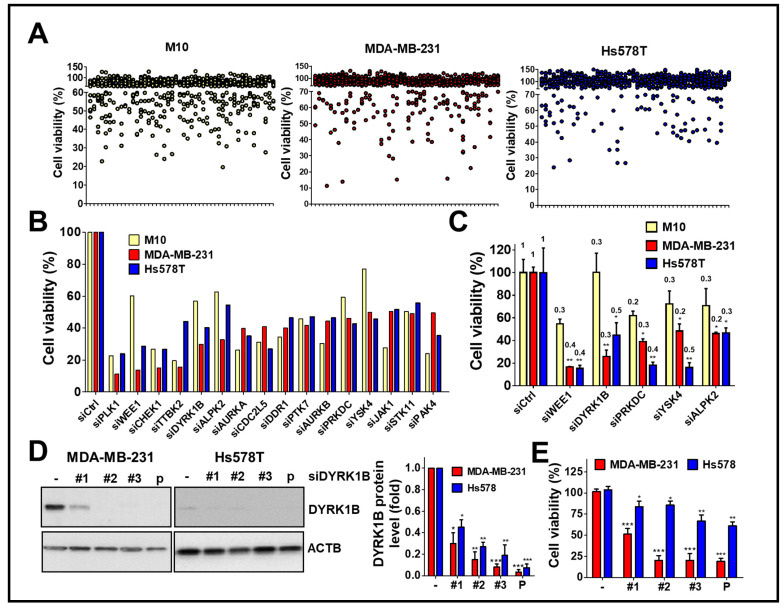
Kinome siRNA library was used to screen selective genes required for the proliferation of TNBC cells. The involvement of DYRK1B in cancer malignancy was evaluated with migration, invasion assays, and spheroid culture. The expression of DYRK1B was confirmed with quantitative PCR and immunoblotting. The clinical correlation of DYRK1B in TNBC patients was examined with tissue microarray and The Cancer Genome Atlas (TCGA) database.
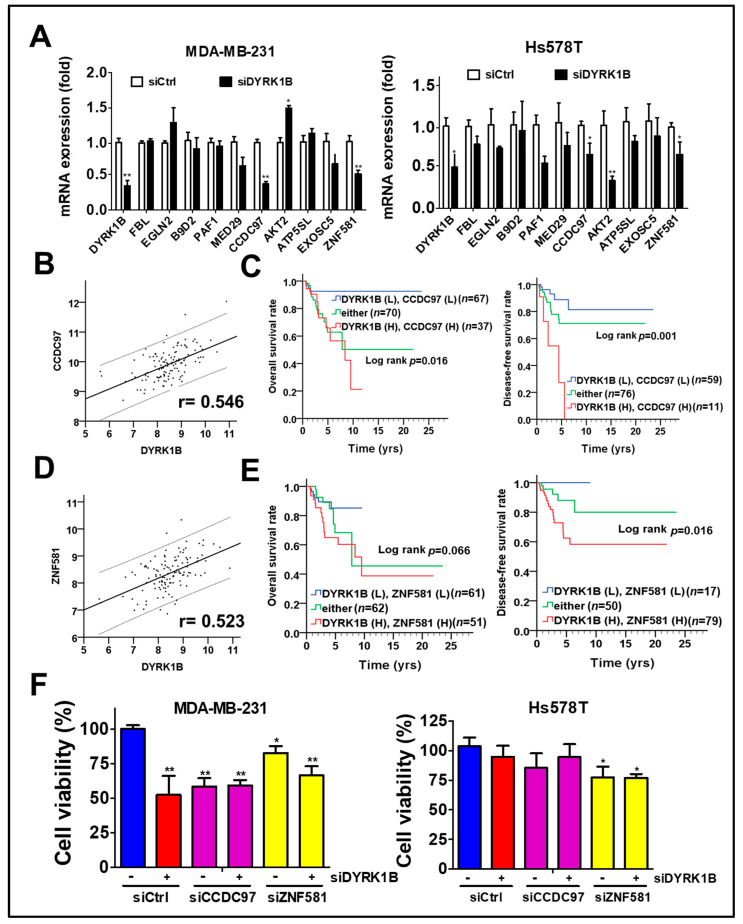
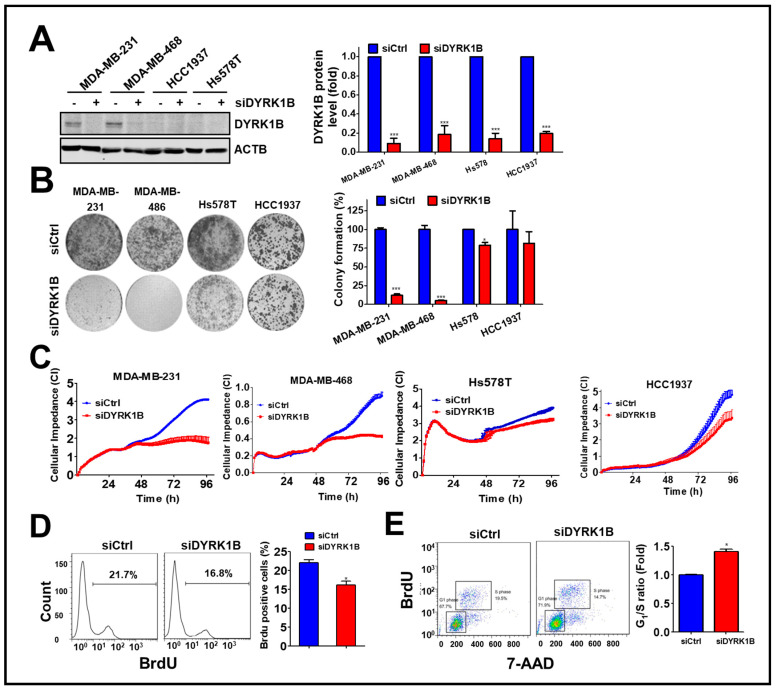
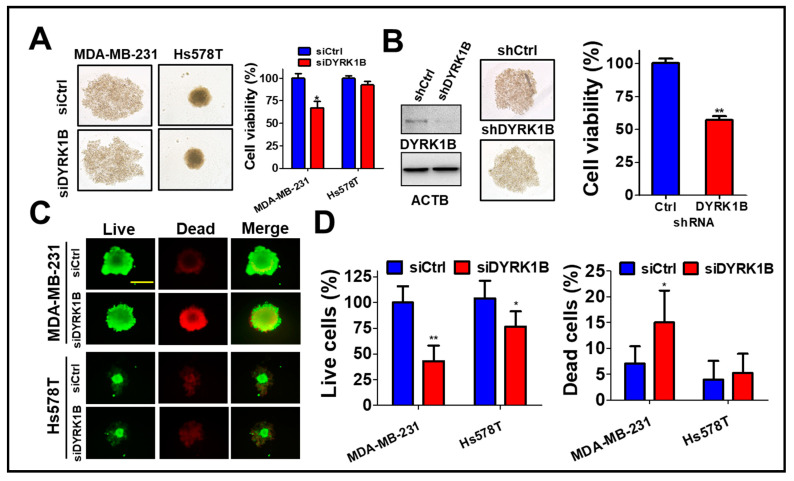
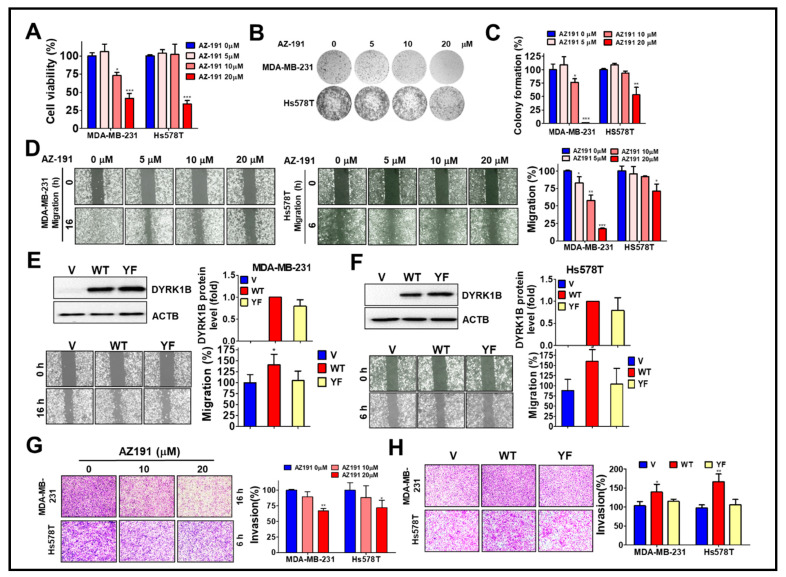
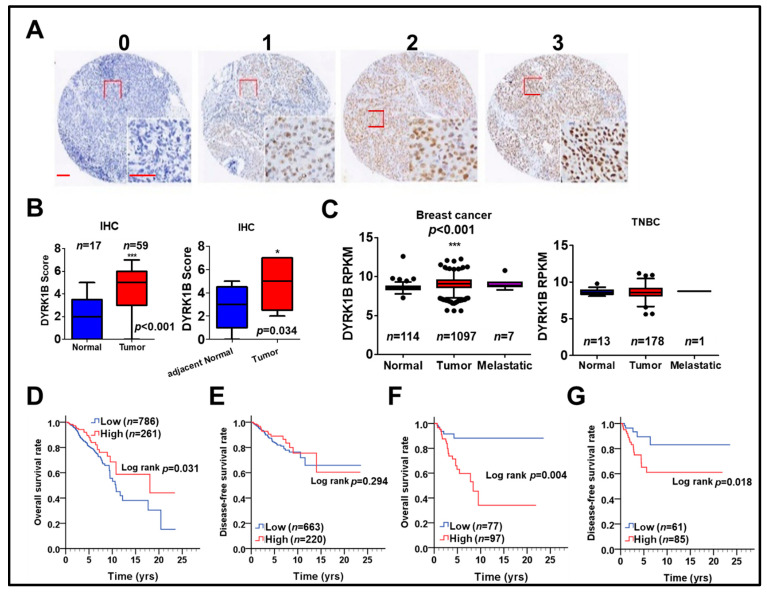
Our results showed that silencing DYRK1B significantly suppressed cell viability in DYRK1B-high expressed TNBC cells, likely by arresting the cell cycle at the G phase. Nevertheless, silencing DYRK1B had marginal effects on DYRK1B-low expressed TNBC cells. Similarly, the knockdown of DYRK1B decreased tumorsphere formation and increased cell death of the tumorsphere. Moreover, inactivation of DYRK1B by either specific inhibitor or ectopic expressing catalytic mutant of DYRK1B inhibited cell viability and metastatic characteristics, including migration and invasion. In addition, DYRK1B protein expression was elevated in tumor tissues compared to that in adjacent normal tissues of TNBC patients. Further, DYRK1B gene expression was highly correlated with CCDC97 or ZNF581 genes in TNBC cells and patients. High co-expression of DYRK1B with CCDC97 or ZNF581 was significantly associated with unfavorable overall survival and disease-free survival of TNBC patients.
our results suggest DYRK1B might be essential for promoting tumor progression and could be a theranostic target for TNBC. Silencing or inactivation of DYRK1B might be a potential targeted therapy for TNBC.
三阴性乳腺癌(TNBC)靶向治疗的选择性分子有限。几种激酶在癌症发展和恶性肿瘤中起关键作用。本研究旨在确定是否有任何激酶赋予TNBC细胞恶性特征,这可作为TNBC的治疗诊断靶点。
使用激酶组siRNA文库筛选TNBC细胞增殖所需的选择性基因。通过迁移、侵袭试验和球体培养评估DYRK1B在癌症恶性肿瘤中的作用。用定量PCR和免疫印迹法确认DYRK1B的表达。用组织芯片和癌症基因组图谱(TCGA)数据库检测TNBC患者中DYRK1B的临床相关性。
我们的结果表明,沉默DYRK1B可显著抑制DYRK1B高表达的TNBC细胞的活力,可能是通过将细胞周期阻滞在G期。然而,沉默DYRK1B对DYRK1B低表达的TNBC细胞影响甚微。同样,敲低DYRK1B可减少肿瘤球的形成并增加肿瘤球的细胞死亡。此外,用特异性抑制剂或异位表达DYRK1B的催化突变体使DYRK1B失活可抑制细胞活力和转移特性,包括迁移和侵袭。此外,与TNBC患者的相邻正常组织相比,肿瘤组织中DYRK1B蛋白表达升高。此外,在TNBC细胞和患者中,DYRK1B基因表达与CCDC97或ZNF581基因高度相关。DYRK1B与CCDC97或ZNF581的高共表达与TNBC患者不良的总生存期和无病生存期显著相关。
我们的结果表明DYRK1B可能对促进肿瘤进展至关重要,并且可能是TNBC的治疗诊断靶点。沉默或失活DYRK1B可能是TNBC的一种潜在靶向治疗方法。