Department of Pharmacology and Toxicology, University of Mississippi Medical Center, Jackson, MS 39216, USA.
Department of Emergency Medicine, University of Mississippi Medical Center, Jackson, MS 39126, USA.
Cells. 2021 Oct 20;10(11):2817. doi: 10.3390/cells10112817.
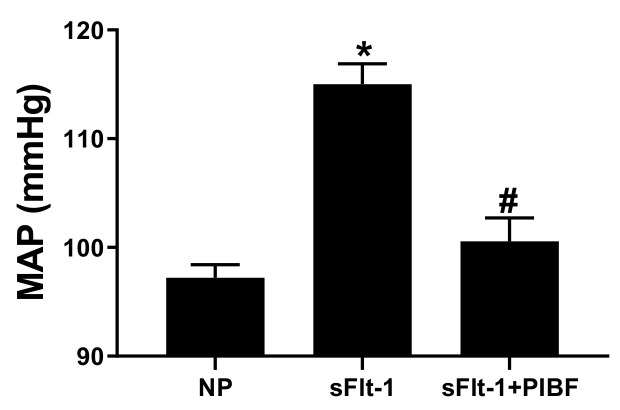
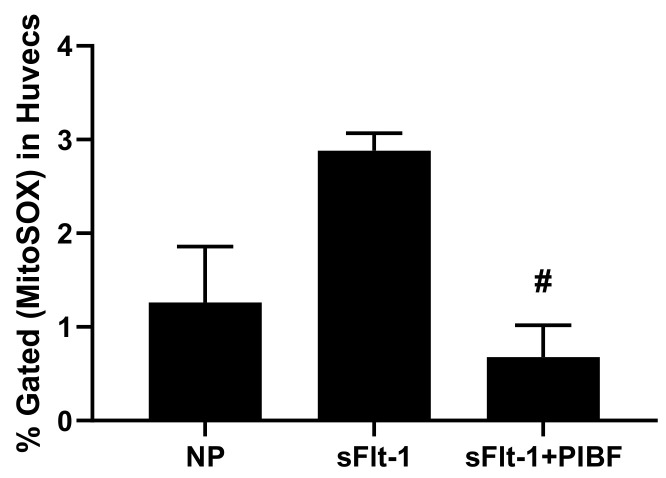
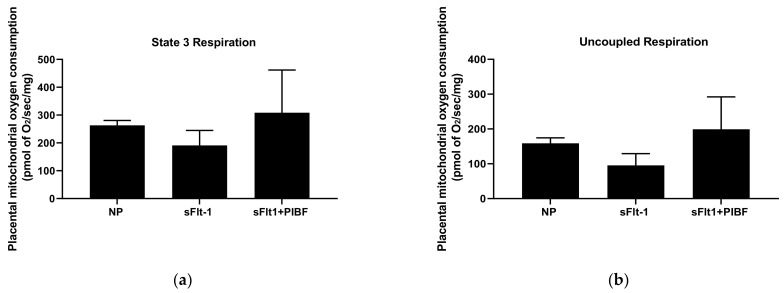
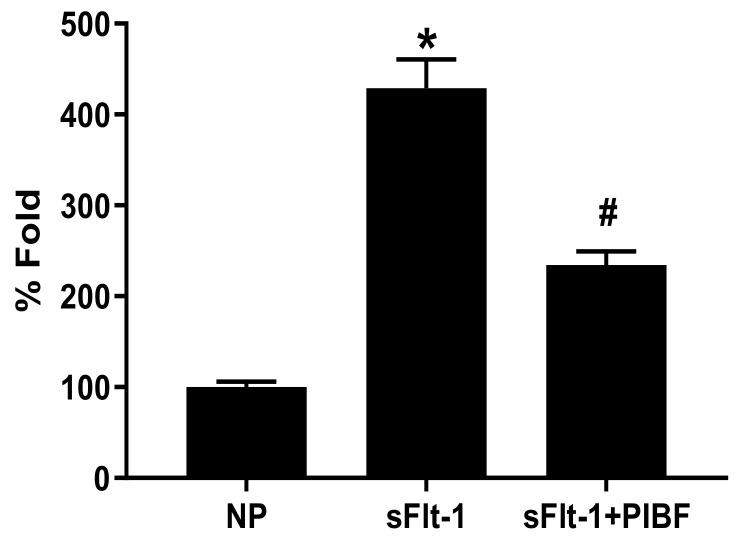
Preeclampsia (PE) is characterized by new onset hypertension in association with placental ischemia, reduced fetal weight, elevated soluble fms-like tyrosine kinase-1 (sFlt-1), and placental mitochondrial (mt) dysfunction and oxidative stress (ROS). Progesterone induced blocking factor (PIBF) is a product of progesterone signaling that blocks inflammatory processes and we have previously shown PIBF to lower mean arterial blood pressure (MAP) and sFlt-1 in a rat model of PE. Infusion of sFlt-1 causes hypertension and many characteristics of PE in pregnant rodents, however, its role in causing mt dysfunction is unknown. Therefore, we hypothesize that PIBF will improve mt function and MAP in response to elevated sFlt-1 during pregnancy. We tested our hypothesis by infusing sFlt-1 via miniosmotic pumps in normal pregnant (NP) Sprague-Dawley rats (3.7 μg·kg·day) on gestation days (GD) 13-19 in the presence or absence of PIBF (2.0 µg/mL) injected intraperitoneally on GD 15 and examined mean arterial blood pressure (MAP) and placental mt ROS on GD 19. sFlt-1 increased MAP to 112 + 2 (n = 11) compared to NP rats (98 + 2 mmHg, n = 15, < 0.05), which was lowered in the presence of sFlt-1 (100 + 1 mmHg, n = 5, < 0.05). Placental mtATP was reduced in sFlt-1 infused rats versus NP controls, but was improved with PIBF. Placental mtROS was elevated with sFlt-1 compared to NP controls, but was reduced with PIBF. Sera from NP + sFlt-1 increased endothelial cell mtROS, which was attenuated with PIBF. These data demonstrate sFlt-1 induced HTN during pregnancy reduces placental mt function. Importantly, PIBF improved placental mt function and HTN, indicating the efficacy of improved progesterone signaling as potential therapeutics for PE.
子痫前期 (PE) 的特征是新发生的高血压与胎盘缺血、胎儿体重减轻、可溶性 fms 样酪氨酸激酶-1 (sFlt-1) 升高以及胎盘线粒体 (mt) 功能障碍和氧化应激 (ROS) 有关。孕激素诱导阻断因子 (PIBF) 是孕激素信号的产物,可阻断炎症过程,我们之前已经证明 PIBF 可降低 PE 大鼠模型中的平均动脉血压 (MAP) 和 sFlt-1。sFlt-1 的输注会导致怀孕啮齿动物的高血压和许多 PE 特征,但它在导致 mt 功能障碍中的作用尚不清楚。因此,我们假设 PIBF 将在怀孕期间对升高的 sFlt-1 做出反应,改善 mt 功能和 MAP。我们通过在妊娠第 13-19 天通过 miniosmotic 泵向正常妊娠 (NP) Sprague-Dawley 大鼠 (3.7 μg·kg·day) 输注 sFlt-1,在存在或不存在 PIBF (2.0 µg/mL) 的情况下在妊娠第 15 天经腹腔注射,并在妊娠第 19 天检查平均动脉血压 (MAP) 和胎盘 mtROS,来检验我们的假设。与 NP 大鼠 (98 + 2 mmHg,n = 15, < 0.05) 相比,sFlt-1 将 MAP 升高至 112 + 2 (n = 11),而在 sFlt-1 存在下,MAP 降低至 100 + 1 mmHg (n = 5, < 0.05)。与 NP 对照相比,sFlt-1 输注大鼠的胎盘 mtATP 减少,但用 PIBF 改善。与 NP 对照相比,sFlt-1 使胎盘 mtROS 升高,但用 PIBF 降低。与 NP + sFlt-1 相比,NP 血清增加了内皮细胞 mtROS,而 PIBF 可减弱其作用。这些数据表明,妊娠期间 sFlt-1 诱导的 HTN 降低了胎盘 mt 功能。重要的是,PIBF 改善了胎盘 mt 功能和 HTN,表明改善孕激素信号作为治疗 PE 的潜在疗法的功效。