Simon Juliette, Jouanmiqueou Bastien, Rols Marie-Pierre, Flahaut Emmanuel, Golzio Muriel
Institut de Pharmacologie et de Biologie Structurale, IPBS, Université de Toulouse, CNRS, UPS, Université Toulouse 3-Paul Sabatier, 205 Route de Narbonne, CEDEX 4, 31077 Toulouse, France.
Centre Interuniversitaire de Recherche et d'Ingénierie des Matériaux, CIRIMAT, Université de Toulouse, CNRS, Université Toulouse 3-Paul Sabatier, 118 Route de Narbonne, CEDEX 9, 31062 Toulouse, France.
Pharmaceutics. 2021 Oct 28;13(11):1805. doi: 10.3390/pharmaceutics13111805.
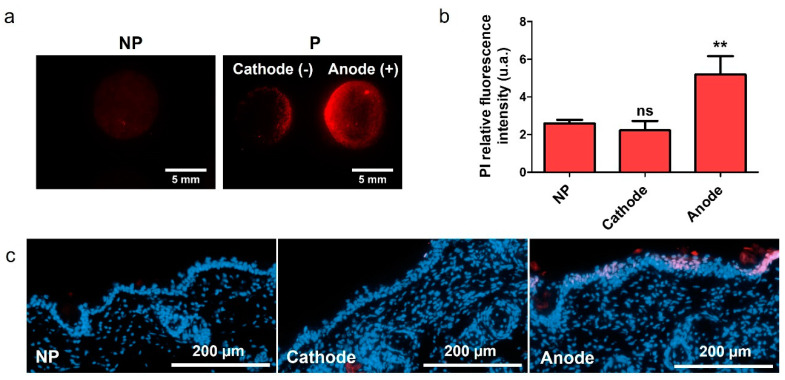
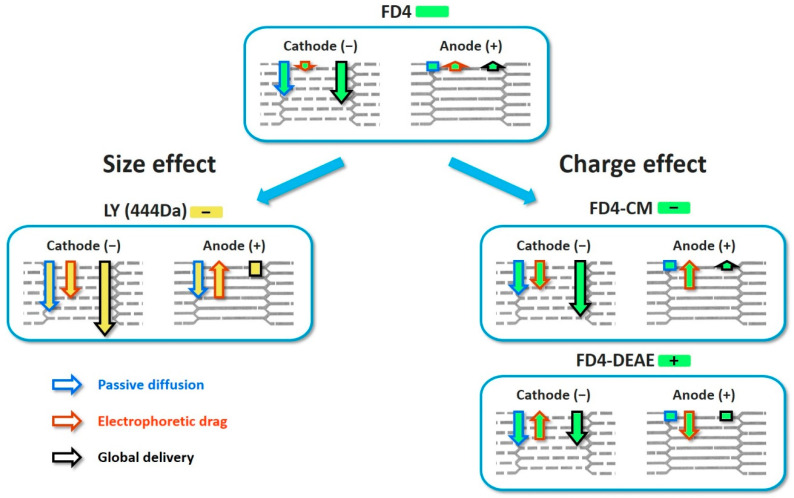
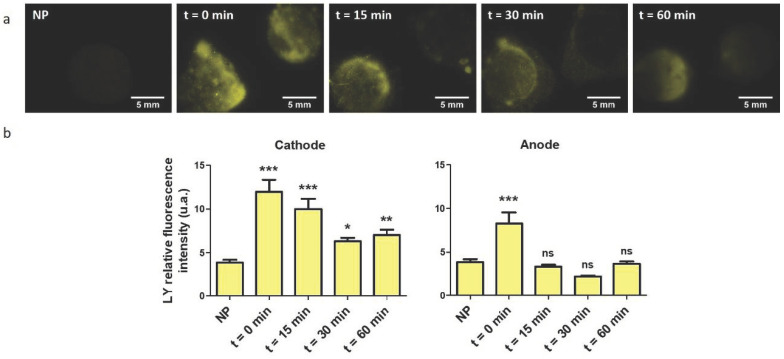
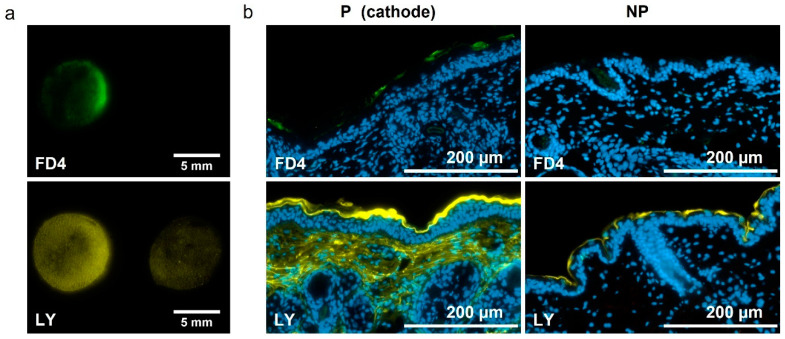
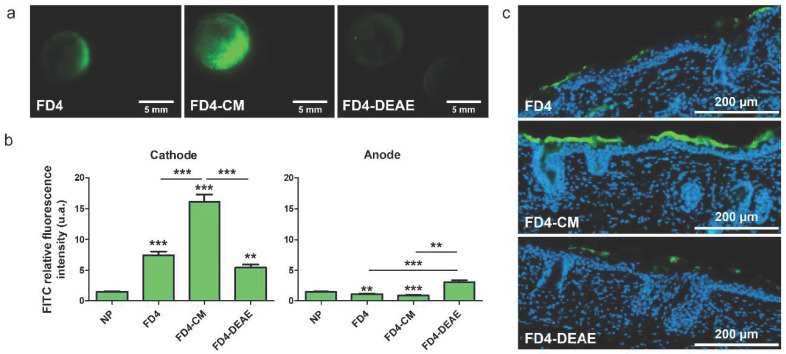
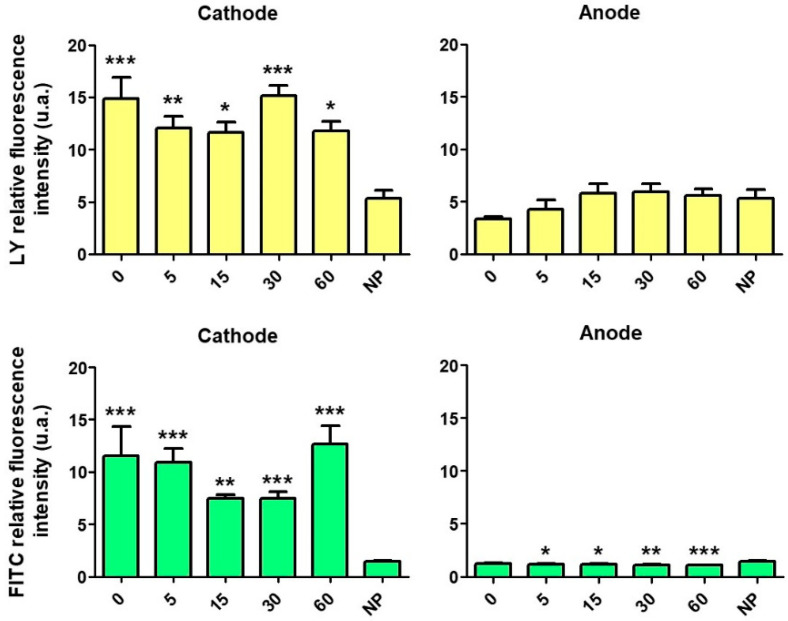
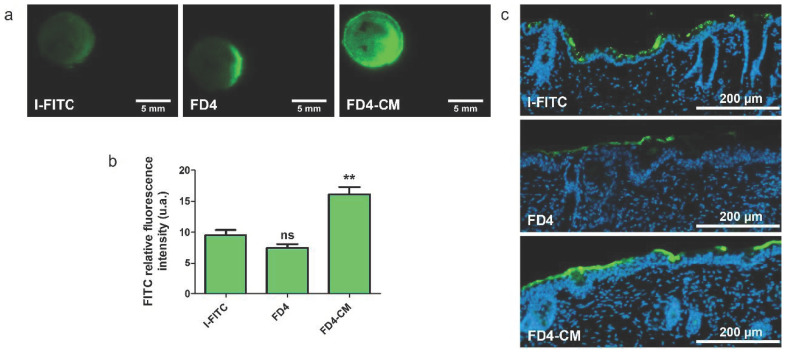
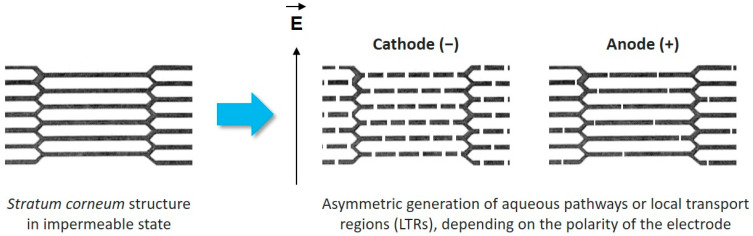
Delivery of hydrophilic molecules through the skin using electroporation is a promising alternative approach to intradermal injection. Recently, we developed a two-in-one electrode/reservoir material composed of carbon nanotubes and agarose hydrogel. In this work, we evaluated the potential of the device to achieve non-invasive transdermal drug delivery using skin electroporation. As it involved an electrode configuration different from the literature, critical questions were raised. First, we demonstrated the efficiency of the device to permeabilize the skin of hairless mice, as observed by propidium iodide (PI) uptake in the nuclei of the epidermis cells through macro fluorescence imaging and histology. Application of Lucifer yellow (LY) at different times after unipolar electroporation treatment demonstrated the partial reversibility of the skin permeabilization after 30 min, and as such, that barrier function properties tended to be restored. We uncovered, for the first time to our knowledge, an intrinsic asymmetry of permeation pathways generated in the during treatment. Electrophoresis was here the main driving force for macromolecule delivery, but it competed with passive diffusion through the generated aqueous pathways for smaller molecules. Finally, we validated 4 kDa dextran labelled with fluorescein isothiocyanate (FD4) as a model molecule to optimize the electrical parameters, needed to improve macromolecule delivery.
利用电穿孔技术通过皮肤递送亲水分子是皮内注射一种很有前景的替代方法。最近,我们开发了一种由碳纳米管和琼脂糖水凝胶组成的二合一电极/储库材料。在这项工作中,我们评估了该装置利用皮肤电穿孔实现无创透皮给药的潜力。由于其电极配置与文献不同,引发了一些关键问题。首先,通过宏观荧光成像和组织学观察表皮细胞核中碘化丙啶(PI)摄取情况,我们证明了该装置使无毛小鼠皮肤通透的效率。在单极电穿孔处理后的不同时间应用荧光素钠(LY)表明,30分钟后皮肤通透性具有部分可逆性,因此屏障功能特性趋于恢复。据我们所知,我们首次发现了处理过程中产生的渗透途径存在内在不对称性。在此,电泳是大分子递送的主要驱动力,但它与小分子通过产生的水性途径的被动扩散相互竞争。最后,我们验证了用异硫氰酸荧光素标记的4 kDa葡聚糖(FD4)作为模型分子,以优化改善大分子递送所需的电参数。