Key Laboratory of Marine Drugs of Ministry of Education, School of Medicine and Pharmacy, Ocean University of China, Qingdao, Shandong Province, People's Republic of China.
Marine Traditional Chinese Medicine R&D Laboratory, Marine Biomedical Research Institute of Qingdao, Qingdao, Shandong Province, People's Republic of China.
Int J Nanomedicine. 2023 Jul 6;18:3711-3725. doi: 10.2147/IJN.S414882. eCollection 2023.
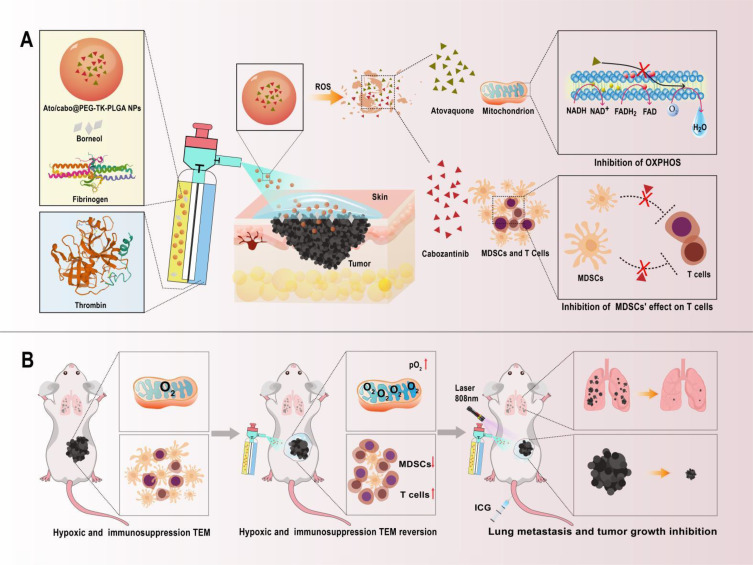
Reversing the hypoxic and immunosuppressive tumor microenvironment (TME) is crucial for treating malignant melanoma. Seeking a robust platform for the effective reversion of hypoxic and immunosuppressive TME may be an excellent solution to revolutionizing the current landscape of malignant melanoma treatment. Here, we demonstrated a transdermal and intravenous dual-administration paradigm. A tailor-made Ato/cabo@PEG-TK-PLGA NPs were administrated transdermally to melanoma with the help of a gel spray containing a skin-penetrating material borneol. Nanoparticles encased Ato and cabo were released and thereby reversed the hypoxic and immunosuppressive tumor microenvironment (TME).
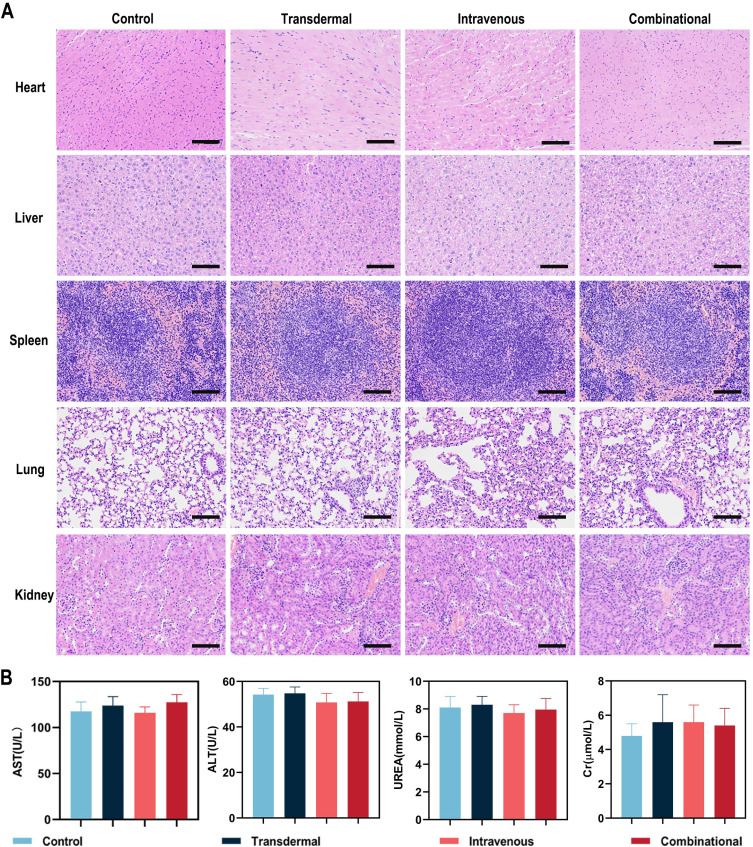
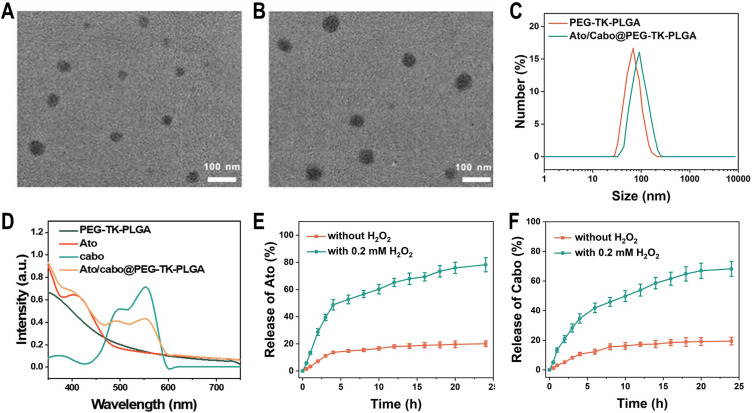
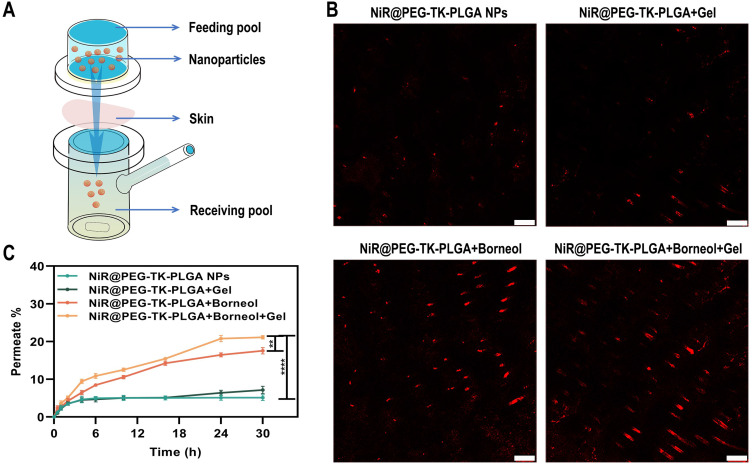
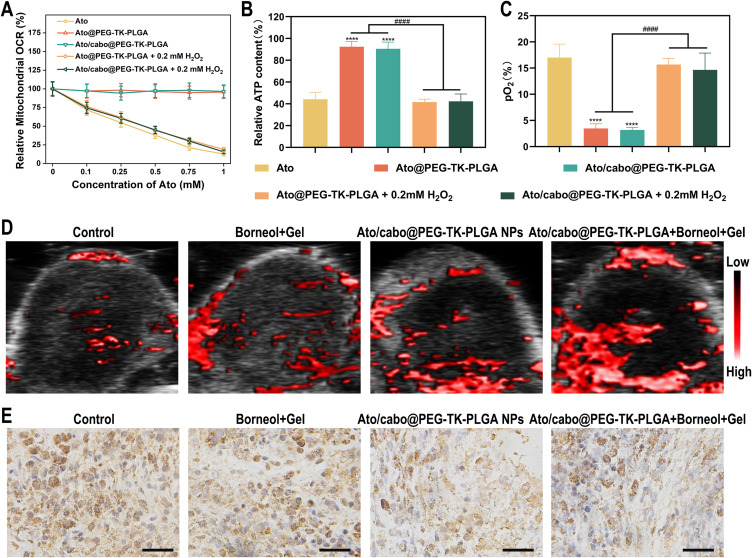
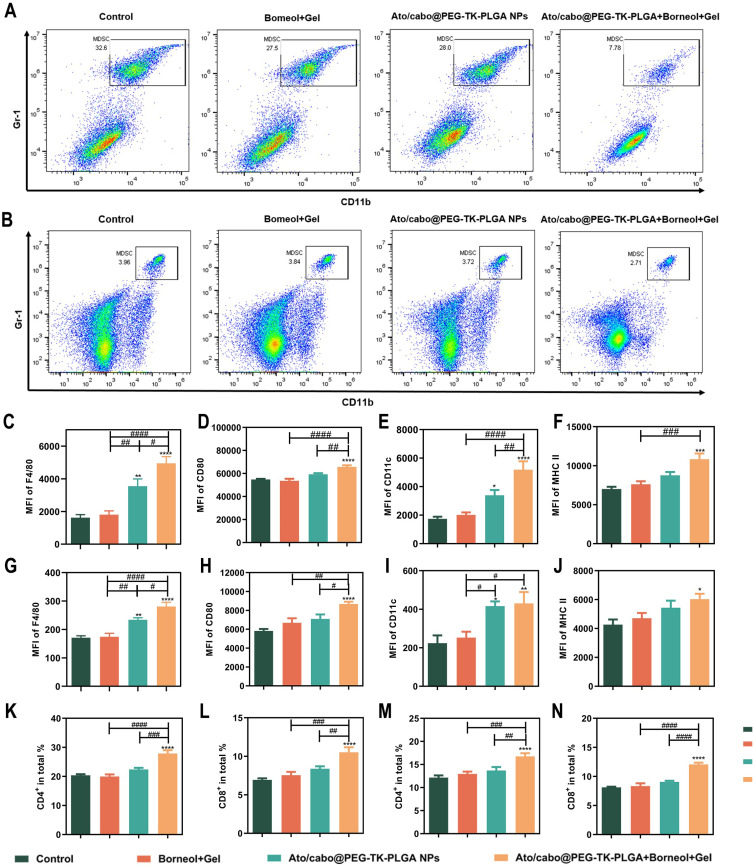
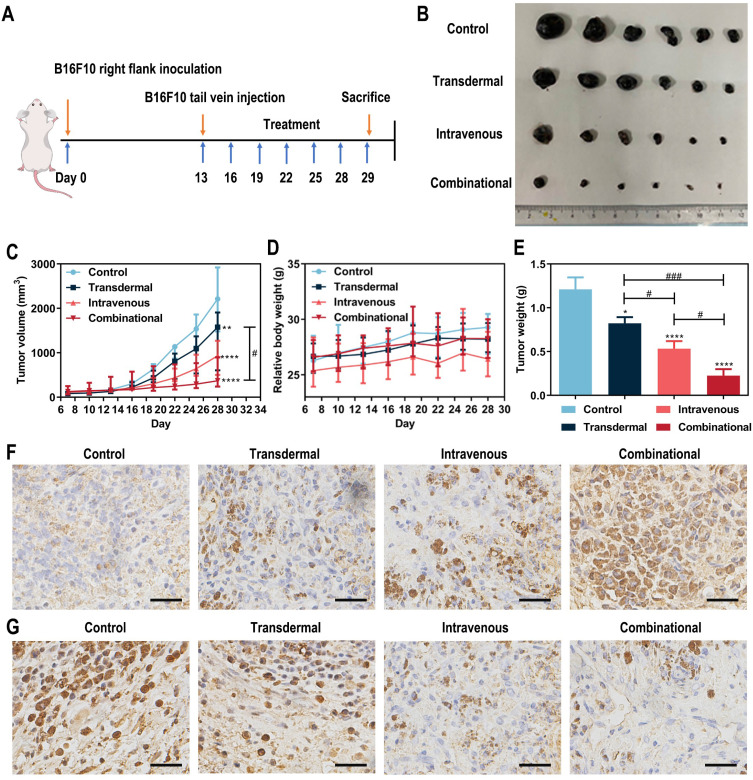
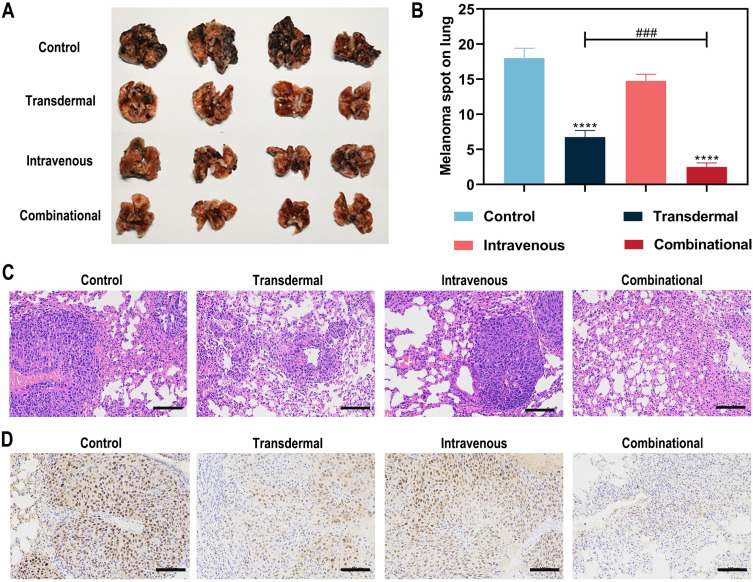
Ato/cabo@PEG-TK-PLGA NPs were synthesized through a self-assembly emulsion process, and the transdermal ability was assessed using Franz diffusion cell assembly. The inhibition effect on cell respiration was measured by OCR, ATP, and pO detection and in vivo photoacoustic (PA) imaging. The reversing of the immunosuppressive was detected through flow cytometry analysis of MDSCs and T cells. At last, the in vivo anti-tumor efficacy and histopathology, immunohistochemical analysis and safety detection were performed using tumor-bearing mice.
The transdermally administrated Ato/cabo@PEG-TK-PLGA NPs successfully spread to the skin surface of melanoma and then entered deep inside the tumor with the help of a gel spray and a skin puncturing material borneol. Atovaquone (Ato, a mitochondrial-respiration inhibitor) and cabozantinib (cabo, a MDSCs eliminator) were concurrently released in response to the intratumorally overexpressed HO. The released Ato and cabo respectively reversed the hypoxic and immunosuppressive TME. The reversed hypoxic TME offered sufficient O for the intravenously administrated indocyanine green (ICG, an FDA-approved photosensitizer) to produce adequate amount of ROS. In contrast, the reversed immunosuppressive TME conferred amplified systemic immune responses.
Taken together, we developed a transdermal and intravenous dual-administration paradigm, which effectively reversed the hypoxic and immunosuppressive tumor microenvironment in the treatment of the malignant melanoma. We believe our study will open a new path for the effective elimination of the primary tumors and the real-time control of tumor metastasis.
逆转缺氧和免疫抑制的肿瘤微环境(TME)对于治疗恶性黑色素瘤至关重要。寻求一种强大的平台来有效逆转缺氧和免疫抑制的 TME,可能是彻底改变恶性黑色素瘤治疗现状的绝佳解决方案。在这里,我们展示了一种经皮和静脉双重给药的范例。在含有透皮用冰片的凝胶喷雾的帮助下,将定制的 Ato/cabo@PEG-TK-PLGA NPs 经皮给药于黑色素瘤。纳米颗粒包裹的 Ato 和 cabo 被释放,从而逆转了缺氧和免疫抑制的肿瘤微环境(TME)。
通过自组装乳液工艺合成 Ato/cabo@PEG-TK-PLGA NPs,并通过 Franz 扩散细胞组件评估其经皮能力。通过 OCR、ATP 和 pO 检测以及体内光声(PA)成像来测量对细胞呼吸的抑制作用。通过 MDSCs 和 T 细胞的流式细胞术分析来检测免疫抑制的逆转。最后,使用荷瘤小鼠进行体内抗肿瘤疗效和组织病理学、免疫组织化学分析和安全性检测。
经皮给予的 Ato/cabo@PEG-TK-PLGA NPs 在凝胶喷雾和透皮用冰片的帮助下成功扩散到黑色素瘤的皮肤表面,然后进入肿瘤深处。对肿瘤内过度表达的 HO 做出反应,同时释放阿托伐醌(Ato,一种线粒体呼吸抑制剂)和卡博替尼(cabo,一种 MDSCs 消除剂)。释放的 Ato 和 cabo 分别逆转了缺氧和免疫抑制的 TME。逆转的缺氧 TME 为静脉给予的已获 FDA 批准的光敏剂吲哚菁绿(ICG)提供了足够的 O,以产生足够量的 ROS。相比之下,逆转的免疫抑制 TME 赋予了增强的全身免疫反应。
总之,我们开发了一种经皮和静脉双重给药的范例,有效地逆转了恶性黑色素瘤治疗中的缺氧和免疫抑制肿瘤微环境。我们相信,我们的研究将为有效消除原发性肿瘤和实时控制肿瘤转移开辟新途径。