Cavaco Marco, Fraga Patrícia, Valle Javier, Andreu David, Castanho Miguel A R B, Neves Vera
Department of Biochemistry, Instituto de Medicina Molecular João Lobo Antunes, Faculdade de Medicina, Universidade de Lisboa, Av. Prof. Egas Moniz, 1649-028 Lisbon, Portugal.
Proteomics and Protein Chemistry Unit, Department of Experimental and Health Sciences, Pompeu Fabra University, Dr. Aiguader 88, Barcelona Biomedical Research Park, 08003 Barcelona, Spain.
Pharmaceutics. 2021 Nov 4;13(11):1863. doi: 10.3390/pharmaceutics13111863.
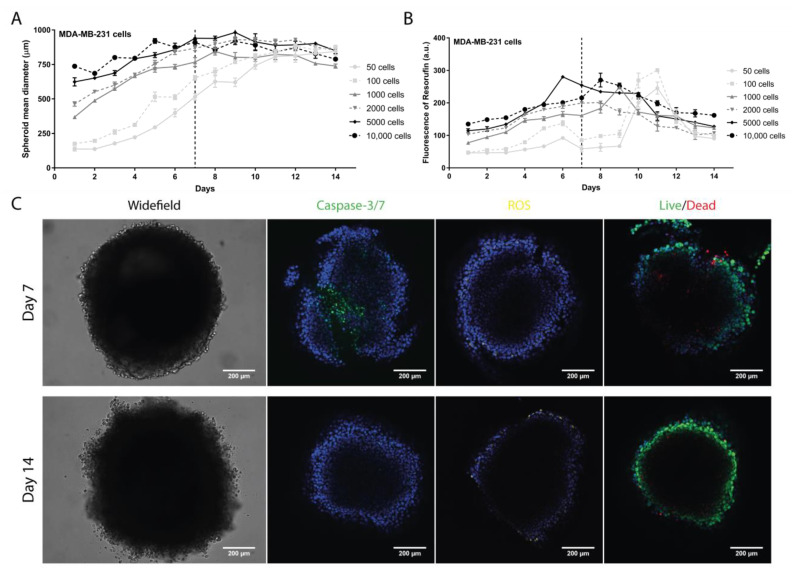
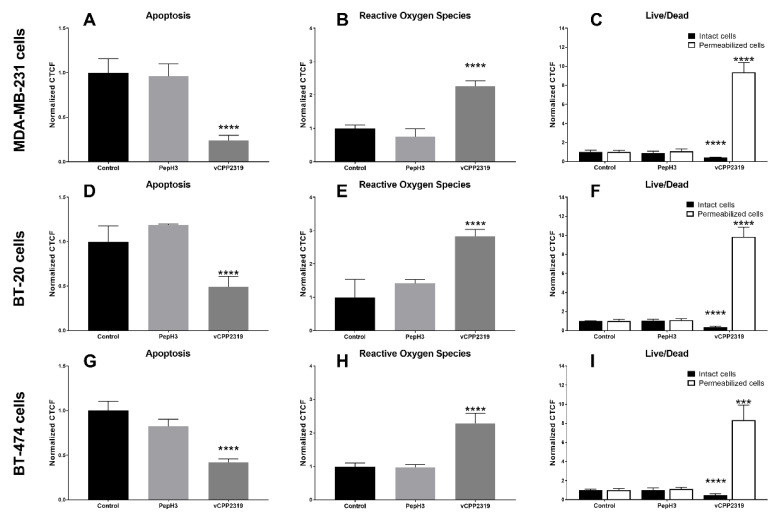
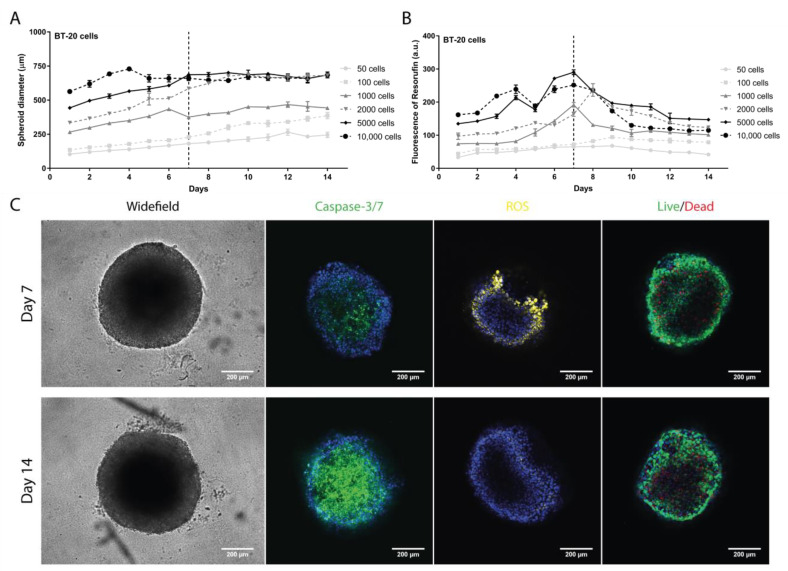
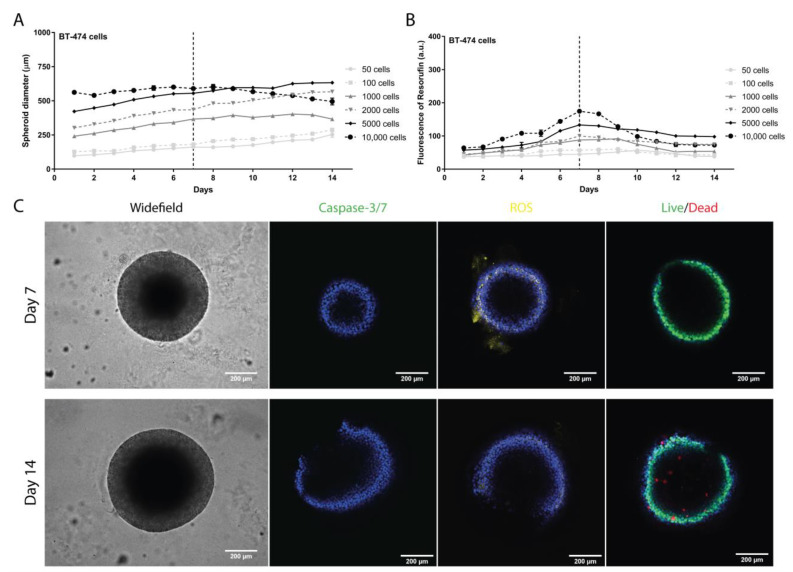
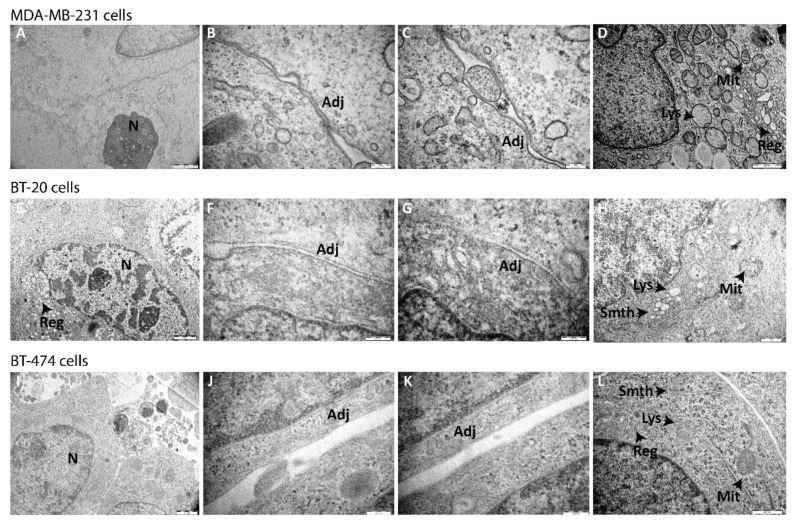
Breast cancer (BC) is the most commonly diagnosed cancer in women and one of the most common causes of cancer-related deaths. Despite intense research efforts, BC treatment still remains challenging. Improved drug development strategies are needed for impactful benefit to patients. Current preclinical studies rely mostly on cell-based screenings, using two-dimensional (2D) cell monolayers that do not mimic in vivo tumors properly. Herein, we explored the development and characterization of three-dimensional (3D) models, named spheroids, of the most aggressive BC subtypes (triple-negative breast cancer-TNBC; and human-epidermal growth receptor-2-HER2+), using the liquid overlay technique with several selected cell lines. In these cell line-derived spheroids, we studied cell density, proliferation, ultrastructure, apoptosis, reactive oxygen species (ROS) production, and cell permeabilization (live/dead). The results showed a formation of compact and homogeneous spheroids on day 7 after seeding 2000 cells/well for MDA-MB-231 and 5000 cells/well for BT-20 and BT-474. Next, we compared the efficacy of a model anticancer peptide (ACP) in cell monolayers and spheroids. Overall, the results demonstrated spheroids to be less sensitive to treatment than cell monolayers, revealing the need for more robust models in drug development.
乳腺癌(BC)是女性中最常被诊断出的癌症,也是癌症相关死亡的最常见原因之一。尽管进行了大量研究,但乳腺癌治疗仍然具有挑战性。需要改进药物开发策略,以便为患者带来切实的益处。当前的临床前研究主要依赖基于细胞的筛选,使用二维(2D)细胞单层,这种单层不能很好地模拟体内肿瘤。在此,我们使用液体覆盖技术和几种选定的细胞系,探索了最具侵袭性的乳腺癌亚型(三阴性乳腺癌-TNBC;以及人表皮生长因子受体2-HER2+)的三维(3D)模型(即球体)的开发和特性。在这些源自细胞系的球体中,我们研究了细胞密度、增殖、超微结构、凋亡、活性氧(ROS)产生以及细胞通透性(活/死)。结果显示,在每孔接种2000个MDA-MB-231细胞以及每孔接种5000个BT-20和BT-474细胞后第7天,形成了紧密且均匀的球体。接下来,我们比较了一种模型抗癌肽(ACP)在细胞单层和球体中的疗效。总体而言,结果表明球体对治疗的敏感性低于细胞单层,这表明在药物开发中需要更强大的模型。