Minutolo Maria, Cinque Maria, Chiumenti Michela, Di Serio Francesco, Alioto Daniela, Navarro Beatriz
Dipartimento di Agraria, Università degli Studi di Napoli Federico II, 80055 Portici, Italy.
Istituto per la Protezione Sostenibile delle Piante, Consiglio Nazionale delle Ricerche, 70126 Bari, Italy.
Plants (Basel). 2021 Nov 5;10(11):2390. doi: 10.3390/plants10112390.
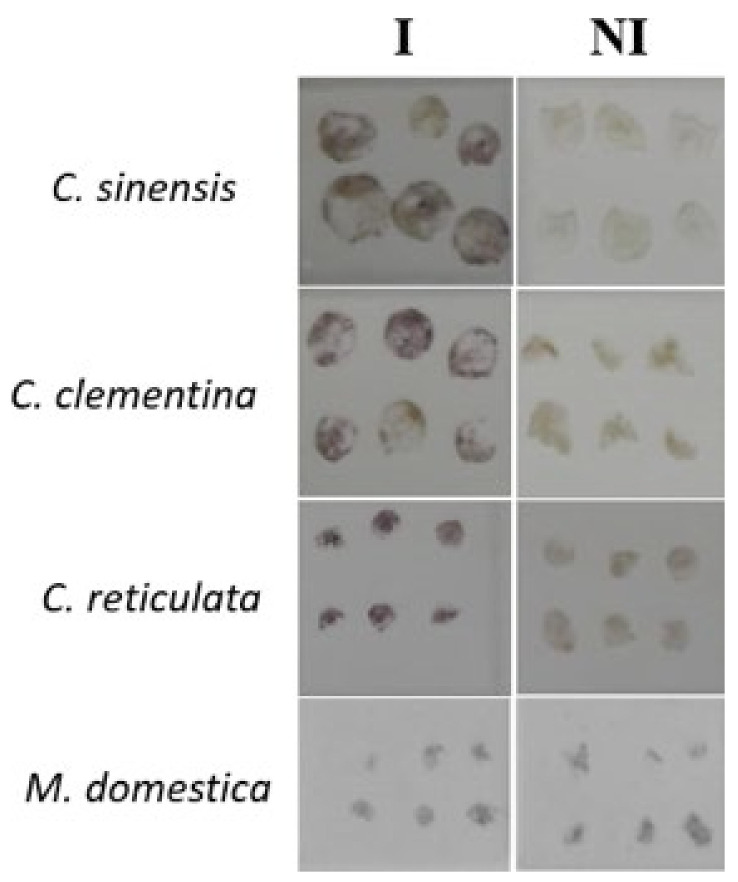
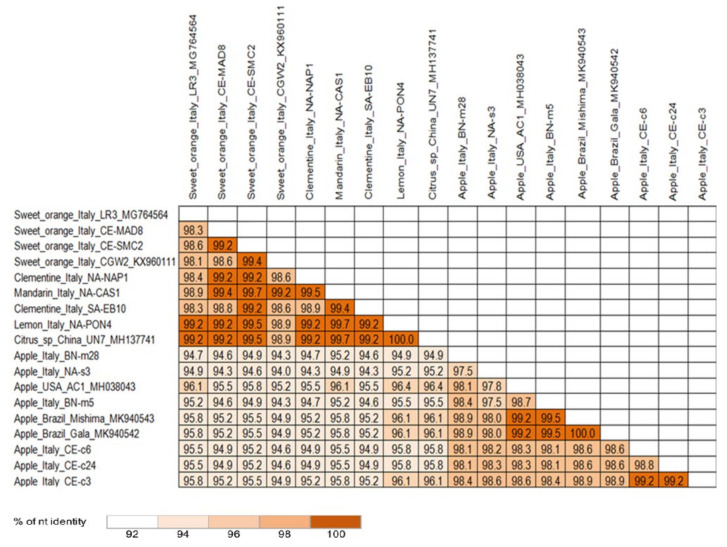
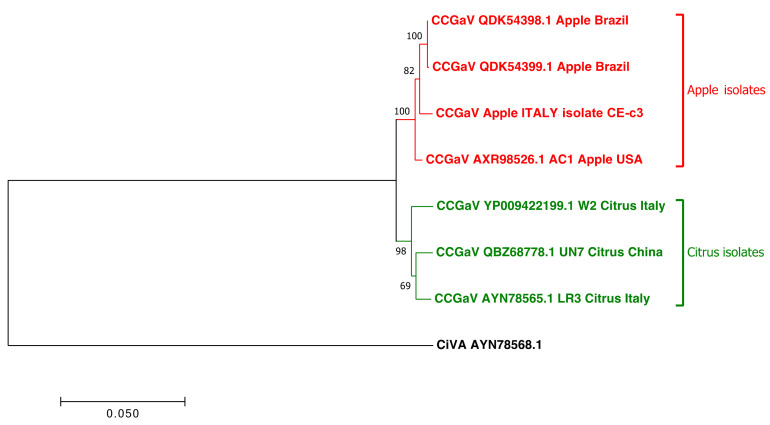
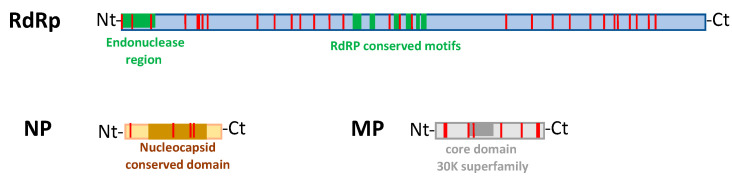
Citrus concave gum-associated virus (CCGaV) is a negative-stranded RNA virus, first reported a few years ago in citrus trees from Italy. It has been reported in apple trees in the USA and in Brazil, suggesting a wider host range and geographic distribution. Here, an anti-CCGaV polyclonal antiserum to specifically detect the virus has been developed and used in a standard double antibody sandwich enzyme-linked immunosorbent assay (DAS-ELISA) that has been validated as a sensitive and reliable method to detect this virus both in citrus and apple trees. In contrast, when the same antiserum was used in direct tissue-blot immunoassay, CCGaV was efficiently detected in citrus but not in apple. Using this antiserum, the first apple trees infected by CCGaV were identified in Italy and the presence of CCGaV in several apple cultivars in southern Italy was confirmed by field surveys. High-throughput sequencing (HTS) allowed for the assembling of the complete genome of one CCGaV Italian apple isolate (CE-c3). Phylogenetic analysis of Italian CCGaV isolates from apple and citrus and those available in the database showed close relationships between the isolates from the same genus ( or ), regardless their geographical origin. This finding was further confirmed by the identification of amino acid signatures specific of isolates infecting citrus or apple hosts. Analysis of HTS reads also revealed that the CE-c3 Italian apple tree, besides CCGaV, was simultaneously infected by several viruses and one viroid, including apple rubbery wood virus 2 which is reported for the first time in Italy. The complete or almost complete genomic sequences of the coinfecting agents were determined.
柑橘凹皮病相关病毒(CCGaV)是一种负链RNA病毒,于几年前在意大利的柑橘树上首次报道。在美国和巴西的苹果树上也有发现,这表明其宿主范围和地理分布更广。在此,已开发出一种用于特异性检测该病毒的抗CCGaV多克隆抗血清,并将其用于标准的双抗体夹心酶联免疫吸附测定(DAS-ELISA),该方法已被验证为在柑橘树和苹果树上检测这种病毒的灵敏且可靠的方法。相比之下,当将相同的抗血清用于直接组织印迹免疫测定时,能在柑橘中高效检测到CCGaV,但在苹果中却检测不到。利用这种抗血清,在意大利首次鉴定出感染CCGaV的苹果树,并通过田间调查证实了意大利南部几个苹果品种中存在CCGaV。高通量测序(HTS)使得一个意大利苹果CCGaV分离株(CE-c3)的完整基因组得以组装。对来自苹果和柑橘的意大利CCGaV分离株以及数据库中现有的分离株进行系统发育分析表明,同一属(或)的分离株之间关系密切,无论其地理来源如何。通过鉴定感染柑橘或苹果宿主的分离株特有的氨基酸特征,进一步证实了这一发现。对HTS读数的分析还表明,除了CCGaV外,意大利的CE-c3苹果树还同时感染了几种病毒和一种类病毒,其中包括苹果橡胶木病毒2,这是该病毒首次在意大利被报道。确定了共感染病原体的完整或几乎完整的基因组序列。