Kyriakou Sotiris, Tragkola Venetia, Plioukas Michael, Anestopoulos Ioannis, Chatzopoulou Paschalina S, Sarrou Eirini, Trafalis Dimitrios T, Deligiorgi Maria V, Franco Rodrigo, Pappa Aglaia, Panayiotidis Mihalis I
Department of Cancer Genetics, Therapeutics & Ultrastructural Pathology, The Cyprus Institute of Neurology & Genetics, Ayios Dometios, Nicosia 2371, Cyprus.
The Cyprus School of Molecular Medicine, Ayios Dometios, Nicosia 2371, Cyprus.
Plants (Basel). 2021 Nov 16;10(11):2472. doi: 10.3390/plants10112472.
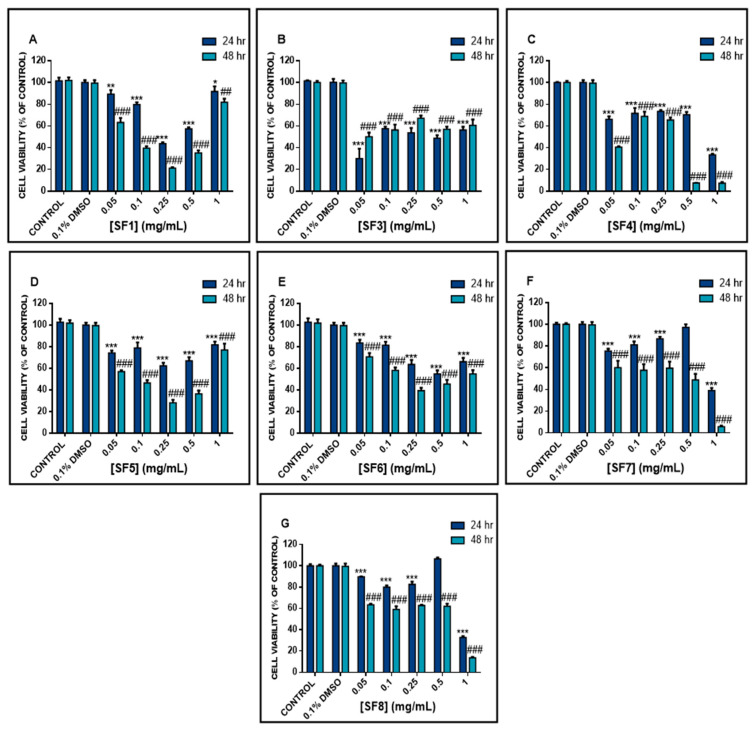
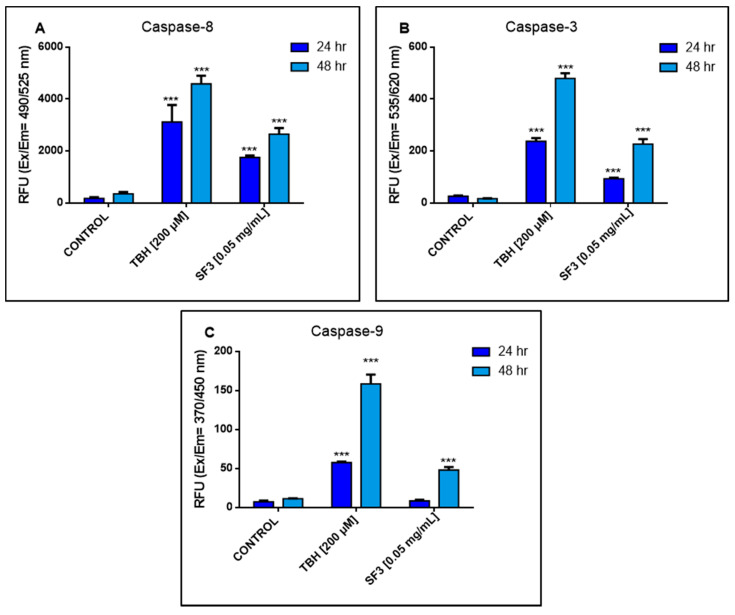
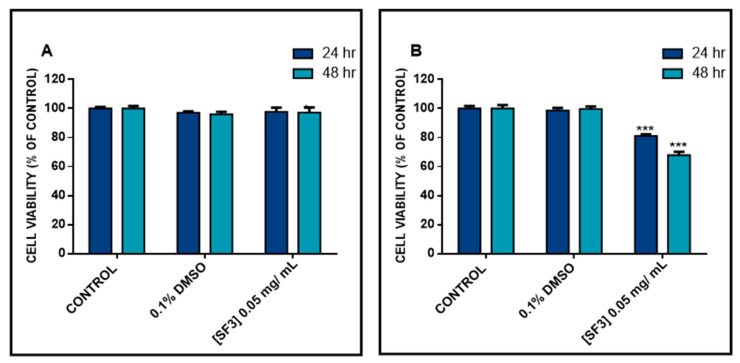
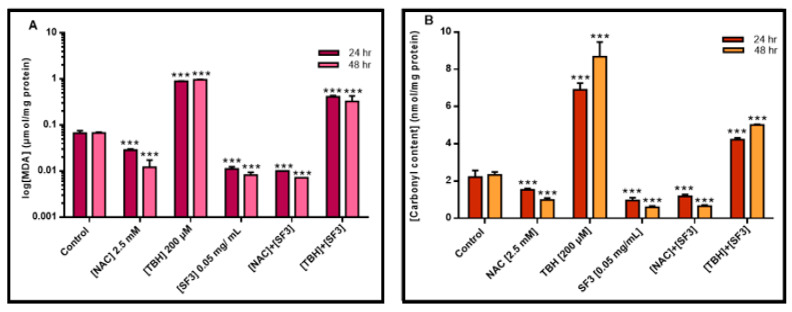
Malignant melanoma is one of the most aggressive types of skin cancer with an increasing incidence worldwide. Thus, the development of innovative therapeutic approaches is of great importance. (SF) is known for its anticancer properties and in this context, we aimed to investigate its potential anti-melanoma activity in an in vitro model of human malignant melanoma. Cytotoxicity was assessed through a colorimetric-based sulforhodamine-B (SRB) assay in primary malignant melanoma (A375), non-malignant melanoma epidermoid carcinoma (A431) and non-tumorigenic melanocyte neighbouring keratinocyte (HaCaT) cells. Among eight (8) different fractions of extracts (SF1-SF8) tested, SF3 was found to possess significant cytotoxic activity against A375 cells, while A431 and HaCaT cells remained relatively resistant or exerted no cytotoxicity, respectively. In addition, the total phenolic (Folin-Ciocalteu assay) and total flavonoid content of SF extracts was estimated, whereas the antioxidant capacity was measured via the inhibition of -butyl hydroperoxide-induced lipid peroxidation and protein oxidation levels. Finally, apoptotic cell death was assessed by utilizing a commercially available kit for the activation of caspases - 3, - 8 and - 9. In conclusion, the anti-melanoma properties of SF3 involve the induction of both extrinsic and intrinsic apoptotic pathway(s), as evidenced by the increased activity levels of caspases - 8, and - 9, respectively.
恶性黑色素瘤是最具侵袭性的皮肤癌类型之一,在全球范围内发病率不断上升。因此,开发创新的治疗方法至关重要。(SF)以其抗癌特性而闻名,在此背景下,我们旨在研究其在人恶性黑色素瘤体外模型中的潜在抗黑色素瘤活性。通过基于比色法的磺基罗丹明 - B(SRB)测定法评估原发性恶性黑色素瘤(A375)、非恶性黑色素瘤表皮样癌(A431)和非致瘤性黑素细胞邻近角质形成细胞(HaCaT)细胞的细胞毒性。在所测试的提取物的八个(8)不同馏分(SF1 - SF8)中,发现SF3对A375细胞具有显著的细胞毒性活性,而A431和HaCaT细胞分别保持相对抗性或无细胞毒性。此外,估计了SF提取物的总酚含量(福林 - 西奥尔特法)和总黄酮含量,而抗氧化能力通过抑制叔丁基过氧化氢诱导的脂质过氧化和蛋白质氧化水平来测量。最后,通过使用市售试剂盒检测半胱天冬酶 - 3、 - 8和 - 9的活化来评估凋亡细胞死亡。总之,SF3的抗黑色素瘤特性涉及外在和内在凋亡途径的诱导,分别由半胱天冬酶 - 8和 - 9活性水平的增加证明。