Division of Endocrine and Kidney Disease Research, Korea National Institute of Health, Cheongju 28159, Chungbuk, Korea.
Department of Medical Nutrition, Kyung Hee University, Yongin 17104, Gyeonggi-do, Korea.
Nutrients. 2021 Nov 10;13(11):4006. doi: 10.3390/nu13114006.
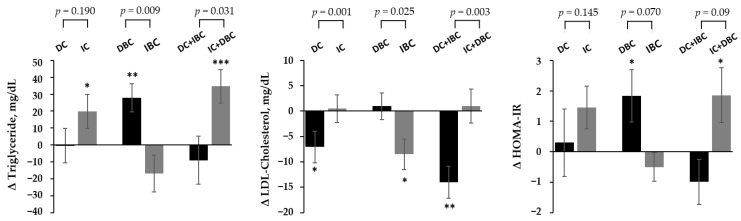
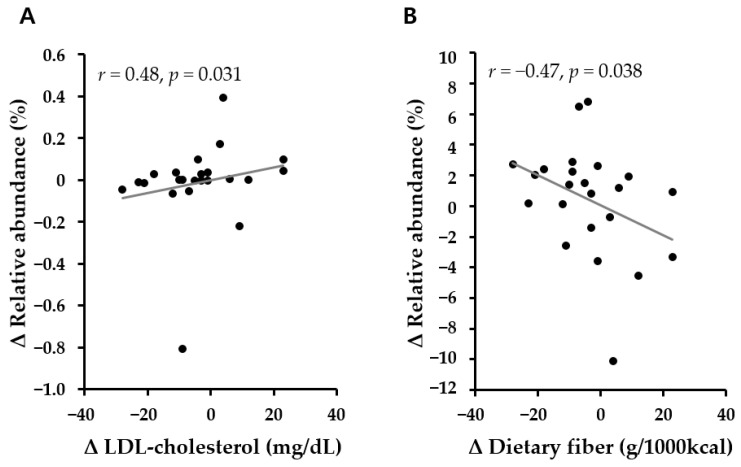
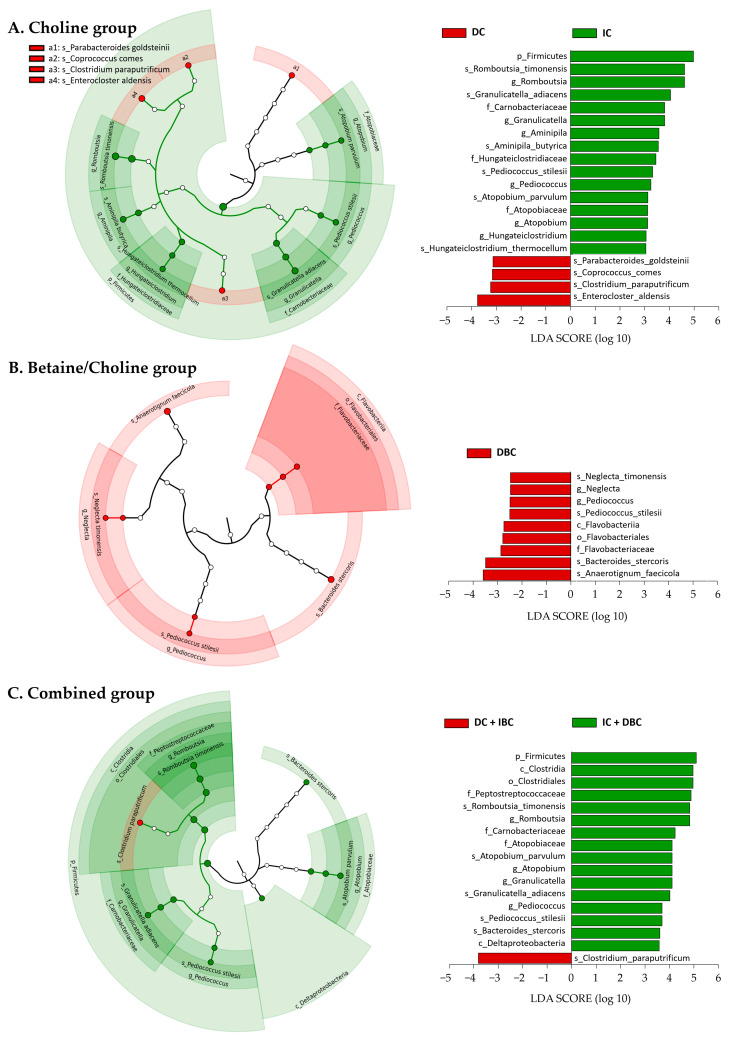
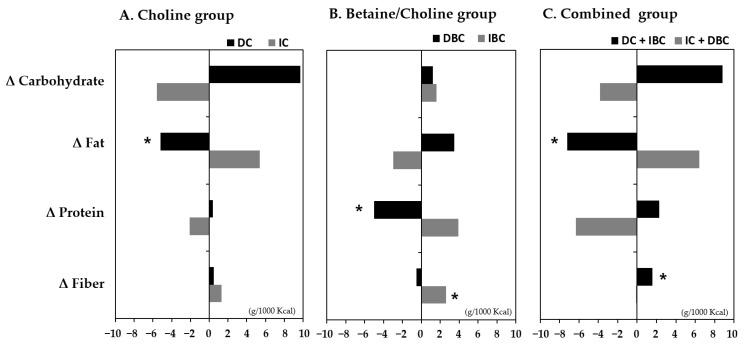
Trimethylamine -oxide (TMAO) and its precursors, including choline, betaine, and L-carnitine, are gut microbiota-related metabolites associated with the risk of obesity. We aimed (1) to comprehensively examine whether the changes in plasma TMAO and its precursors induced by lifestyle intervention are associated with the improvements in plasma metabolic parameters; and (2) to identify the fecal microbiome profiles and nutrient intakes associated with these metabolites and metabolic index. Data from 40 participants (obese children and adolescents) having the plasma metabolites data related to the changes in BMI z-scores after 6-month lifestyle intervention were analyzed. In this study, we observed that choline and the betaine-to-choline ratio (B/C) showed different patterns depending on the changes in BMI z-scores by the response to lifestyle intervention. During the 6 months, an increase in choline and a decrease in B/C were observed in non-responders. We also found that changes in choline and B/C were associated with the improvements in plasma lipid levels. Individuals who showed reduced choline or increased B/C from the baseline to 6 months had a significant decrease in LDL-cholesterol over 6 months compared to those with increased choline or decreased B/C, respectively. In addition, the increase in choline or decrease in B/C was associated with the increase in plasma triglycerides. The distribution of gut microbiota belonging to the Firmicutes, such as Clostridia, Clostridiales, Peptostreptococcaceae, , and was altered to be lower during the 6 months both as choline decreased and B/C increased. Moreover, the decrease in choline and the increase in B/C were associated with reduced fat intake and increased fiber intake after the 6-month intervention. Finally, lower abundance of showed the association with lower LDL-cholesterol and higher intake of fiber. In summary, we demonstrated that reduced choline and increased B/C by lifestyle intervention were associated with the improvements of LDL-cholesterol and triglycerides, low-fat and high-fiber intakes, and low abundance of Firmicutes. These indicate that changes to circulating choline and B/C could predict individuals' changes in metabolic compositions in response to the lifestyle intervention.
三甲胺氧化物(TMAO)及其前体,包括胆碱、甜菜碱和左旋肉碱,是与肥胖风险相关的肠道微生物群相关代谢物。我们旨在:(1)全面研究生活方式干预引起的血浆 TMAO 和其前体的变化是否与血浆代谢参数的改善相关;(2)确定与这些代谢物和代谢指标相关的粪便微生物组特征和营养素摄入。分析了 40 名参与者(肥胖儿童和青少年)的血浆代谢物数据,这些数据与 6 个月生活方式干预后 BMI z 分数的变化有关。在这项研究中,我们观察到胆碱和甜菜碱与胆碱的比值(B/C)根据生活方式干预的反应呈现出不同的模式。在 6 个月期间,在非应答者中观察到胆碱增加和 B/C 减少。我们还发现胆碱和 B/C 的变化与血浆脂质水平的改善有关。与基线相比,在 6 个月时胆碱减少或 B/C 增加的个体,与分别胆碱增加或 B/C 减少的个体相比,LDL-胆固醇在 6 个月内显著降低。此外,胆碱增加或 B/C 减少与血浆甘油三酯增加有关。在 6 个月期间,属于厚壁菌门的肠道微生物群的分布发生改变,例如梭菌、梭菌目、消化链球菌科、和 ,其含量下降,这与胆碱减少和 B/C 增加有关。此外,胆碱减少和 B/C 增加与 6 个月干预后脂肪摄入减少和纤维摄入增加有关。最后,较低的 丰度与较低的 LDL-胆固醇和较高的纤维摄入量有关。总之,我们表明,生活方式干预引起的胆碱减少和 B/C 增加与 LDL-胆固醇和甘油三酯的改善、低脂和高纤维摄入以及厚壁菌门的丰度降低有关。这表明循环胆碱和 B/C 的变化可以预测个体对生活方式干预的代谢成分变化。