Department of Emergency Medicine, Guangdong Provincial People's Hospital, Guangdong Academy of Medical Sciences, Guangzhou, China.
Department of Emergency Medicine, Beijing Key Laboratory of Cardiopulmonary Cerebral Resuscitation, Beijing Chaoyang Hospital, Capital Medical University, Beijing, China.
CNS Neurosci Ther. 2022 Feb;28(2):247-258. doi: 10.1111/cns.13765. Epub 2021 Nov 27.
Fisetin, the effective ingredient of the traditional Chinese medicine named Cotinus coggygria, is recommended to be active therapeutic in many disorders. However, its role in sepsis-associated encephalopathy (SAE) remains unclarified.
Cecal ligation and puncture (CLP) operation was performed to establish a rat model of SAE. Rats were grouped according to the surgery operation and fisetin administration. Cognitive impairment was assessed by Morris water maze test. Disruption of blood-brain barrier (BBB) integrity was detected by Evan's blue staining. The mitophagy, reactive oxygen species (ROS) generation, NLRP3 inflammasome activation, and pro-inflammatory cytokines levels were measured through western blot and double immunofluorescence labeling. A transmission electron microscope was applied for the observation of mitochondrial autophagosomes.
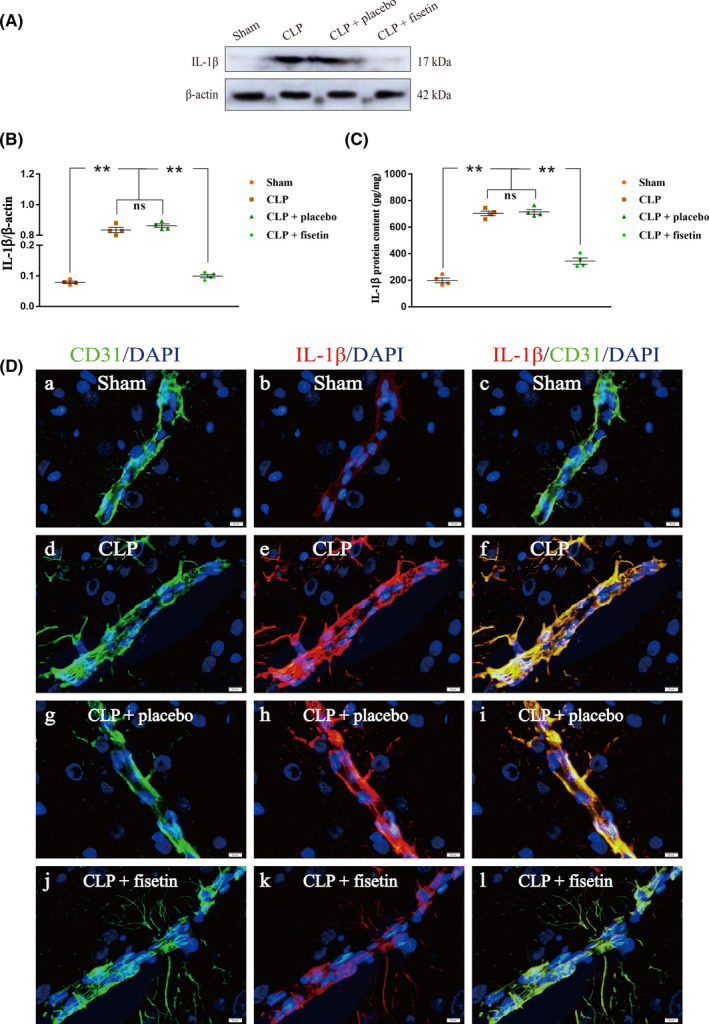
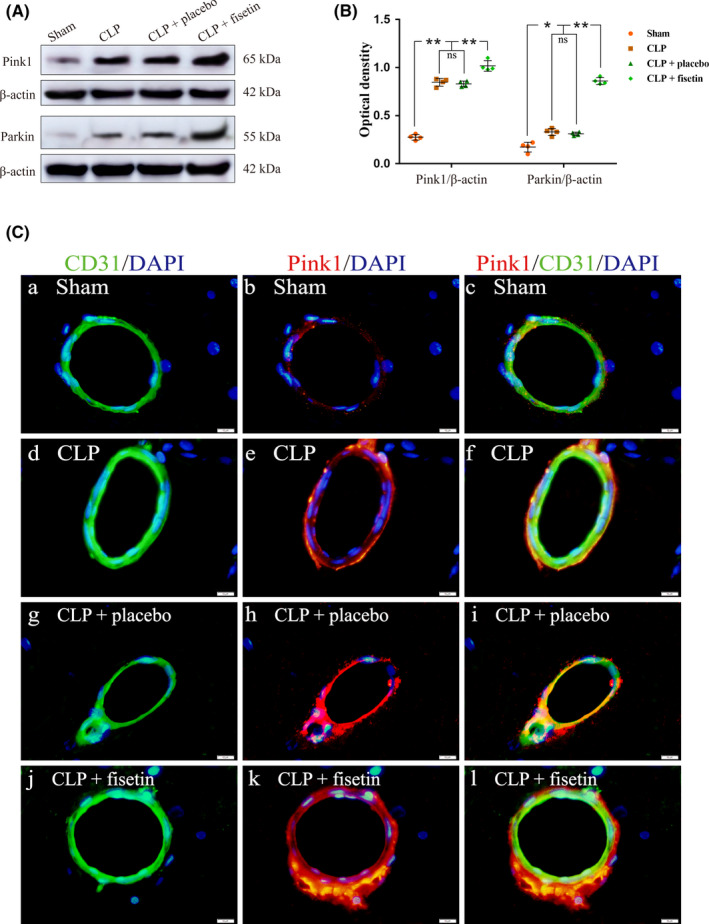
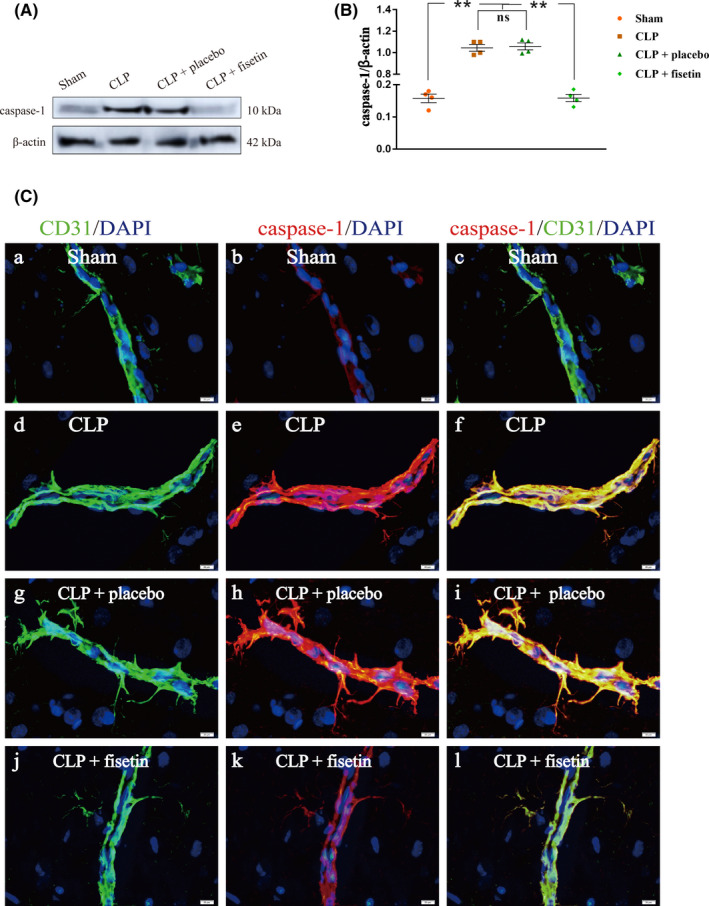
Rats in the CLP group presented increased expression of IL-1R1, pNF-κB, TNF-α, and iNOS in microglial cells, indicating severe inflammation in the central nervous system (CNS). Nevertheless, there was no increase in BBB permeability. Meanwhile, NLRP3 inflammasome was activated in cerebral microvascular endothelial cells (CMECs), presented with an elevation of caspase-1 expression and IL-1β secretion into CNS. In addition, we found fisetin significantly improved cognitive dysfunction in rats with SAE. Neuroprotective effects of fisetin might be associated with inhibition of neuroinflammation, represented with decreased expression of IL-1R1, pNF-κB, TNF-α, and iNOS in microglia. Furthermore, fisetin induced mitophagy, scavenged ROS, blocked NLRP3 inflammasome activation of CMECs, as evidenced by decreased expression of caspase-1 and reduced release of IL-1β into CNS.
Collectively, fisetin-blocked NLRP3 inflammasome activation via promoting mitophagy in CMECs may suppress the secretion of IL-1β into CNS, reduce neuroinflammation, and contribute to the amelioration of cognitive impairment.
漆树黄酮是传统中药地锦草的有效成分,被推荐用于多种疾病的活性治疗。然而,其在脓毒症相关性脑病(SAE)中的作用尚不清楚。
采用盲肠结扎穿孔(CLP)手术建立 SAE 大鼠模型。根据手术操作和漆黄素给药将大鼠分为不同组。通过 Morris 水迷宫试验评估认知障碍。伊文思蓝染色检测血脑屏障(BBB)完整性破坏。通过 Western blot 和双免疫荧光标记检测自噬、活性氧(ROS)生成、NLRP3 炎性小体激活和促炎细胞因子水平。透射电镜观察线粒体自噬体。
CLP 组大鼠小胶质细胞中白细胞介素-1受体 1(IL-1R1)、磷酸化核因子-κB(pNF-κB)、肿瘤坏死因子-α(TNF-α)和诱导型一氧化氮合酶(iNOS)表达增加,表明中枢神经系统(CNS)炎症严重。然而,BBB 通透性没有增加。同时,大脑微血管内皮细胞(CMECs)中 NLRP3 炎性小体激活,表现为 caspase-1 表达增加和 IL-1β分泌到 CNS。此外,我们发现漆黄素可显著改善 SAE 大鼠的认知功能障碍。漆黄素的神经保护作用可能与抑制神经炎症有关,表现为小胶质细胞中 IL-1R1、pNF-κB、TNF-α和 iNOS 的表达降低。此外,漆黄素诱导自噬,清除 ROS,阻断 CMECs 中 NLRP3 炎性小体的激活,表现为 caspase-1 表达降低,IL-1β分泌到 CNS 减少。
总之,漆黄素通过促进 CMECs 中的自噬来阻断 NLRP3 炎性小体的激活,可能会减少 IL-1β向 CNS 的分泌,减轻神经炎症,改善认知障碍。