Department of Epidemiological Sciences, Animal and Plant Health Agency, New Haw, Addlestone, Surrey, UK.
Department of Pathobiology and Population Sciences and London Centre for Neglected Tropical Disease Research, Royal Veterinary College, Hatfield, UK.
Parasit Vectors. 2021 Nov 27;14(1):590. doi: 10.1186/s13071-021-05092-8.
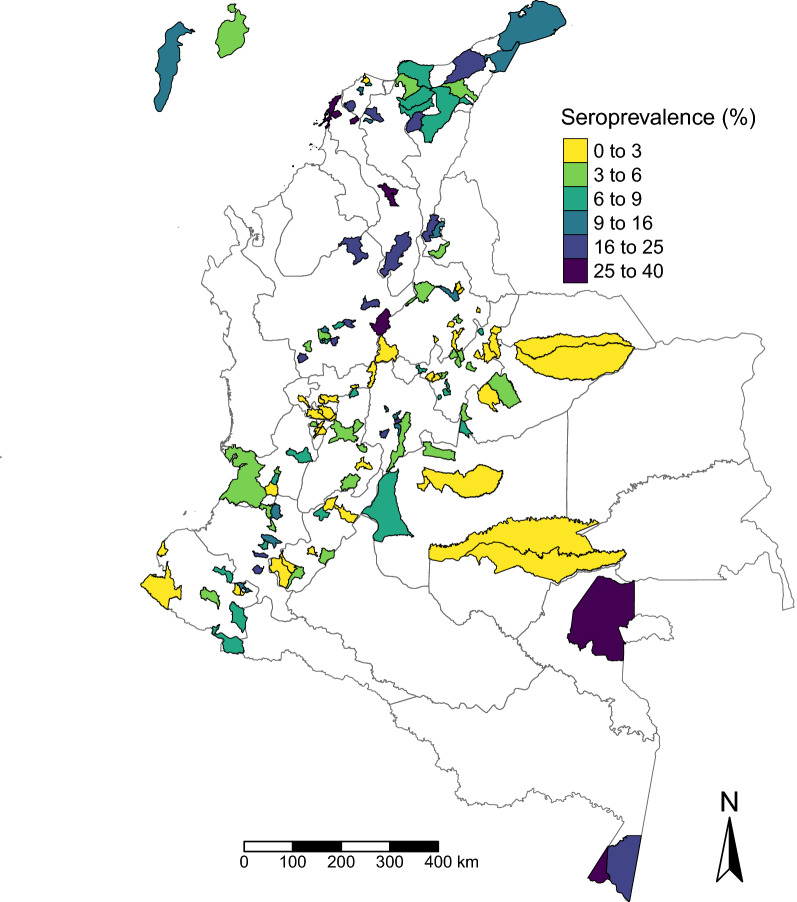
Cysticercosis is a zoonotic neglected tropical disease (NTD) that affects humans and pigs following the ingestion of Taenia solium eggs. Human cysticercosis poses a substantial public health burden in endemic countries. The World Health Organization (WHO) aims to target high-endemicity settings with enhanced interventions in 17 countries by 2030. Between 2008 and 2010, Colombia undertook a national baseline serosurvey of unprecedented scale, which led to an estimated seroprevalence of T. solium cysticercus antibodies among the general population of 8.6%. Here, we use contemporary geostatistical approaches to analyse this unique dataset with the aim of understanding the spatial distribution and risk factors associated with human cysticercosis in Colombia to inform how best to target intervention strategies.
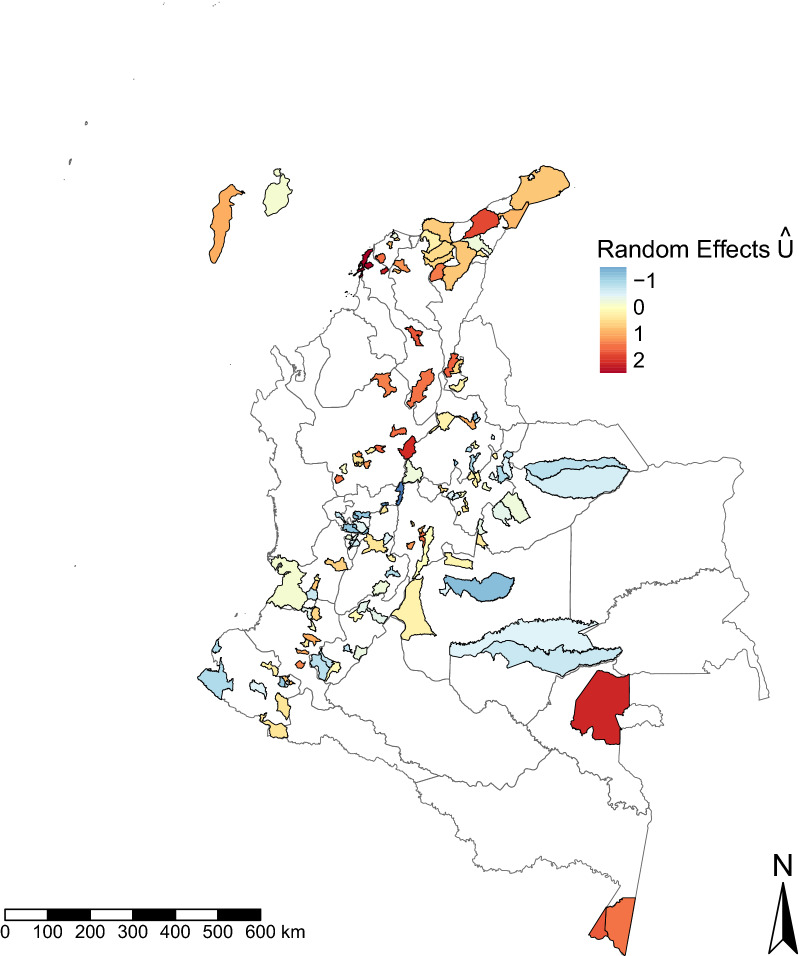
We used a geostatistical model to estimate individual and household risk factors associated with seropositivity to T. solium cysticercus antibodies from 29,253 people from 133 municipalities in Colombia. We used both independent and spatially structured random effects at neighbourhood/village and municipality levels to account for potential clustering of exposure to T. solium. We present estimates of the distribution and residual correlation of seropositivity at the municipality level.
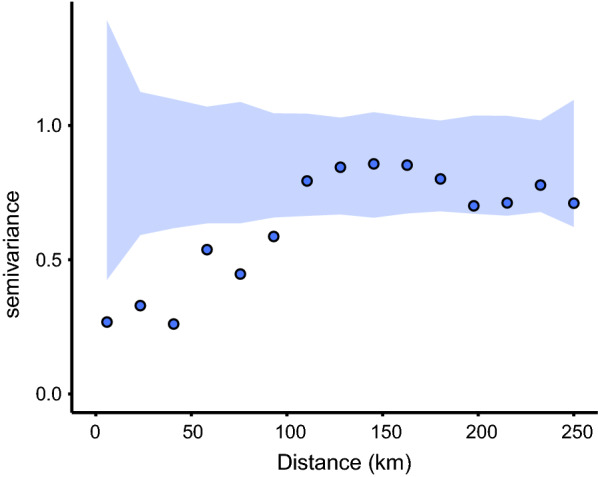
High seroprevalence was identified in municipalities located in the north and south of Colombia, with spatial correlation in seropositivity estimated up to approximately 140 km. Statistically significant risk factors associated with seropositivity to T. solium cysticercus were related to age, sex, educational level, socioeconomic status, use of rainwater, consumption of partially cooked/raw pork meat and possession of dogs.
In Colombia, the distribution of human cysticercosis is influenced by socioeconomic considerations, education and environmental factors related to the spread of T. solium eggs. This information can be used to tailor national intervention strategies, such as targeting spatial hotspots and more highly exposed groups, including displaced people and women. Large-scale seroprevalence surveys accompanied by geospatial mapping are an essential step towards reaching the WHO's 2021‒2030 NTD roadmap targets.
囊虫病是一种动物源性的被忽视的热带病(NTD),人在摄入猪带绦虫虫卵后会感染该病。在流行国家,人体囊虫病对公共卫生造成了巨大的负担。世界卫生组织(WHO)计划到 2030 年在 17 个国家针对高流行地区加强干预措施。2008 年至 2010 年期间,哥伦比亚开展了规模空前的全国基线血清学调查,估计该国普通人群的猪带绦虫囊尾蚴抗体血清阳性率为 8.6%。在这里,我们使用当代地统计学方法来分析这个独特的数据集,目的是了解哥伦比亚人体囊虫病的空间分布和相关风险因素,为最佳干预策略提供信息。
我们使用地统计学模型,分析了来自哥伦比亚 133 个城市的 29253 人,评估了与猪带绦虫囊尾蚴抗体血清阳性相关的个体和家庭风险因素。我们在邻里/村庄和城市两级使用独立的和空间结构的随机效应来解释潜在的猪带绦虫暴露聚类。我们在城市一级呈现了血清阳性的分布和残差相关性的估计值。
在哥伦比亚北部和南部的城市中发现了高血清阳性率,在 140 公里左右的范围内估计了血清阳性的空间相关性。与猪带绦虫囊尾蚴血清阳性相关的统计学显著风险因素与年龄、性别、教育程度、社会经济地位、使用雨水、食用半生不熟/生猪肉和拥有狗有关。
在哥伦比亚,人体囊虫病的分布受到社会经济因素、教育和与猪带绦虫卵传播有关的环境因素的影响。这些信息可以用于调整国家干预策略,例如针对空间热点和更广泛的高暴露人群,包括流离失所者和妇女。大规模的血清流行率调查伴随着地理空间映射是实现世界卫生组织 2021-2030 年 NTD 路线图目标的重要步骤。