Vrije Universiteit Brussel (VUB), Liver Cell Biology Research Group, Jette, Belgium.
KU Leuven, VIB Center for Cancer Biology, Leuven, Belgium.
Cell Death Dis. 2021 Nov 27;12(12):1110. doi: 10.1038/s41419-021-04377-1.
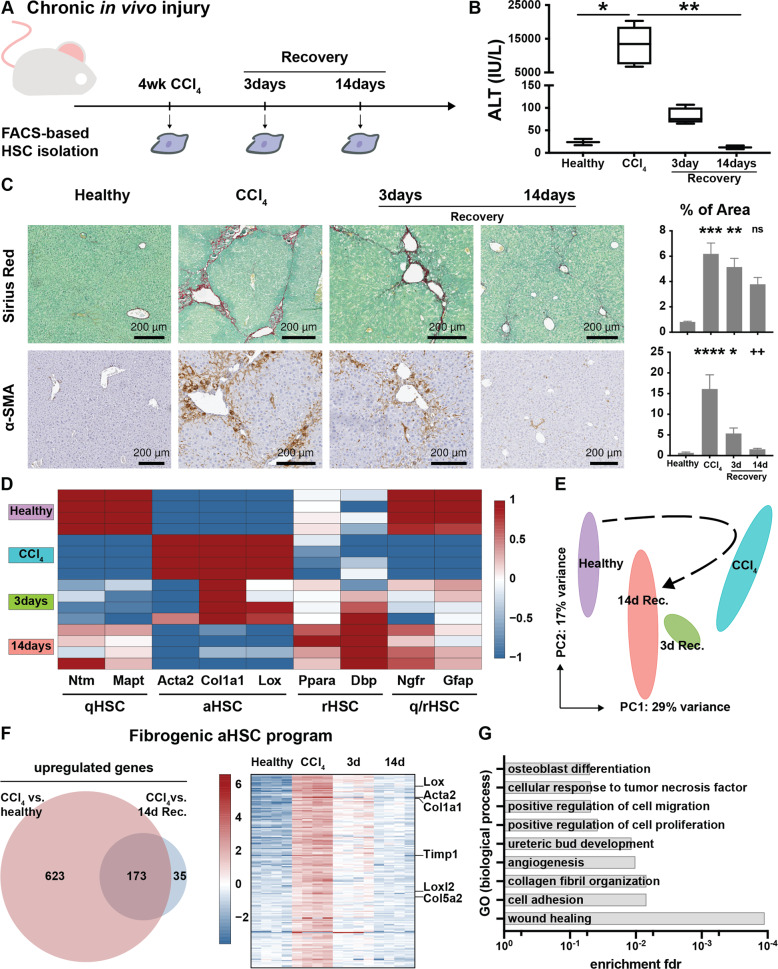
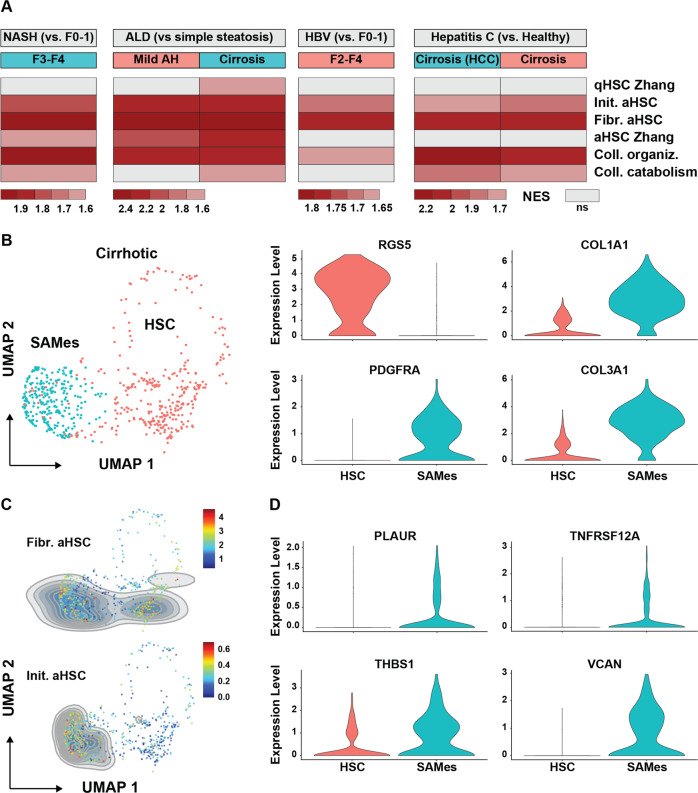
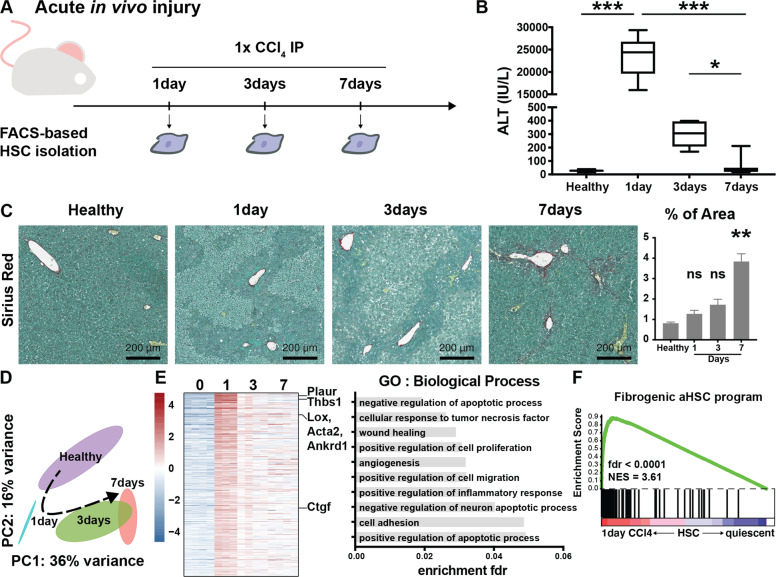
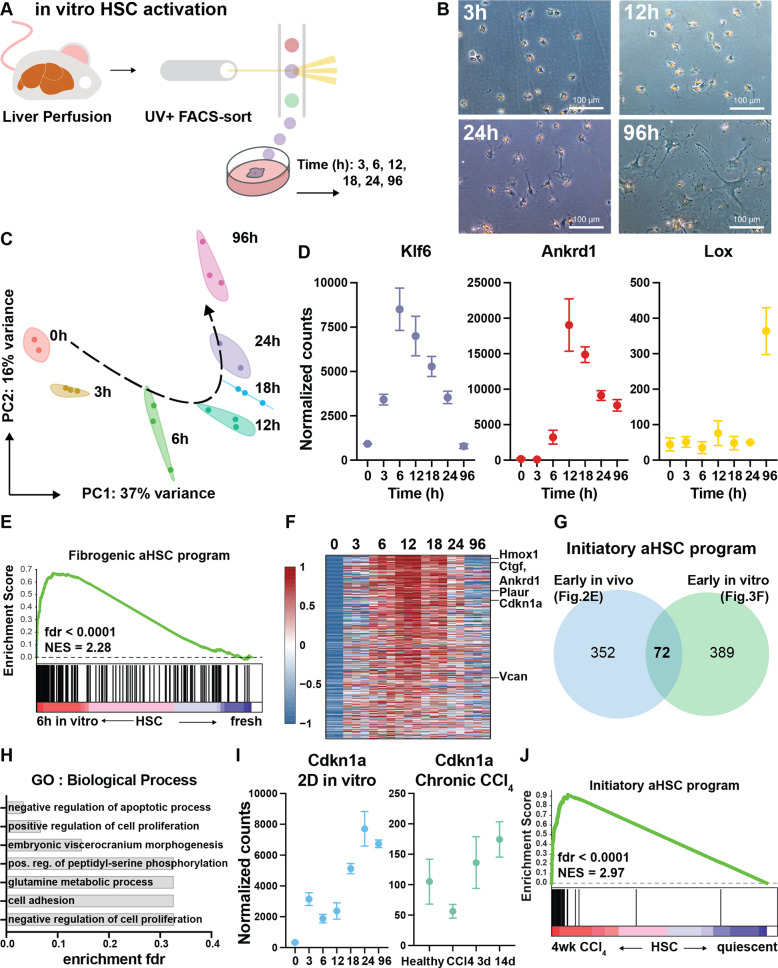
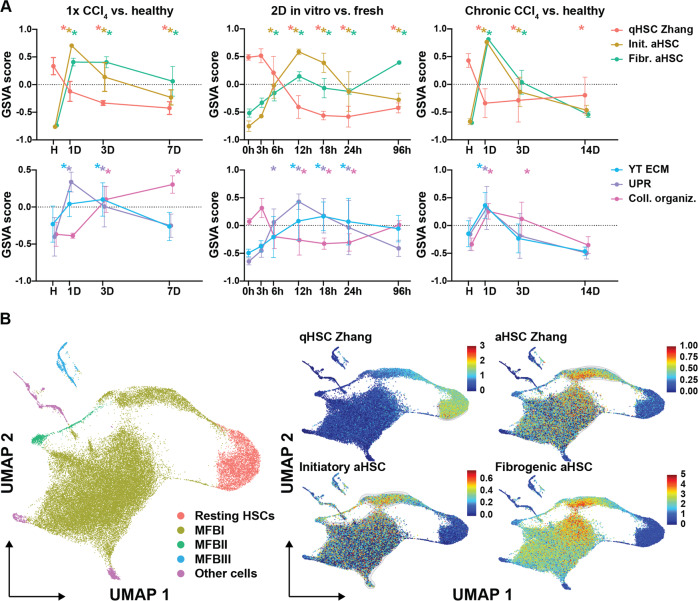
Activated hepatic stellate cells (aHSC) are the main source of extra cellular matrix in liver fibrosis. Activation is classically divided in two phases: initiation and perpetuation. Currently, HSC-based therapeutic candidates largely focus on targeting the aHSCs in the perpetuation phase. However, the importance of HSC initiation during chronic liver disease (CLD) remains unclear. Here, we identified transcriptional programs of initiating and activated HSCs by RNA sequencing, using in vitro and in vivo mouse models of fibrosis. Importantly, we show that both programs are active in HSCs during murine and human CLD. In human cirrhotic livers, scar associated mesenchymal cells employ both transcriptional programs at the single cell level. Our results indicate that the transcriptional programs that drive the initiation of HSCs are still active in humans suffering from CLD. We conclude that molecules involved in the initiation of HSC activation, or in the maintenance of aHSCs can be considered equally important in the search for druggable targets of chronic liver disease.
活化的肝星状细胞(aHSC)是肝纤维化中细胞外基质的主要来源。活化通常分为两个阶段:启动和持续。目前,基于 HSC 的治疗候选物主要集中在针对持续期的 aHSCs。然而,HSC 启动在慢性肝病(CLD)中的重要性仍不清楚。在这里,我们通过 RNA 测序,使用体外和体内纤维化小鼠模型,鉴定了起始和活化的 HSC 的转录程序。重要的是,我们表明,在小鼠和人类 CLD 中,这两个程序在 HSCs 中都是活跃的。在人类肝硬化肝脏中,瘢痕相关间充质细胞在单细胞水平上同时使用这两个转录程序。我们的研究结果表明,驱动 HSC 启动的转录程序在患有 CLD 的人类中仍然活跃。我们得出结论,参与 HSC 激活启动或 aHSCs 维持的分子在寻找慢性肝病的药物靶点方面同样重要。