Ben Mansour Ghassen, Kacem Asma, Ishak Mohamed, Grélot Laurent, Ftaiti Foued
Department of Physiology and Functional Explorations, IBN EL JAZZAR Medicine Faculty, Sousse, Tunisia.
Institute of Sport and Physical Education, Manouba University, Ksar-Said, Tunisia.
BMC Sports Sci Med Rehabil. 2021 Nov 28;13(1):150. doi: 10.1186/s13102-021-00376-z.
The aim of this study is to determine and to compare the effect of sex differences in percentage of body fat on the strength and power performances of the legs and arms during short maximal exercise.
72 male and 64 female students aged 20 to 23 years were enrolled in this study. After assessing their morphological characteristics (body mass, height and percentage of fat mass), a squat jump test (SJ), a 5 successive jump test (5JT), a hand gripping (HG) and back strength (BS) tests have been conducted for each subject. Male students were re-tested after being weighed down with a weight equivalent to the mean differences in body fat recorded between the two sexes in the form of a loaded worn vest.
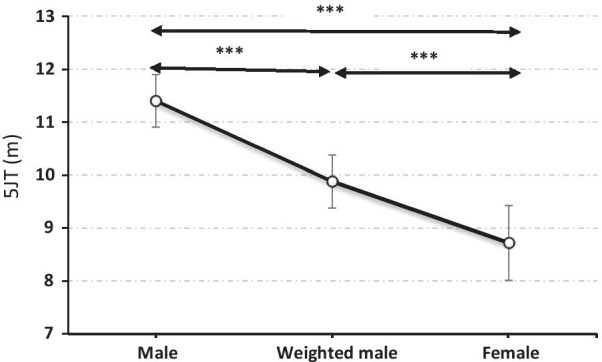
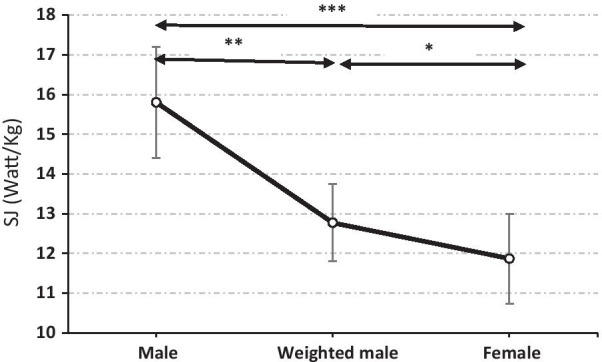
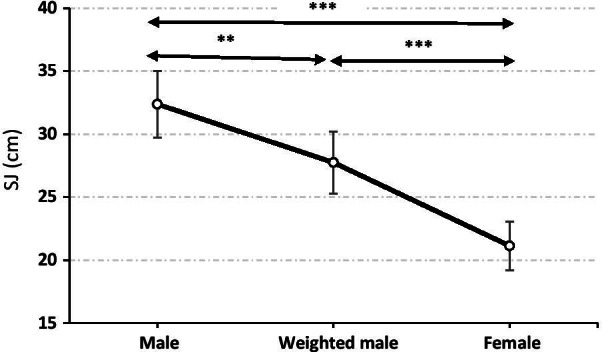
Male are 15.7% heavier and 7.4% taller and presented a percentage of fat mass (17.2 ± 1.8%) significantly (p < 0.001) lower than that of women subject (25.0 ± 2.5%) (difference male vs female for fat mass: -45.5%). HG, BS, 5JT and SJ performances were significantly higher in males (44 ± 5 kg, 141 ± 2 kg, 11 ± 1 m and 32.4 ± 2,7 cm, respectively) than in females (31.0 ± 4 kg, 81.6 ± 13 kg, 8.7 ± 0.7 m and 21.1 ± 1.9 cm, respectively). In the control (unloaded) condition, the relative difference between males and females represented 23.5% and 34.7% of the male performances for 5JT and SJ, respectively. In the weighted condition, the relative difference between weighted males and females still represented 11.7% and 23.8% of the weighted male performances for 5JT and SJ, respectively. Cancelling the sex difference in fat mass by adding weight in males reduced by 50.1% the sex difference during 5JT and 31.4% and 71.7% for hight and power results, respectively during SJ test.
During short and maximal exercise, male performed better with their hands, back and legs than female students. Excess fat for female students has a disadvantageous effect on vertical and horizontal jumps performances. The persistence of sex differences after weighting of male students indicates that body fat is responsible for 30 to 70% of the observed differences between sexes performances and power outcomes during jump tests.
本研究旨在确定并比较体脂百分比的性别差异对短时间最大强度运动中腿部和手臂力量及功率表现的影响。
本研究招募了72名年龄在20至23岁之间的男性学生和64名女性学生。在评估他们的形态特征(体重、身高和脂肪量百分比)后,对每个受试者进行了深蹲跳测试(SJ)、5次连续跳跃测试(5JT)、握力测试(HG)和背部力量测试(BS)。男性学生在穿上相当于两性记录的体脂平均差异重量的负重背心后再次进行测试。
男性体重比女性重15.7%,身高比女性高7.4%,其脂肪量百分比(17.2±1.8%)显著低于女性受试者(25.0±2.5%)(p<0.001)(男性与女性脂肪量差异:-45.5%)。男性的握力、背部力量、5JT和SJ表现(分别为44±5kg、141±2kg、11±1m和32.4±2.7cm)显著高于女性(分别为31.0±4kg、81.6±13kg、8.7±0.7m和21.1±1.9cm)。在对照(无负重)条件下,男性和女性在5JT和SJ中的相对差异分别占男性表现的23.5%和34.7%。在负重条件下,负重男性和女性在5JT和SJ中的相对差异分别仍占负重男性表现的11.7%和23.8%。通过给男性增加重量来消除体脂的性别差异,在5JT中使性别差异减少了50.1%,在SJ测试中,高度和功率结果的性别差异分别减少了31.4%和71.7%。
在短时间最大强度运动中,男性在手部、背部和腿部的表现优于女性学生。女性学生过多的脂肪对垂直和水平跳跃表现有不利影响。男性学生负重后性别差异仍然存在,这表明在跳跃测试中,体脂导致了两性表现和功率结果中观察到的差异的30%至70%。