Rehman Saifur, Rantam Fedik Abdul, Rehman Abdul, Effendi Mustofa Helmi, Shehzad Aamir
Division of Veterinary Public Health, Faculty of Veterinary Medicine, Universitas, Airlangga, Surabaya Indonesia.
Department of Epidemiology and Public Health, University of Veterinary and Animal Sciences, Lahore, Pakistan.
Vet World. 2021 Sep;14(9):2518-2526. doi: 10.14202/vetworld.2021.2518-2526. Epub 2021 Sep 25.
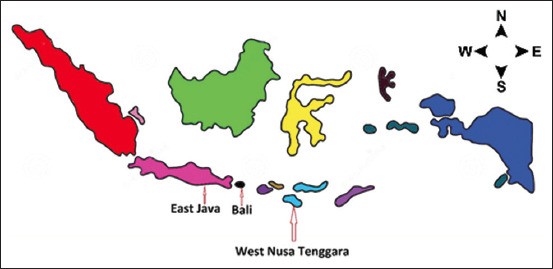
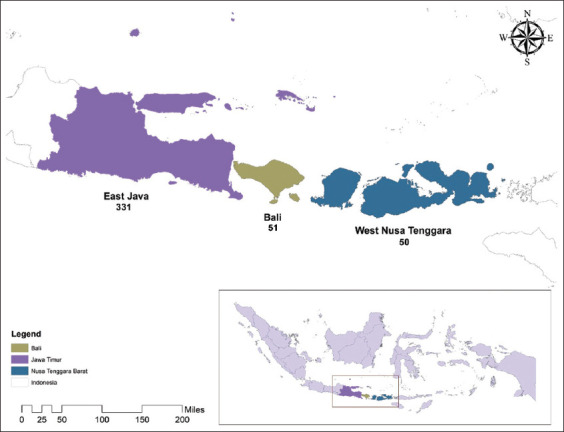
Rabies is an important viral zoonotic disease that is mostly transmitted through the bite of a rabid dog. Despite serious efforts regarding its control, rabies is still endemic in many provinces of Indonesia. The study aims to assess the knowledge, attitudes, and practices (KAP) related to rabies in urban and rural areas in three provinces of Indonesia.
s: A total of 432 respondents of different age groups, educational levels, geographical areas, and occupations participated in this study. Data were collected using a pre-designed questionnaire with online and offline modes to assess the KAP of rabies among the respondents. A series of Chi-square tests and frequency distribution analyses were performed to determine associations between response variables.
Of the 432 participants, 56.9% were aware of the clinical signs of rabies. Excepting for people at high risk of contracting the disease (e.g., veterinarians), most respondents (83.1%) were not vaccinated against rabies. Surprisingly, 79.4 % of those who were bitten by an infected dog did not seek medical care from the doctor and approximately 71.8% had poor knowledge of rabies control and vaccine campaigns. Of all respondents, 64% (p<0.05, odds ratio=1.63) were vaccinated after an infected dog bite. Similarly, 32% (p<0.05, odds ratio=1.59) were aware of surveys and vaccinations in their areas. In contrast, 20.7% (p<0.05, odds ratio=0.593) reported that rabid dogs were killed in their areas. The majority (89.60%) of the respondents were aware of the fact that rabies can cause death. Most of the respondents (93%) knew that rabies is caused by an infected dog bite. The overall levels of KAP among the respondents were good.
The findings of the current study generally show that participants had good knowledge about clinical signs based on their frequency percentage, but lacked knowledge regarding medical treatment and surveys for awareness and vaccination of rabies. Overall, a significant (p<0.05, odds ratio>1) relationship was found among the KAP of participants. This depicts that the majority of the population is aware of rabies and factors involved in its transmission.
狂犬病是一种重要的病毒性人畜共患病,主要通过疯狗咬伤传播。尽管在狂犬病防控方面付出了巨大努力,但在印度尼西亚的许多省份,狂犬病仍然流行。本研究旨在评估印度尼西亚三个省份城乡地区与狂犬病相关的知识、态度和行为(KAP)。
共有432名不同年龄组、教育水平、地理区域和职业的受访者参与了本研究。使用预先设计的问卷,通过线上和线下方式收集数据,以评估受访者对狂犬病的KAP。进行了一系列卡方检验和频率分布分析,以确定反应变量之间的关联。
在432名参与者中,56.9%的人知晓狂犬病的临床症状。除了感染狂犬病风险较高的人群(如兽医)外,大多数受访者(83.1%)未接种狂犬病疫苗。令人惊讶的是,79.4%被感染狗咬伤的人没有就医,约71.8%的人对狂犬病防控和疫苗接种活动了解不足。在所有受访者中,64%(p<0.05,优势比=1.63)在被感染狗咬伤后接种了疫苗。同样,32%(p<0.05,优势比=1.59)知晓所在地区的调查和疫苗接种情况。相比之下,20.7%(p<0.05,优势比=0.593)报告所在地区的疯狗被扑杀。大多数受访者(89.60%)知道狂犬病会导致死亡。大多数受访者(93%)知道狂犬病是由感染狗咬伤引起的。受访者的KAP总体水平良好。
本研究结果总体表明,基于频率百分比,参与者对临床症状有较好的了解,但在狂犬病的医疗救治以及宣传和疫苗接种调查方面缺乏相关知识。总体而言,在参与者的KAP之间发现了显著(p<0.05,优势比>1)的关系。这表明大多数人知晓狂犬病及其传播相关因素。