University of Calgary, Calgary, AB, Canada.
Integr Cancer Ther. 2021 Jan-Dec;20:15347354211061733. doi: 10.1177/15347354211061733.
Cancer treatments can cause significant gastrointestinal (GI) health issues, and negatively affect patient's psychosocial health and quality of life (QOL). Novel, integrative strategies using prebiotics and probiotics have been explored for treating adverse cancer treatment-related side effects. We evaluated the current literature for interventions using prebiotics or probiotics specifically to treat GI and psychosocial health issues in cancer patients and survivors.
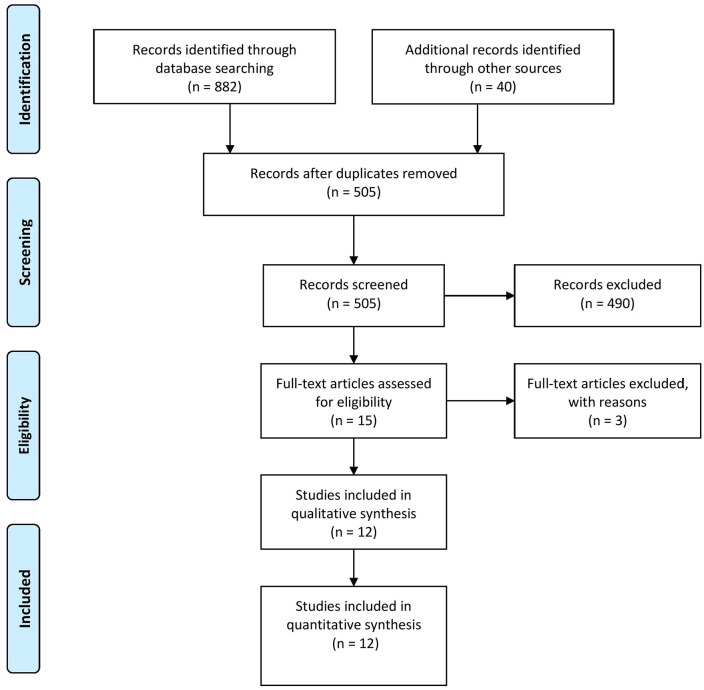
Five databases (PubMed, MEDLINE (Ovid), CINHAL, PsychINFO, Web of Science) were searched for studies with prebiotic or probiotic interventions where GI and/or psychosocial health outcomes were measured in adult cancer patients and survivors, and published before September 12th 2021.
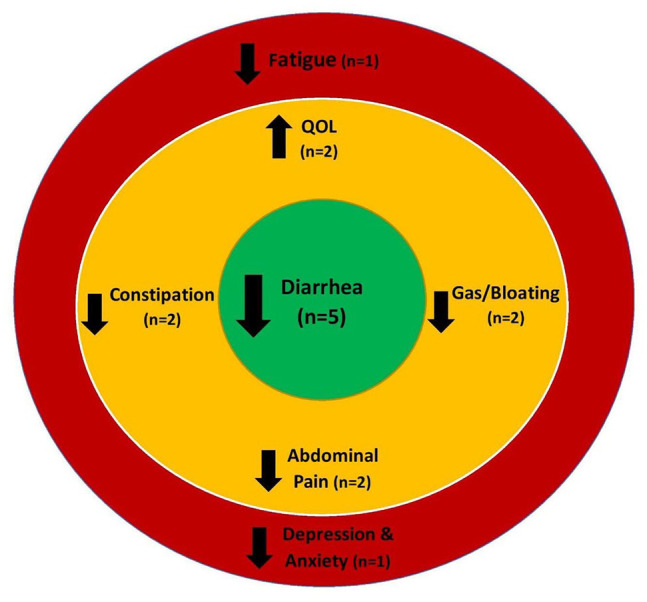
Twelve studies (N = 974 participants) meeting the inclusion criteria were identified (randomized controlled trials [n = 10], single-group pre-post studies [n = 2]). Ten studies were conducted with patients on active cancer treatment, and 2 studies treated patients after anti-cancer therapies. Three studies used prebiotics, 7 studies used probiotics, and 2 studies used a combination therapy. The most commonly used probiotic strains were from the genus. There was minimal evidence for prebiotics to improve GI or psychosocial health. Probiotics were associated with significant improvements in abdominal pain (n = 2), gas/bloating (n = 2), and especially diarrhea (n = 5), and with improvements in anxiety (n = 1), depression (n = 1), fatigue (n = 1), and QOL (n = 2).
Studies specifically examining effects of prebiotics and probiotics on GI and psychosocial health outcomes are scarce. Probiotic intervention may improve some GI symptoms in cancer patients, and QOL in survivors. Controlled trials that consistently include GI and psychosocial health outcomes are needed.
癌症治疗会引起严重的胃肠道(GI)健康问题,并对患者的心理社会健康和生活质量(QOL)产生负面影响。已经探索了使用益生元和益生菌的新型综合策略来治疗与癌症治疗相关的不良反应。我们评估了使用益生元或益生菌专门治疗癌症患者和幸存者胃肠道和心理社会健康问题的当前文献。
在五个数据库(PubMed、MEDLINE(Ovid)、CINHAL、PsychINFO、Web of Science)中搜索了关于益生元或益生菌干预的研究,这些研究在成年癌症患者和幸存者中测量了胃肠道和/或心理社会健康结果,并于 2021 年 9 月 12 日之前发表。
确定了符合纳入标准的 12 项研究(N=974 名参与者)(随机对照试验 [n=10],单组前后研究 [n=2])。10 项研究针对正在接受癌症治疗的患者进行,2 项研究针对癌症治疗后的患者进行。3 项研究使用了益生元,7 项研究使用了益生菌,2 项研究使用了联合治疗。最常用的益生菌菌株来自属。益生元改善胃肠道或心理社会健康的证据很少。益生菌与腹痛(n=2)、气体/腹胀(n=2)、特别是腹泻(n=5)的显著改善以及焦虑(n=1)、抑郁(n=1)、疲劳(n=1)和生活质量(n=2)的改善相关。
专门研究益生元和益生菌对胃肠道和心理社会健康结果影响的研究很少。益生菌干预可能改善癌症患者的一些胃肠道症状和幸存者的生活质量。需要进行一致纳入胃肠道和心理社会健康结果的对照试验。