Department of Oral Pathology, Bahria University Medical and Dental College, Karachi 75530, Pakistan.
Prosthodontics Unit, School of Dental Sciences, Health Campus, Universiti Sains Malaysia, 16150 Kubang Kerian, Kota Bharu, Kelantan, Malaysia.
Biomed Res Int. 2021 Oct 25;2021:5437237. doi: 10.1155/2021/5437237. eCollection 2021.
The present study was aimed at assessing the impact of teledentistry, its application, and trends in uplifting dental practice and clinical care around the world. . The present observational study comprised of an electronic survey distributed among dental professionals around the globe. The validated survey form consisted of a total 26 questions with 5-point Likert scale response. The questionnaire used was divided into four domains: usefulness of teledentistry for patients, its usefulness in dental practice, its capacity to improve the existing practice, and the concerns attached to its use. The statistical analysis was performed using SPSS-25. ANOVA test was used to assess the effect of independent variables on dependent variables. A value of ≤0.05 was taken as statistically significant.
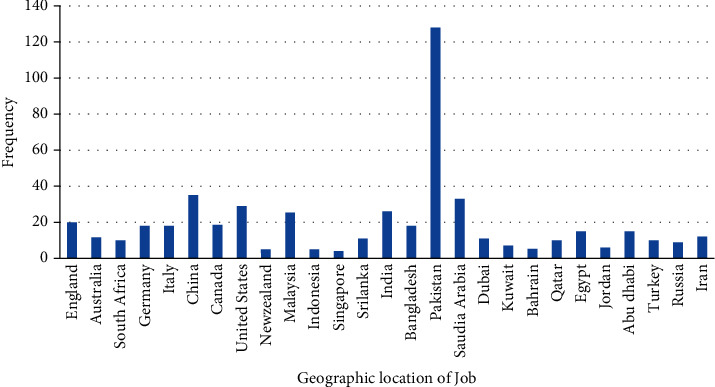
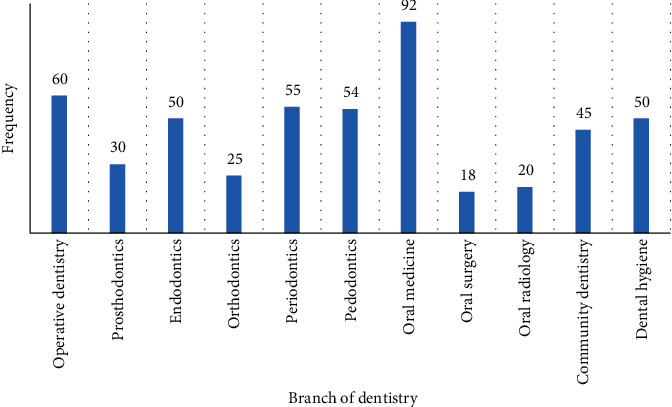
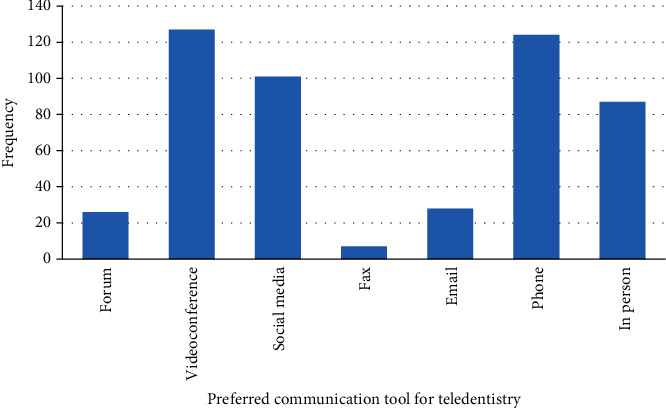
A total of 506 dental professionals participated in the study with the response rate of 89.39%. More than half of the participants (50-75%) endorsed that teledentistry is a useful tool for improving clinical practice as well as patient care. Two-thirds of the participants (69.96%) considered that teledentistry would reduce cost for the dental practices. On the other hand, about 50-70% of dental professionals expressed their concerns regarding the security of the data and consent of patients. The most preferred communication tool for teledentistry was reported to be videoconference followed by phone. The majority of participants recommended the use of teledentistry in the specialty of oral medicine, operative dentistry, and periodontics. There was a significant difference between the age, experience of dentists, and their qualifications with domains of teledentistry.
The overall impact of dental professionals towards teledentistry was positive with adequate willingness to incorporate this modality in their clinical practice. However, the perceived concerns pertaining to teledentistry are significant impediments towards its integration within the oral health system. An in-depth study of its business model and cost-benefit needs of time, especially in the context of developing countries, in order to avail the optimum benefits of teledentistry.
本研究旨在评估远程牙科及其应用对全球牙科实践和临床护理的提升作用和趋势。本观察性研究包括一项在全球牙科专业人员中进行的电子调查。经验证的调查表格共包含 26 个问题,采用 5 点李克特量表作答。调查问卷分为四个领域:远程牙科对患者的有用性、在牙科实践中的有用性、改善现有实践的能力以及对其使用的担忧。统计分析使用 SPSS-25 进行。方差分析用于评估自变量对因变量的影响。取 值≤0.05 为统计学显著。
共有 506 名牙科专业人员参与了这项研究,回复率为 89.39%。超过一半的参与者(50-75%)认为远程牙科是改善临床实践和患者护理的有用工具。三分之二的参与者(69.96%)认为远程牙科将降低牙科实践的成本。另一方面,约 50-70%的牙科专业人员对数据的安全性和患者的同意表示担忧。远程牙科最受欢迎的沟通工具是视频会议,其次是电话。大多数参与者建议在口腔医学、口腔修复学和牙周病学等专业领域使用远程牙科。牙医的年龄、经验和资格与远程牙科的各个领域之间存在显著差异。
牙科专业人员对远程牙科的总体影响是积极的,他们有足够的意愿将这种模式纳入他们的临床实践。然而,对远程牙科的感知担忧是其整合到口腔健康系统中的重大障碍。需要深入研究其商业模式和成本效益,特别是在发展中国家的背景下,以充分利用远程牙科的优势。