GENUD (Growth, Exercise, Nutrition and Development) Research Group, Universidad de Zaragoza, Instituto Agroalimentario de Aragón (IA2), Instituto de Investigación Sanitaria de Aragón (IIS Aragón), Zaragoza, Spain; Centro de Investigación Biomédica en Red de Fisiopatología de la Obesidad y Nutrición (CIBEROBN), Instituto de Salud Carlos III, Madrid, Spain.
Department of Pediatrics, Imperial College London, London, United Kingdom.
Adv Nutr. 2022 Mar;13(2):355-375. doi: 10.1093/advances/nmab139. Epub 2023 Feb 10.
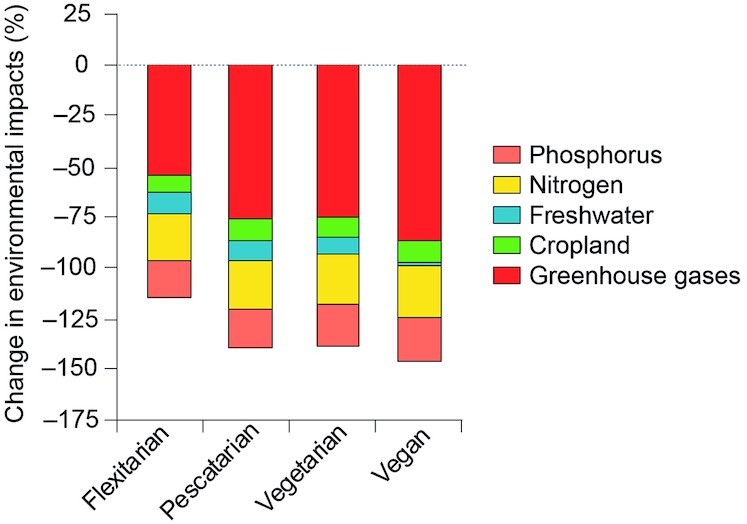
The global adoption of predominantly plant-based, sustainable, healthy diets will help reduce the risk of obesity- and malnutrition-related noncommunicable diseases while protecting the future health of our planet. This review examines the benefits and limitations of different types of plant-based diets in terms of health and nutrition, affordability and accessibility, cultural (ethical and religious) acceptability, and the environment (i.e., the 4 pillars underlying sustainable healthy diets). Results suggest that, without professional supervision, traditional plant-based diets (vegan, vegetarian, and pescatarian diets) can increase the risk of nutritional deficiencies among infants, children/adolescents, women, pregnant/lactating women, and the elderly. In contrast, flexitarian diets and territorial diversified diets (TDDs; e.g., Mediterranean and New Nordic diets) that include large quantities of plant-sourced foods, low amounts of red meat, and moderate amounts of poultry, fish, eggs, and dairy can meet the energy and nutrition needs of different populations without the need for dietary education or supplementation. Compared with vegan, vegetarian, and pescatarian diets, more diverse flexitarian diets and TDDs are associated with reduced volumes of food waste and may be more acceptable and easier to maintain for people who previously followed Western diets. Although flexitarian diets and TDDs have a greater impact on the environment than vegan, vegetarian, and pescatarian diets, the negative effects are considerably reduced compared with Western diets, especially if diets include locally sourced seasonal foods. Further studies are required to define more precisely optimal sustainable healthy diets for different populations and to ensure that diets are affordable and accessible to people in all countries.
全球范围内广泛采用以植物为主、可持续且健康的饮食结构,将有助于降低与肥胖和营养相关的非传染性疾病风险,同时保护我们星球的未来健康。本文从健康和营养、经济实惠和可及性、文化(伦理和宗教)接受度以及环境(即可持续健康饮食的 4 个支柱)等方面,审查了不同类型的植物性饮食的益处和局限性。研究结果表明,如果没有专业指导,传统的植物性饮食(纯素、素食和鱼素饮食)可能会增加婴幼儿、儿童/青少年、女性、孕妇/哺乳期妇女和老年人营养缺乏的风险。相比之下,弹性素食和地域多样化饮食(如地中海和新北欧饮食)中包含大量植物性食物、少量红肉和适量家禽、鱼类、鸡蛋和奶制品,可以满足不同人群的能量和营养需求,而无需进行饮食教育或补充。与纯素、素食和鱼素饮食相比,更多样化的弹性素食和地域多样化饮食与减少食物浪费量有关,并且可能更容易被之前遵循西方饮食的人接受和坚持。虽然弹性素食和地域多样化饮食对环境的影响大于纯素、素食和鱼素饮食,但与西方饮食相比,其负面影响要小得多,特别是如果饮食中包含当地当季的食物。还需要进一步的研究来为不同人群确定更精确的最佳可持续健康饮食,并确保饮食在所有国家都经济实惠且可及。