School of Public Health, Loma Linda University, CA.
Adv Nutr. 2019 Nov 1;10(Suppl_4):S380-S388. doi: 10.1093/advances/nmz019.
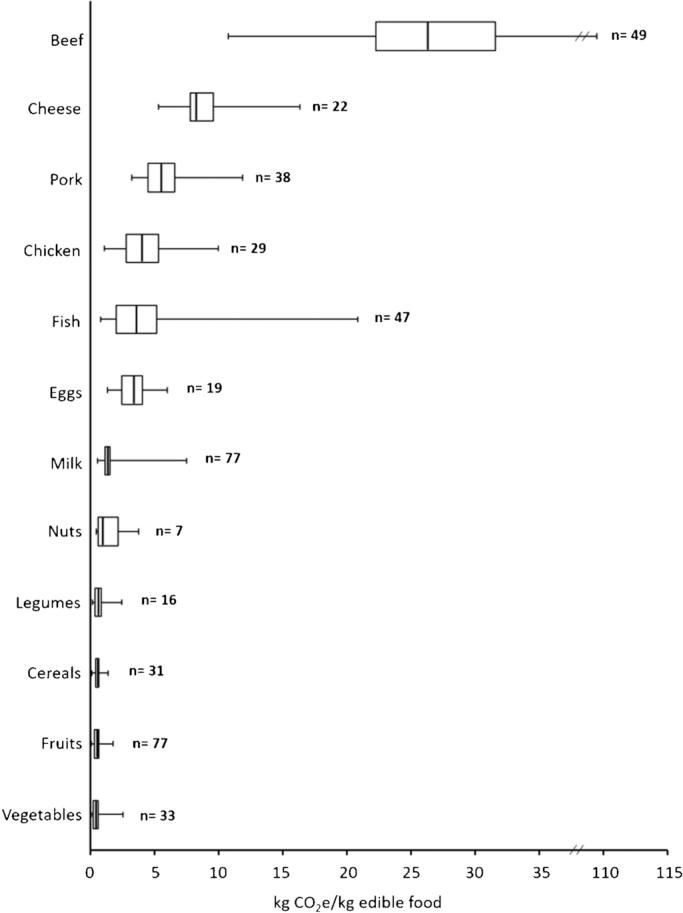
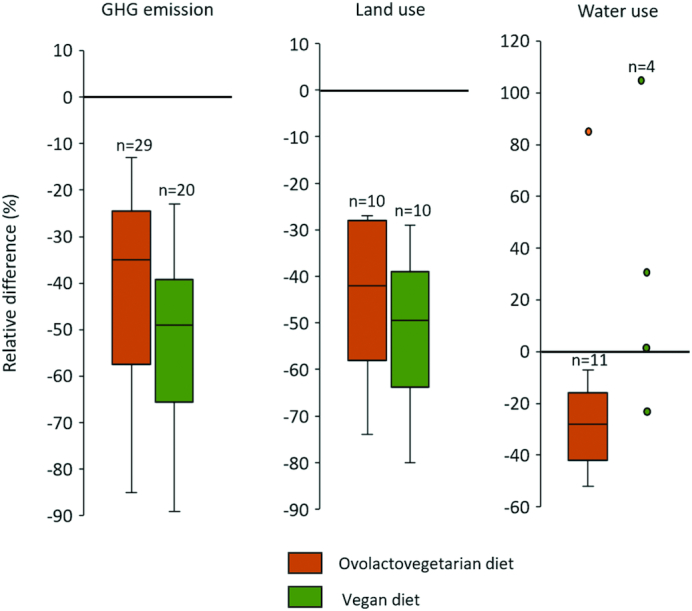
To maintain planetary health, human activities must limit the use of Earth's resources within finite boundaries and avoid environmental degradation. At present, food systems account for a substantial use of natural resources and contribute considerably to climate change, degradation of land, water use, and other impacts, which in turn threaten human health through food insecurity. Additionally, current dietary patterns, rich in animal products and excessive in calories, are detrimental to both population and planetary health. In order to resolve the diet-environment-health trilemma, population-level dietary changes are essential. Vegetarian diets are reported to be healthy options. Most plant-sourced foods are less resource intense and taxing on the environment than the production of animal-derived foods, particularly meat and dairy from ruminants. This review article explores simultaneously the environmental sustainability of vegetarian diets, and its alignment with people's health. In general, the progression from omnivorous to ovolactovegetarian and vegan diets is associated with increased environmental sustainability. Greenhouse gas emissions resulting from vegan and ovolactovegetarian diets are ∼50% and ∼35% lower, respectively, than most current omnivore diets, and with corresponding reductions in the use of natural resources. Concomitant health benefits could be obtained by shifting from current dietary patterns to sustainable vegetarian diets. Thus, there seems to be an alignment of health and environmental outcomes for vegetarian diets. Although this shows the human health and environmental sustainability benefits of vegetarian diets in high-income countries, questions remain about the challenges in other contexts and the political will to promote meat-free diets as the social norm.
为了维护行星健康,人类活动必须将地球资源的使用限制在有限的范围内,并避免环境恶化。目前,粮食系统大量消耗自然资源,并对气候变化、土地退化、水资源利用和其他影响做出重大贡献,这些反过来又通过粮食不安全威胁人类健康。此外,目前富含动物产品和卡路里过高的饮食模式既不利于人口健康,也不利于行星健康。为了解决饮食-环境-健康的三重困境,必须在人口层面上改变饮食结构。素食被认为是健康的选择。与动物源性食品相比,大多数植物性食品的资源密集度和对环境的影响都较低,特别是来自反刍动物的肉类和奶制品。这篇综述文章同时探讨了素食的环境可持续性及其与人类健康的一致性。一般来说,从杂食到杂食、素食的转变与环境可持续性的提高有关。素食和素食的温室气体排放量分别比大多数当前的杂食者饮食低约 50%和 35%,同时相应地减少了自然资源的使用。从当前的饮食模式转变为可持续的素食饮食,可以获得伴随而来的健康益处。因此,素食似乎在健康和环境结果方面是一致的。尽管这表明了素食在高收入国家对人类健康和环境可持续性的好处,但在其他情况下,仍然存在挑战和推广无肉饮食作为社会规范的政治意愿问题。