Department of Genetics and Institute of Bioinformatics, University of Georgia, Athens, GA 30602, USA.
Department of Genetics, University of Georgia, Athens, GA 30602, USA.
Genetics. 2021 Oct 2;219(2). doi: 10.1093/genetics/iyab113.
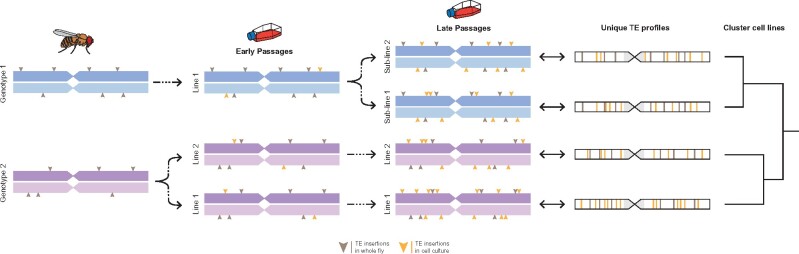
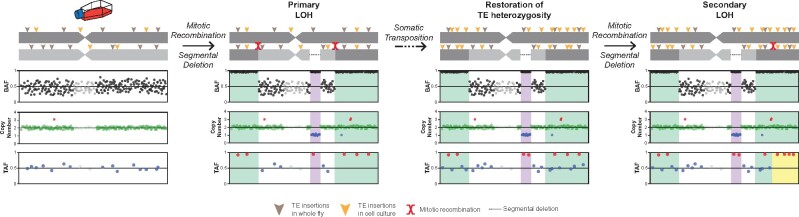
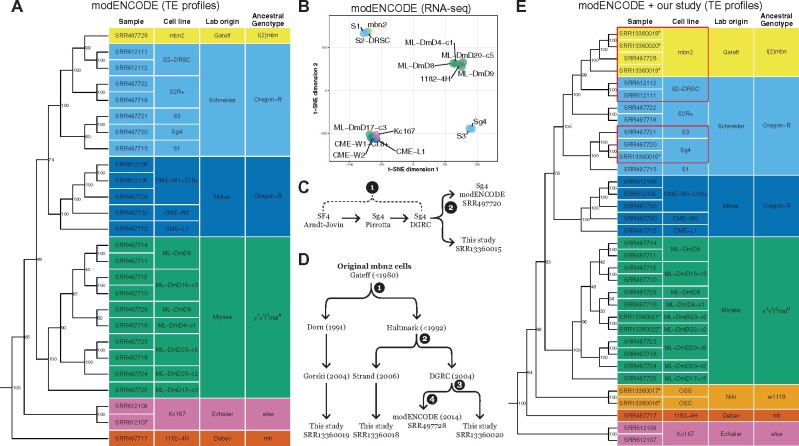
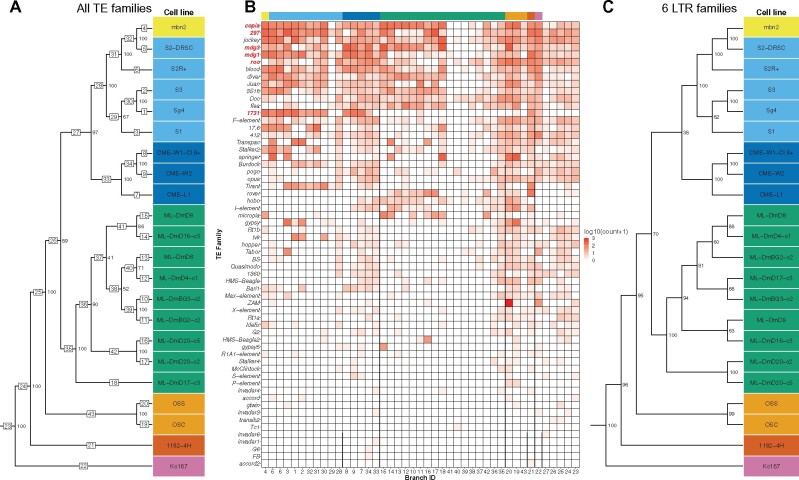
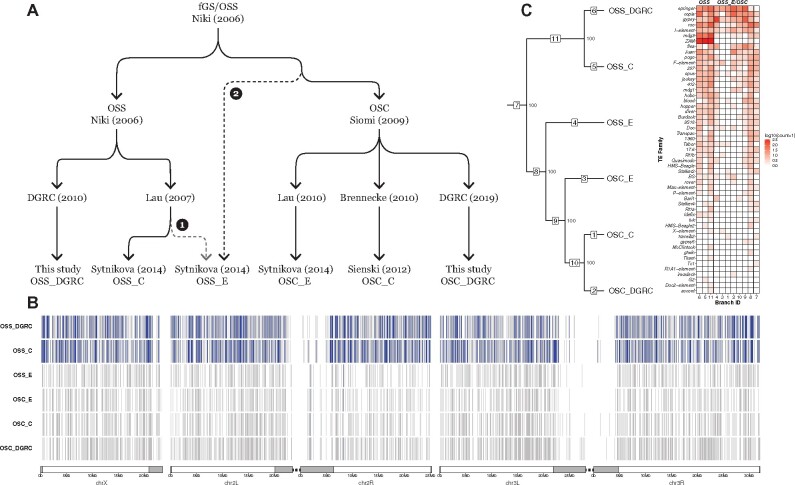
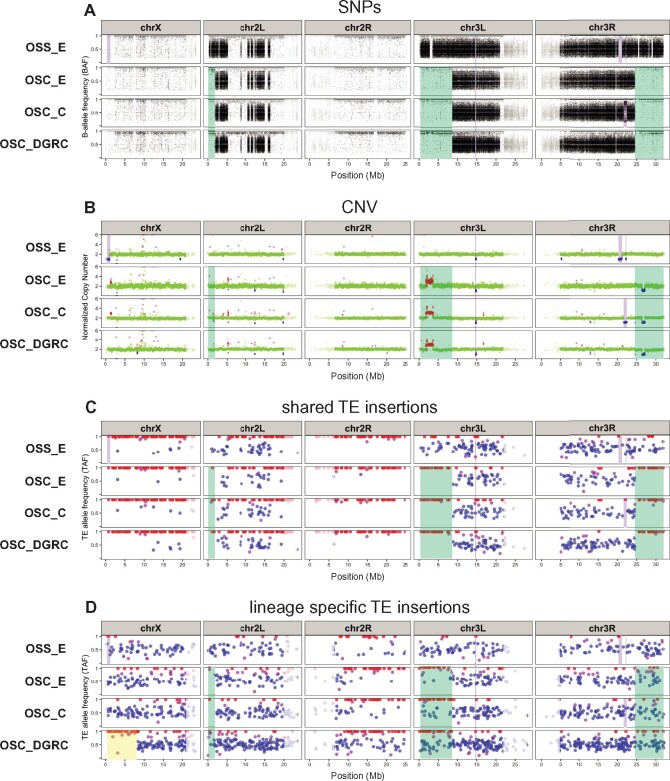
Cell culture systems allow key insights into biological mechanisms yet suffer from irreproducible outcomes in part because of cross-contamination or mislabeling of cell lines. Cell line misidentification can be mitigated by the use of genotyping protocols, which have been developed for human cell lines but are lacking for many important model species. Here, we leverage the classical observation that transposable elements (TEs) proliferate in cultured Drosophila cells to demonstrate that genome-wide TE insertion profiles can reveal the identity and provenance of Drosophila cell lines. We identify multiple cases where TE profiles clarify the origin of Drosophila cell lines (Sg4, mbn2, and OSS_E) relative to published reports, and also provide evidence that insertions from only a subset of long-terminal repeat retrotransposon families are necessary to mark Drosophila cell line identity. We also develop a new bioinformatics approach to detect TE insertions and estimate intra-sample allele frequencies in legacy whole-genome sequencing data (called ngs_te_mapper2), which revealed loss of heterozygosity as a mechanism shaping the unique TE profiles that identify Drosophila cell lines. Our work contributes to the general understanding of the forces impacting metazoan genomes as they evolve in cell culture and paves the way for high-throughput protocols that use TE insertions to authenticate cell lines in Drosophila and other organisms.
细胞培养系统可以深入了解生物学机制,但由于细胞系的交叉污染或标记错误,其结果在一定程度上不可重复。通过使用基因分型方案可以减轻细胞系鉴定错误的问题,这些方案已经为人类细胞系开发,但缺乏许多重要的模式物种的方案。在这里,我们利用转座元件(TEs)在培养的果蝇细胞中增殖的经典观察结果,证明全基因组 TE 插入图谱可以揭示果蝇细胞系的身份和来源。我们确定了多个案例,其中 TE 图谱相对于已发表的报道澄清了果蝇细胞系(Sg4、mbn2 和 OSS_E)的起源,并且还提供了证据表明只有少数长末端重复反转录转座子家族的插入足以标记果蝇细胞系的身份。我们还开发了一种新的生物信息学方法来检测 TE 插入并估计遗留全基因组测序数据中的样本内等位基因频率(称为 ngs_te_mapper2),这揭示了杂合性丢失是塑造鉴定果蝇细胞系的独特 TE 图谱的机制。我们的工作有助于全面了解后生动物基因组在细胞培养中进化时所受的影响,并为使用 TE 插入物在果蝇和其他生物体中验证细胞系的高通量方案铺平了道路。