Winton Centre for Risk & Evidence Communication, University of Cambridge, Cambridge, UK
Defence Science and Technology Laboratory, Salisbury, UK.
BMJ Open. 2021 Dec 1;11(12):e050869. doi: 10.1136/bmjopen-2021-050869.
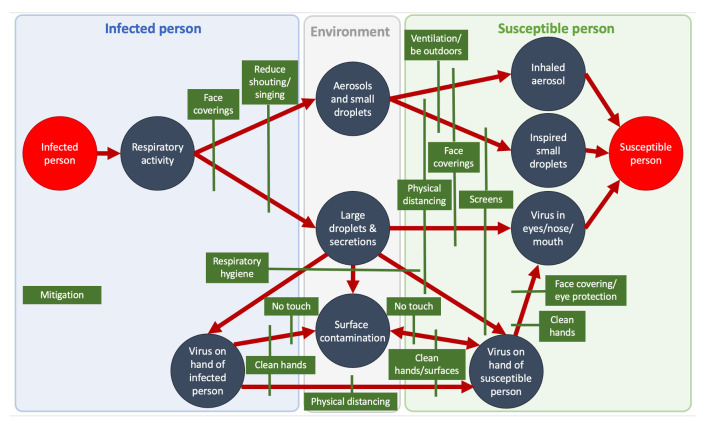
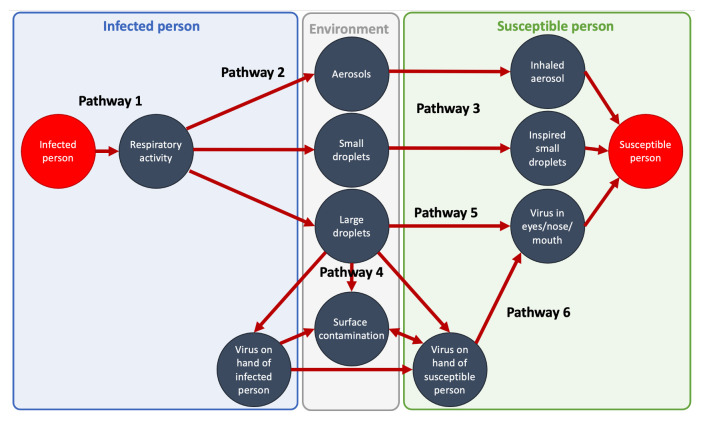
To help people make decisions about the most effective mitigation measures against SARS-CoV-2 transmission in different scenarios, the likelihoods of transmission by different routes need to be quantified to some degree (however uncertain). These likelihoods need to be communicated in an appropriate way to illustrate the relative importance of different routes in different scenarios, the likely effectiveness of different mitigation measures along those routes, and the level of uncertainty in those estimates. In this study, a pragmatic expert elicitation was undertaken to supply the underlying quantitative values to produce such a communication tool.
Twenty-seven individual experts from five countries and many scientific disciplines provided estimates.
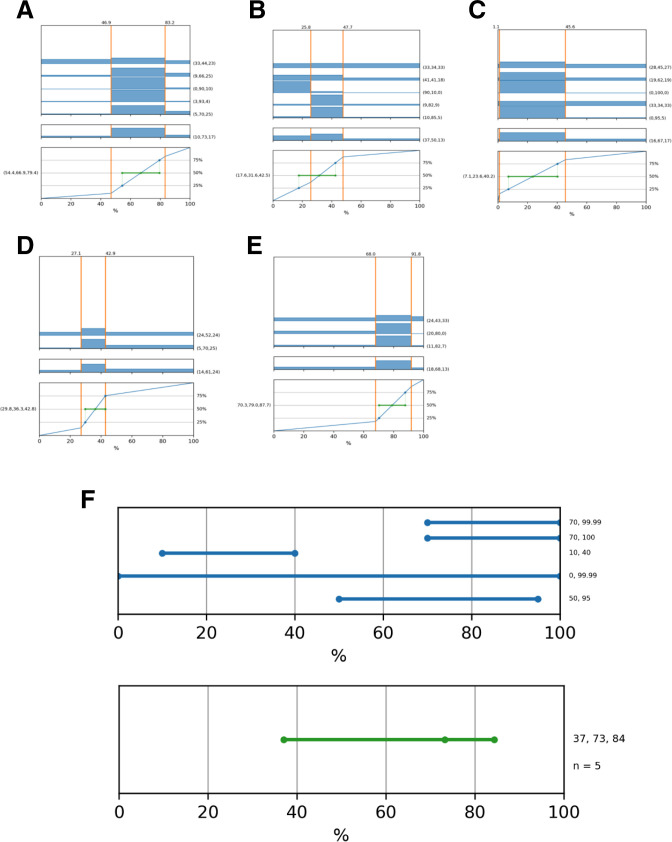
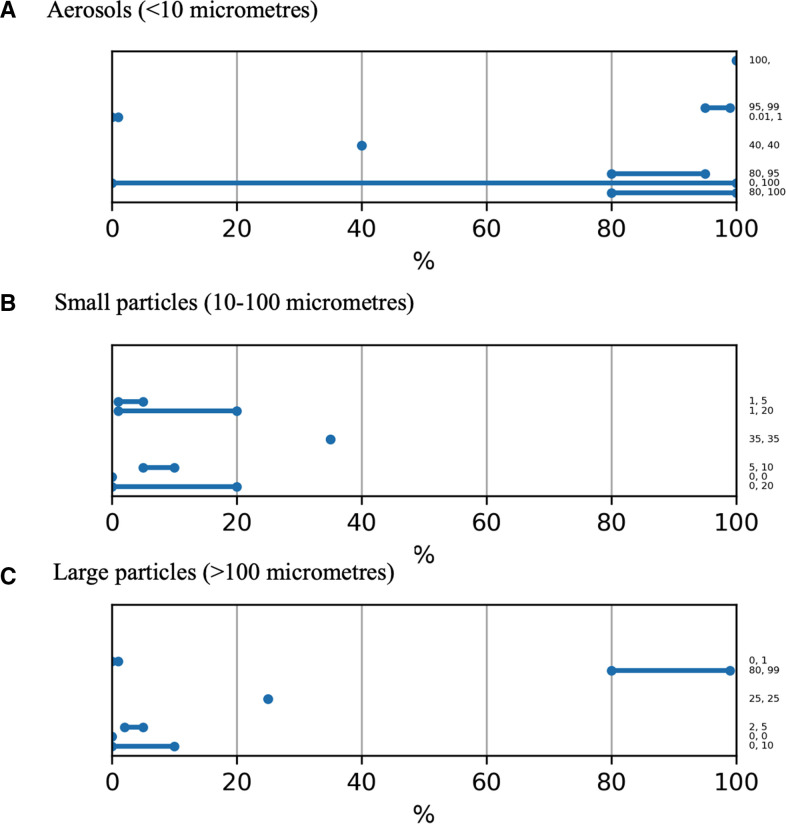
Estimates of transmission parameters, assessments of the quality of the evidence, references to relevant literature, rationales for their estimates and sources of uncertainty.
The participants' responses showed that there is still considerable disagreement among experts about the relative importance of different transmission pathways and the effectiveness of different mitigation measures due to a lack of empirical evidence. Despite these disagreements, when pooled, the majority views on each parameter formed an internally consistent set of estimates (for example, that transmission was more likely indoors than outdoors, and at closer range), which formed the basis of a visualisation to help individuals and organisations understand the factors that influence transmission and the potential benefits of different mitigation measures.
为了帮助人们针对不同场景下 SARS-CoV-2 传播的最有效缓解措施做出决策,需要在一定程度上(无论多么不确定)量化不同传播途径的传播可能性。这些可能性需要以适当的方式进行沟通,以说明不同场景下不同途径的相对重要性、沿这些途径采取不同缓解措施的可能效果,以及这些估计的不确定性水平。在这项研究中,进行了实用的专家评估,以提供产生这种沟通工具的基本定量值。
来自五个国家和多个科学学科的 27 名个体专家提供了估计值。
参与者的回应表明,由于缺乏经验证据,专家们对于不同传播途径的相对重要性以及不同缓解措施的有效性仍然存在相当大的分歧。尽管存在这些分歧,但汇总后,大多数专家对每个参数的看法形成了一组内部一致的估计值(例如,传播更可能发生在室内而不是室外,并且在更近的距离内),这些估计值构成了可视化的基础,以帮助个人和组织了解影响传播的因素以及不同缓解措施的潜在好处。