• 文献检索
  • 文档翻译
  • 深度研究
  • 学术资讯
  • Suppr Zotero 插件Zotero 插件
  • 邀请有礼
  • 套餐&价格
  • 历史记录
应用&插件
Suppr Zotero 插件Zotero 插件浏览器插件Mac 客户端Windows 客户端微信小程序
定价
高级版会员购买积分包购买API积分包
服务
文献检索文档翻译深度研究API 文档MCP 服务
关于我们
关于 Suppr公司介绍联系我们用户协议隐私条款
关注我们

Suppr 超能文献

核心技术专利:CN118964589B侵权必究
粤ICP备2023148730 号-1Suppr @ 2026

文献检索

告别复杂PubMed语法,用中文像聊天一样搜索,搜遍4000万医学文献。AI智能推荐,让科研检索更轻松。

立即免费搜索

文件翻译

保留排版,准确专业,支持PDF/Word/PPT等文件格式,支持 12+语言互译。

免费翻译文档

深度研究

AI帮你快速写综述,25分钟生成高质量综述,智能提取关键信息,辅助科研写作。

立即免费体验

基于人工智能的 MRI 下肢扭转自动评估。

Artificial intelligence-based automatic assessment of lower limb torsion on MRI.

机构信息

Department of Diagnostic and Interventional Radiology, University Hospital Düsseldorf, Düsseldorf, Germany.

Institute of Imaging and Computer Vision, RWTH University Aachen, Aachen, Germany.

出版信息

Sci Rep. 2021 Dec 1;11(1):23244. doi: 10.1038/s41598-021-02708-y.

DOI:10.1038/s41598-021-02708-y
PMID:34853401
原文链接:https://pmc.ncbi.nlm.nih.gov/articles/PMC8636587/
Abstract

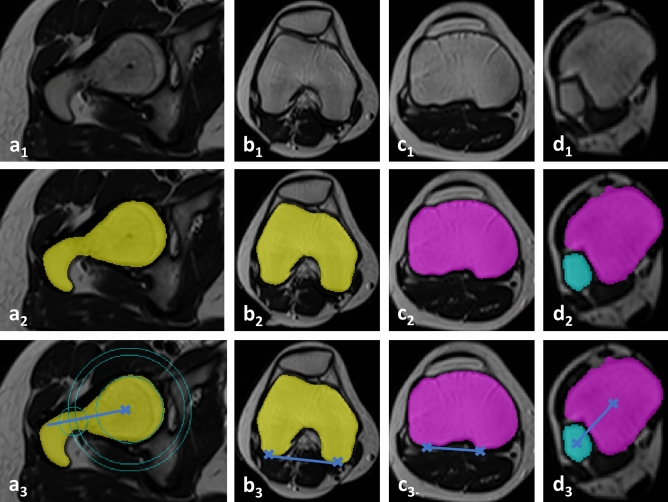
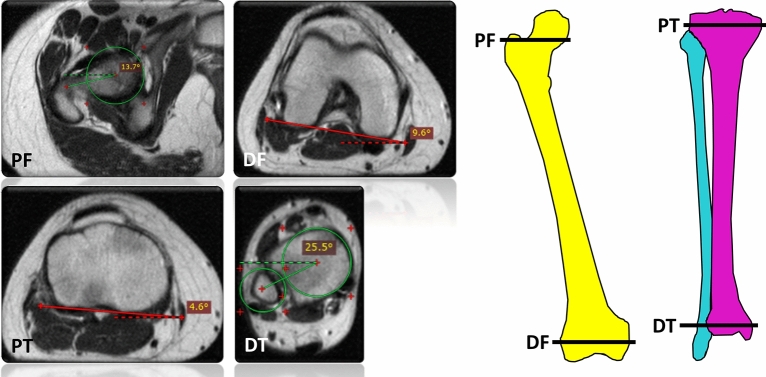
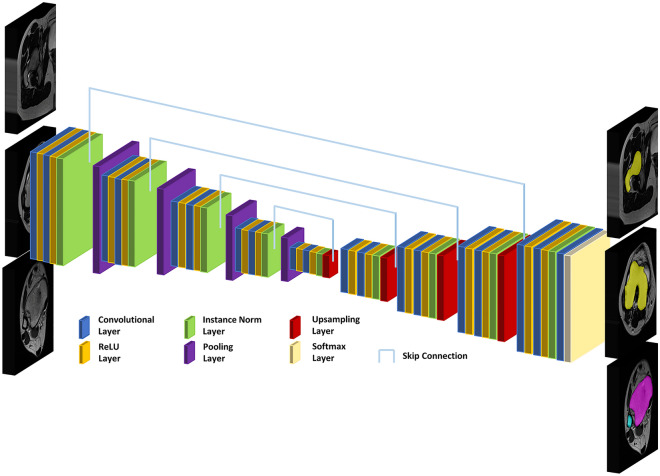
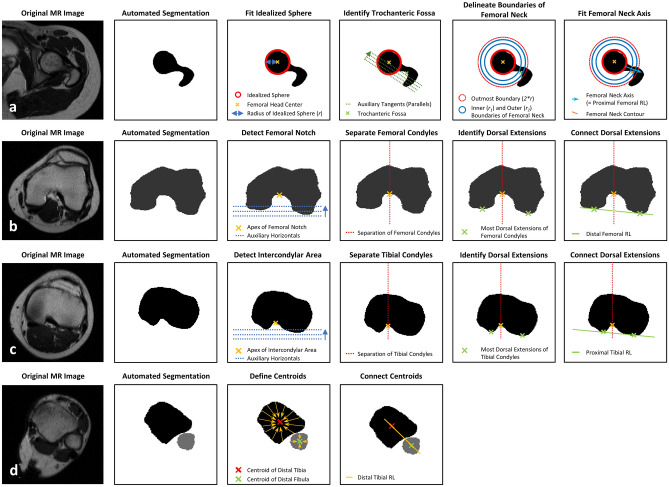
Abnormal torsion of the lower limbs may adversely affect joint health. This study developed and validated a deep learning-based method for automatic measurement of femoral and tibial torsion on MRI. Axial T2-weighted sequences acquired of the hips, knees, and ankles of 93 patients (mean age, 13 ± 5 years; 52 males) were included and allocated to training (n = 60), validation (n = 9), and test sets (n = 24). A U-net convolutional neural network was trained to segment both femur and tibia, identify osseous anatomic landmarks, define pertinent reference lines, and quantify femoral and tibial torsion. Manual measurements by two radiologists provided the reference standard. Inter-reader comparisons were performed using repeated-measures ANOVA, Pearson's r, and the intraclass correlation coefficient (ICC). Mean Sørensen-Dice coefficients for segmentation accuracy ranged between 0.89 and 0.93 and erroneous segmentations were scarce. Ranges of torsion as measured by both readers and the algorithm on the same axial image were 15.8°-18.0° (femur) and 33.9°-35.2° (tibia). Correlation coefficients (ranges, .968 ≤ r ≤ .984 [femur]; .867 ≤ r ≤ .904 [tibia]) and ICCs (ranges, .963 ≤ ICC ≤ .974 [femur]; .867 ≤ ICC ≤ .894 [tibia]) indicated excellent inter-reader agreement. Algorithm-based analysis was faster than manual analysis (7 vs 207 vs 230 s, p < .001). In conclusion, fully automatic measurement of torsional alignment is accurate, reliable, and sufficiently fast for clinical workflows.

摘要

下肢异常扭转可能会对关节健康产生不利影响。本研究开发并验证了一种基于深度学习的方法,用于自动测量 MRI 上的股骨和胫骨扭转。纳入了 93 名患者(平均年龄 13 ± 5 岁;52 名男性)的髋关节、膝关节和踝关节的轴向 T2 加权序列,并将其分配到训练集(n=60)、验证集(n=9)和测试集(n=24)。使用 U 型网络卷积神经网络对股骨和胫骨进行分割,识别骨性解剖标志,定义相关参考线,并量化股骨和胫骨扭转。两名放射科医生的手动测量值作为参考标准。采用重复测量方差分析、Pearson r 和组内相关系数(ICC)进行读者间比较。分割准确性的平均 Sørensen-Dice 系数在 0.89 到 0.93 之间,错误分割很少。两位读者和算法在同一轴向图像上测量的扭转范围分别为 15.8°-18.0°(股骨)和 33.9°-35.2°(胫骨)。相关系数(范围,0.968≤r≤0.984 [股骨];0.867≤r≤0.904 [胫骨])和 ICC(范围,0.963≤ICC≤0.974 [股骨];0.867≤ICC≤0.894 [胫骨])表明读者间具有极好的一致性。基于算法的分析比手动分析更快(7 秒对 207 秒对 230 秒,p<0.001)。总之,用于测量扭转对线的全自动方法准确、可靠,并且分析速度足够满足临床工作流程的需求。
https://cdn.ncbi.nlm.nih.gov/pmc/blobs/5db6/8636587/4ee7bc69920c/41598_2021_2708_Fig5_HTML.jpg
https://cdn.ncbi.nlm.nih.gov/pmc/blobs/5db6/8636587/72e0f34551ce/41598_2021_2708_Fig1_HTML.jpg
https://cdn.ncbi.nlm.nih.gov/pmc/blobs/5db6/8636587/19c007848892/41598_2021_2708_Fig2_HTML.jpg
https://cdn.ncbi.nlm.nih.gov/pmc/blobs/5db6/8636587/25de2bd9e55e/41598_2021_2708_Fig3_HTML.jpg
https://cdn.ncbi.nlm.nih.gov/pmc/blobs/5db6/8636587/28d8b9b75ca5/41598_2021_2708_Fig4_HTML.jpg
https://cdn.ncbi.nlm.nih.gov/pmc/blobs/5db6/8636587/4ee7bc69920c/41598_2021_2708_Fig5_HTML.jpg
https://cdn.ncbi.nlm.nih.gov/pmc/blobs/5db6/8636587/72e0f34551ce/41598_2021_2708_Fig1_HTML.jpg
https://cdn.ncbi.nlm.nih.gov/pmc/blobs/5db6/8636587/19c007848892/41598_2021_2708_Fig2_HTML.jpg
https://cdn.ncbi.nlm.nih.gov/pmc/blobs/5db6/8636587/25de2bd9e55e/41598_2021_2708_Fig3_HTML.jpg
https://cdn.ncbi.nlm.nih.gov/pmc/blobs/5db6/8636587/28d8b9b75ca5/41598_2021_2708_Fig4_HTML.jpg
https://cdn.ncbi.nlm.nih.gov/pmc/blobs/5db6/8636587/4ee7bc69920c/41598_2021_2708_Fig5_HTML.jpg

相似文献

1
Artificial intelligence-based automatic assessment of lower limb torsion on MRI.基于人工智能的 MRI 下肢扭转自动评估。
Sci Rep. 2021 Dec 1;11(1):23244. doi: 10.1038/s41598-021-02708-y.
2
Automated Analysis of Alignment in Long-Leg Radiographs by Using a Fully Automated Support System Based on Artificial Intelligence.使用基于人工智能的全自动支持系统对长腿X线片进行对齐的自动分析。
Radiol Artif Intell. 2020 Dec 23;3(2):e200198. doi: 10.1148/ryai.2020200198. eCollection 2021 Mar.
3
Differences in Femoral Torsion Among Various Measurement Methods Increase in Hips With Excessive Femoral Torsion.各种测量方法在股骨扭转中的差异在股骨扭转过度的髋关节中增加。
Clin Orthop Relat Res. 2019 May;477(5):1073-1083. doi: 10.1097/CORR.0000000000000610.
4
Femoral and tibial torsion measurement in children and adolescents: comparison of 3D models based on low-dose biplanar radiography and low-dose CT.儿童和青少年股骨和胫骨扭转测量:基于低剂量双平面 X 射线和低剂量 CT 的 3D 模型比较。
AJR Am J Roentgenol. 2014 Mar;202(3):W285-91. doi: 10.2214/AJR.13.11103.
5
A Validated, Automated, 3-Dimensional Method to Reliably Measure Tibial Torsion.一种经过验证的、自动化的、三维方法,可可靠测量胫骨扭转。
Am J Sports Med. 2021 Mar;49(3):747-756. doi: 10.1177/0363546520986873. Epub 2021 Feb 3.
6
Measuring femoral and rotational alignment: EOS system versus computed tomography.测量股骨和旋转对线:EOS 系统与计算机断层扫描。
Orthop Traumatol Surg Res. 2013 Sep;99(5):509-16. doi: 10.1016/j.otsr.2012.12.023. Epub 2013 Jul 19.
7
MRI-based torsion measurement of the lower limb is a reliable and valid alternative for CT measurement: a prospective study.基于 MRI 的下肢扭转测量是一种可靠且有效的 CT 测量替代方法:一项前瞻性研究。
Knee Surg Sports Traumatol Arthrosc. 2023 Nov;31(11):4903-4909. doi: 10.1007/s00167-023-07533-6. Epub 2023 Aug 17.
8
Femoral and tibial torsion measurements in children and adolescents: comparison of MRI and 3D models based on low-dose biplanar radiographs.儿童和青少年股骨与胫骨扭转测量:基于低剂量双平面X线片的MRI与3D模型比较
Skeletal Radiol. 2017 Apr;46(4):469-476. doi: 10.1007/s00256-017-2569-x. Epub 2017 Feb 3.
9
Measurement of femoral torsion by ultrasound and magnetic resonance imaging: concurrent validity.超声和磁共振成像测量股骨扭转:并行效度。
Phys Ther. 2010 Nov;90(11):1641-8. doi: 10.2522/ptj.20090391. Epub 2010 Aug 19.
10
Femoral and tibial torsion measurements with 3D models based on low-dose biplanar radiographs in comparison with standard CT measurements.基于低剂量双平面 X 线片的 3D 模型与标准 CT 测量值比较测量股骨和胫骨扭转。
AJR Am J Roentgenol. 2012 Nov;199(5):W607-12. doi: 10.2214/AJR.11.8295.

引用本文的文献

1
Deep-Learning System for Automatic Measurement of the Femorotibial Rotational Angle on Lower-Extremity Computed Tomography.用于在下肢计算机断层扫描上自动测量股胫旋转角度的深度学习系统。
J Imaging Inform Med. 2025 Sep 10. doi: 10.1007/s10278-025-01641-0.
2
AI in motion: the impact of data augmentation strategies on mitigating MRI motion artifacts.动态人工智能:数据增强策略对减轻MRI运动伪影的影响。
Eur Radiol. 2025 May 17. doi: 10.1007/s00330-025-11670-6.
3
Radiological assessment of lower limb torsional deformities: a narrative review.

本文引用的文献

1
TorchIO: A Python library for efficient loading, preprocessing, augmentation and patch-based sampling of medical images in deep learning.TorchIO:一个用于在深度学习中高效加载、预处理、增强和基于补丁的医学图像采样的 Python 库。
Comput Methods Programs Biomed. 2021 Sep;208:106236. doi: 10.1016/j.cmpb.2021.106236. Epub 2021 Jun 17.
2
Artificial intelligence in musculoskeletal imaging: a perspective on value propositions, clinical use, and obstacles.人工智能在肌肉骨骼成像中的应用:价值主张、临床应用和障碍的视角。
Skeletal Radiol. 2022 Feb;51(2):239-243. doi: 10.1007/s00256-021-03802-y. Epub 2021 May 13.
3
Tibial torsion analysis in computed tomography: development and validation of a real 3D measurement technique.
下肢扭转畸形的放射学评估:一篇叙述性综述
Ann Jt. 2025 Jan 21;10:7. doi: 10.21037/aoj-24-42. eCollection 2025.
4
Computed tomography-based automated 3D measurement of femoral version: Validation against standard 2D measurements in symptomatic patients.基于计算机断层扫描的股骨扭转角自动三维测量:与有症状患者的标准二维测量结果的对比验证
J Orthop Res. 2024 Oct;42(10):2237-2248. doi: 10.1002/jor.25865. Epub 2024 Apr 27.
5
Adaptive IoU Thresholding for Improving Small Object Detection: A Proof-of-Concept Study of Hand Erosions Classification of Patients with Rheumatic Arthritis on X-ray Images.用于改进小目标检测的自适应交并比阈值处理:基于X射线图像对风湿性关节炎患者手部侵蚀分类的概念验证研究
Diagnostics (Basel). 2022 Dec 29;13(1):104. doi: 10.3390/diagnostics13010104.
6
Lorentzian-Corrected Apparent Exchange-Dependent Relaxation (LAREX) Ω-Plot Analysis-An Adaptation for qCEST in a Multi-Pool System: Comprehensive In Silico, In Situ, and In Vivo Studies.洛伦兹校正表观交换依赖弛豫(LAREX)Ω-图分析——一种适用于多池系统中 qCEST 的方法:全面的计算机模拟、原位和体内研究。
Int J Mol Sci. 2022 Jun 22;23(13):6920. doi: 10.3390/ijms23136920.
计算机断层扫描中的胫骨扭转分析:一种真实三维测量技术的开发与验证
Insights Imaging. 2021 Feb 15;12(1):18. doi: 10.1186/s13244-020-00960-w.
4
Rapid Musculoskeletal MRI in 2021: Clinical Application of Advanced Accelerated Techniques.2021 年快速肌肉骨骼 MRI:高级加速技术的临床应用。
AJR Am J Roentgenol. 2021 Mar;216(3):718-733. doi: 10.2214/AJR.20.22902. Epub 2021 Feb 3.
5
nnU-Net: a self-configuring method for deep learning-based biomedical image segmentation.nnU-Net:一种基于深度学习的生物医学图像分割的自配置方法。
Nat Methods. 2021 Feb;18(2):203-211. doi: 10.1038/s41592-020-01008-z. Epub 2020 Dec 7.
6
Deep learning method for segmentation of rotator cuff muscles on MR images.基于深度学习的磁共振图像肩袖肌群分割方法。
Skeletal Radiol. 2021 Apr;50(4):683-692. doi: 10.1007/s00256-020-03599-2. Epub 2020 Sep 16.
7
Diagnostic accuracy of deep learning in orthopaedic fractures: a systematic review and meta-analysis.深度学习在骨科骨折中的诊断准确性:系统评价和荟萃分析。
Clin Radiol. 2020 Sep;75(9):713.e17-713.e28. doi: 10.1016/j.crad.2020.05.021. Epub 2020 Jun 23.
8
The Effect of Modality and Landmark Selection on MRI and CT Femoral Torsion Angles.模态和定位标志选择对 MRI 和 CT 股骨扭转角度的影响。
Radiology. 2020 Aug;296(2):381-390. doi: 10.1148/radiol.2020192723. Epub 2020 Jun 9.
9
Machine Learning for Automation of Radiology Protocols for Quality and Efficiency Improvement.机器学习在放射学协议自动化中的应用,以提高质量和效率。
J Am Coll Radiol. 2020 Sep;17(9):1149-1158. doi: 10.1016/j.jacr.2020.03.012. Epub 2020 Apr 9.
10
Should Pearson's correlation coefficient be avoided?是否应避免使用皮尔逊相关系数?
Ophthalmic Physiol Opt. 2019 Sep;39(5):316-327. doi: 10.1111/opo.12636. Epub 2019 Aug 18.