Institute of Molecular Biotechnology of the Austrian Academy of Sciences (IMBA), Vienna BioCenter (VBC), Vienna, Austria.
Institute of Molecular Pathology (IMP), Vienna Biocenter, Vienna, Austria.
Nature. 2022 Jan;601(7894):600-605. doi: 10.1038/s41586-021-04267-8. Epub 2021 Dec 2.
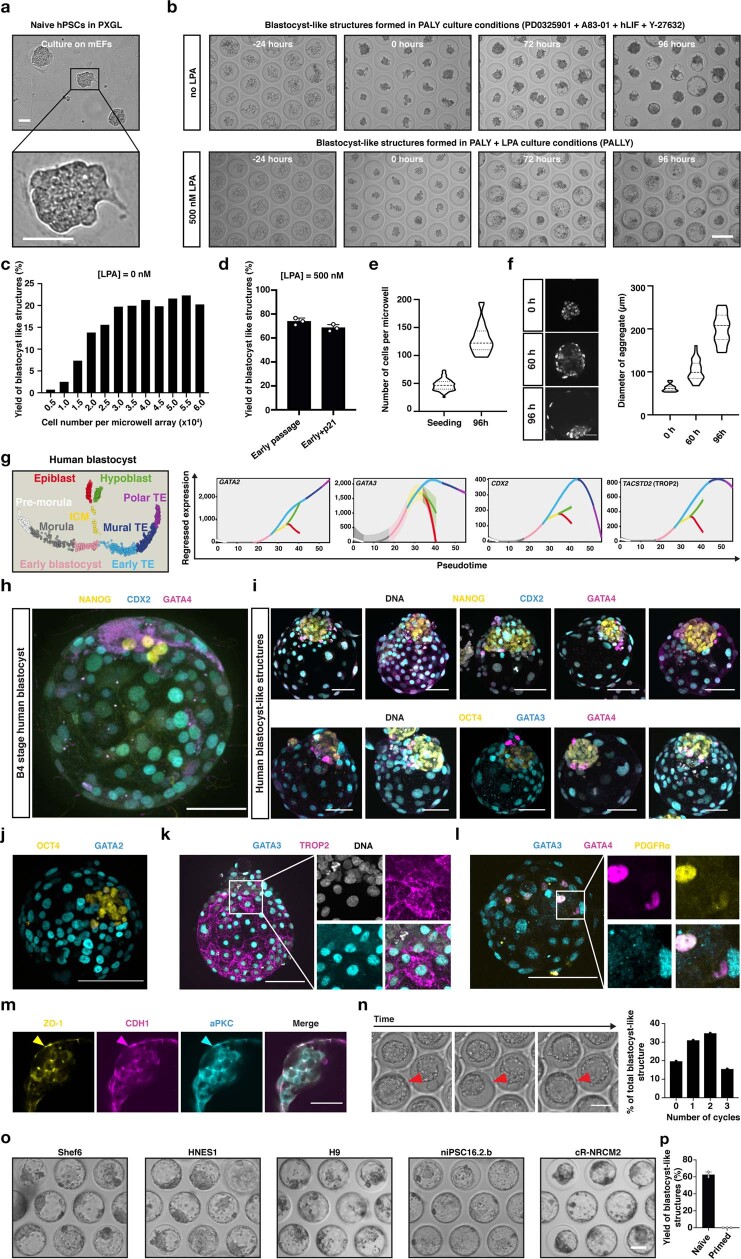
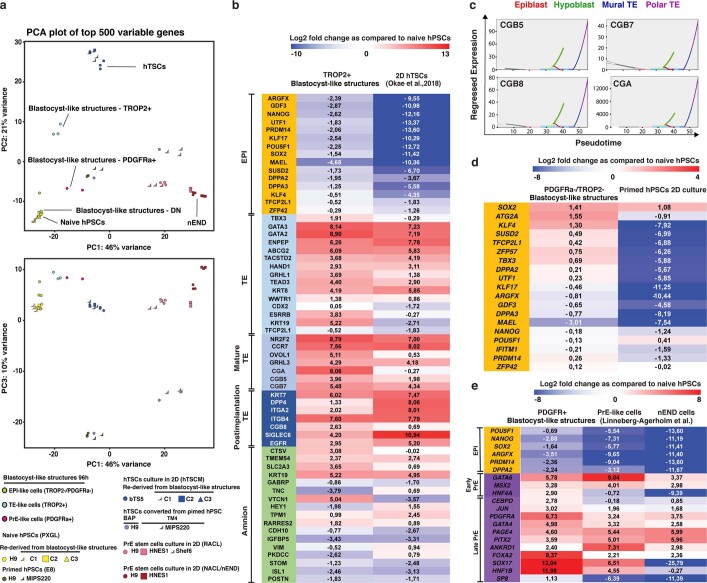
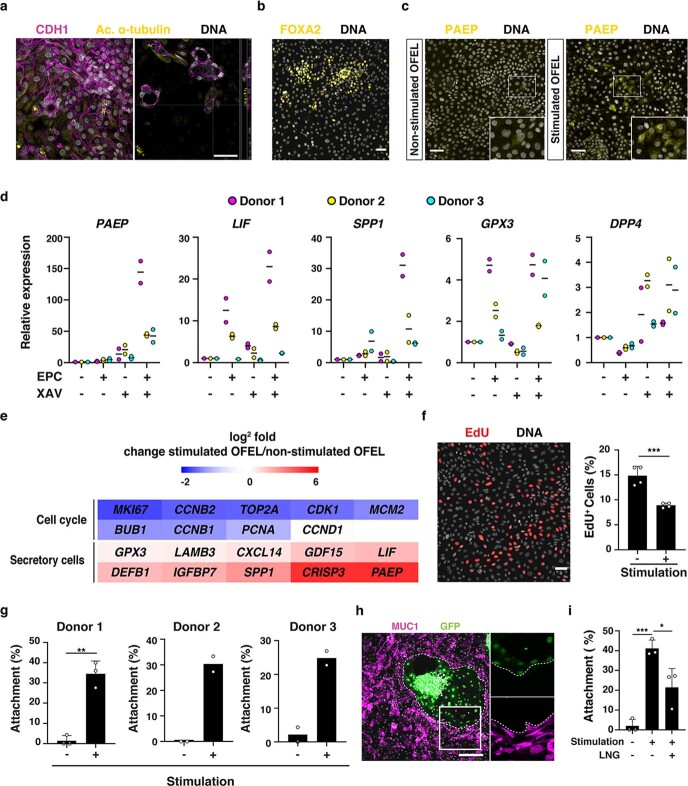
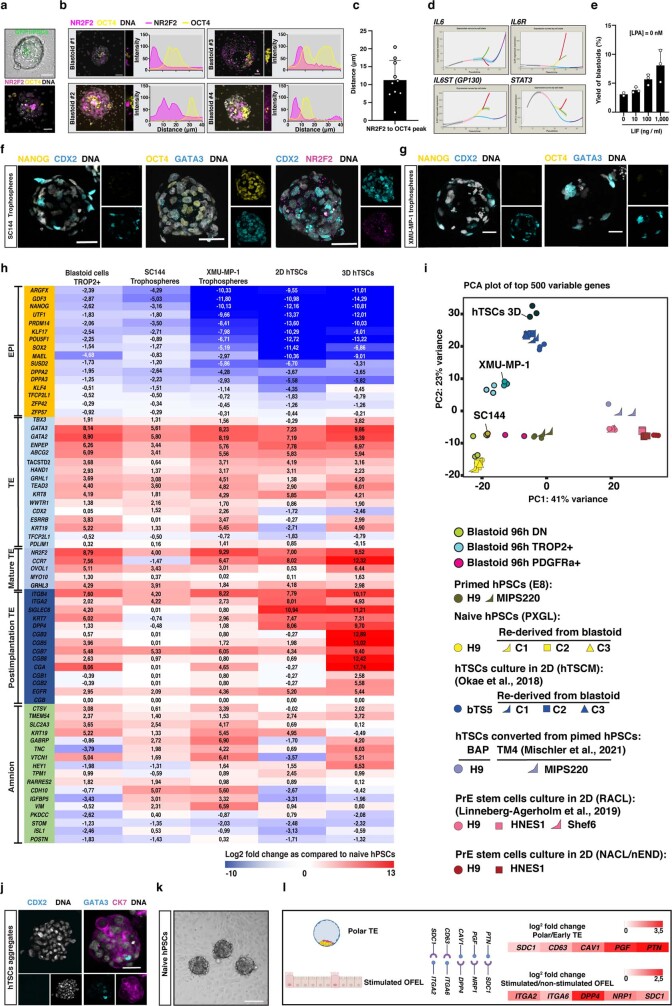
One week after fertilization, human embryos implant into the uterus. This event requires the embryo to form a blastocyst consisting of a sphere encircling a cavity lodging the embryo proper. Stem cells can form a blastocyst model that we called a blastoid. Here we show that naive human pluripotent stem cells cultured in PXGL medium and triply inhibited for the Hippo, TGF-β and ERK pathways efficiently (with more than 70% efficiency) form blastoids generating blastocyst-stage analogues of the three founding lineages (more than 97% trophectoderm, epiblast and primitive endoderm) according to the sequence and timing of blastocyst development. Blastoids spontaneously form the first axis, and we observe that the epiblast induces the local maturation of the polar trophectoderm, thereby endowing blastoids with the capacity to directionally attach to hormonally stimulated endometrial cells, as during implantation. Thus, we propose that such a human blastoid is a faithful, scalable and ethical model for investigating human implantation and development.
受精后一周,人类胚胎植入子宫。这一事件要求胚胎形成一个囊胚,由一个环绕着容纳胚胎本身的腔的球体组成。干细胞可以形成一个囊胚模型,我们称之为囊胚样体。在这里,我们展示了在 PXGL 培养基中培养的原始人类多能干细胞,通过三重抑制 Hippo、TGF-β 和 ERK 途径(效率超过 70%),有效地形成囊胚样体,生成三个创始谱系的囊胚阶段类似物(滋养外胚层超过 97%,上胚层和原始内胚层),符合囊胚发育的顺序和时间。囊胚样体自发地形成第一个轴,我们观察到上胚层诱导局部极性滋养外胚层成熟,从而赋予囊胚样体定向附着到激素刺激的子宫内膜细胞的能力,就像在植入过程中一样。因此,我们提出这样的人类囊胚样体是一种忠实、可扩展和符合伦理的模型,可用于研究人类植入和发育。