Necmettin Erbakan University, Faculty of Health Sciences, Department of Nutrition and Dietetics, Konya, Turkey.
Clin Nutr ESPEN. 2021 Dec;46:264-270. doi: 10.1016/j.clnesp.2021.09.745. Epub 2021 Oct 5.
BACKGROUND & AIMS: The study aimed to evaluate emotional eating tendency of Turkish individuals during COVID-19 pandemic.
The study comprised an online questionnaire and it was conducted from August to September 2020. The survey was distributed through social networks.
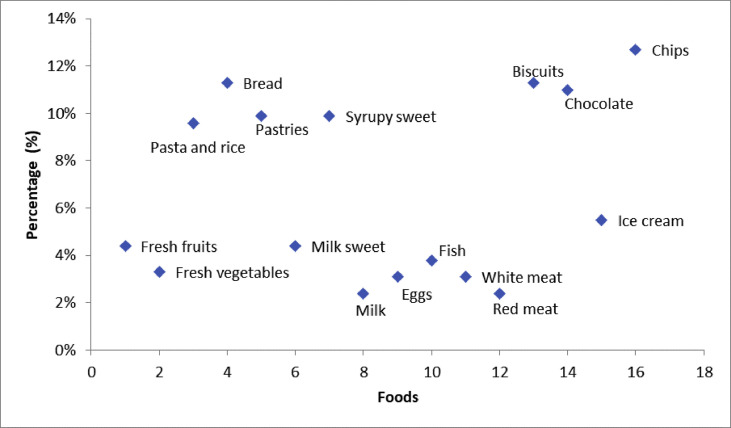
A total of 1626 adults have been included in the study, aged between 18 and 65 years (69.6% females and 30.4% males). The average BMI of all participants was 24.4 ± 4.7 kg/m, 6% were underweight, and 11.6% were obese. A total of 32.7% of the participants had an increase in appetite and 34.4% had a weight gain. It was found that most of the participants (75.7%) were emotional eaters at different levels. Emotional eating was more common in obese people (43.5%) than normal weight (33.5%) and underweight (18.4%) people. It was examined the increasing food intake according to the BMI, the obese increased the consumption of fresh vegetables, fruits, pastries, and, eggs; underweight increased the consumption of fresh vegetables and fruits, milk and, eggs. As in other countries, a weight gain was observed in the individuals. However, the participants resorted to emotional eating to cope with negative emotions such as depression, anxiety, and stress caused by the pandemic.
In this study, it has been provided preliminary data that can be used in future studies to determine the emotional eating behaviors during the COVID-19 pandemic.
本研究旨在评估 COVID-19 大流行期间土耳其个体的情绪性进食倾向。
本研究包括在线问卷调查,于 2020 年 8 月至 9 月进行。调查通过社交网络进行分发。
共纳入 1626 名 18 至 65 岁的成年人(女性占 69.6%,男性占 30.4%)。所有参与者的平均 BMI 为 24.4±4.7kg/m,6%为体重不足,11.6%为肥胖。32.7%的参与者食欲增加,34.4%体重增加。结果发现,大多数参与者(75.7%)不同程度地存在情绪性进食。肥胖者(43.5%)比体重正常者(33.5%)和体重不足者(18.4%)更常出现情绪性进食。根据 BMI 检查食物摄入量的增加,肥胖者增加了新鲜蔬菜、水果、糕点和鸡蛋的摄入;体重不足者增加了新鲜蔬菜和水果、牛奶和鸡蛋的摄入。与其他国家一样,个体体重也有所增加。然而,参与者通过情绪性进食来应对大流行带来的抑郁、焦虑和压力等负面情绪。
本研究提供了初步数据,可用于未来研究确定 COVID-19 大流行期间的情绪性进食行为。