Malfitano Calogero, Rossetti Angela, Scarano Stefano, Malloggi Chiara, Tesio Luigi
Department of Neurorehabilitation Sciences, IRCCS Istituto Auxologico Italiano, Ospedale San Luca, Milano, Italy.
Department of Biomedical Sciences for Health, Università Degli Studi di Milano, Milano, Italy.
Front Neurol. 2021 Nov 11;12:742567. doi: 10.3389/fneur.2021.742567. eCollection 2021.
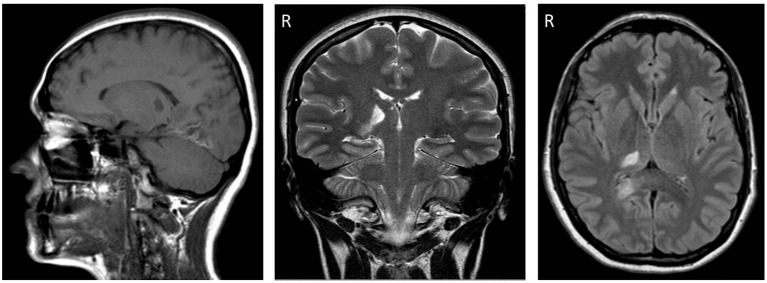
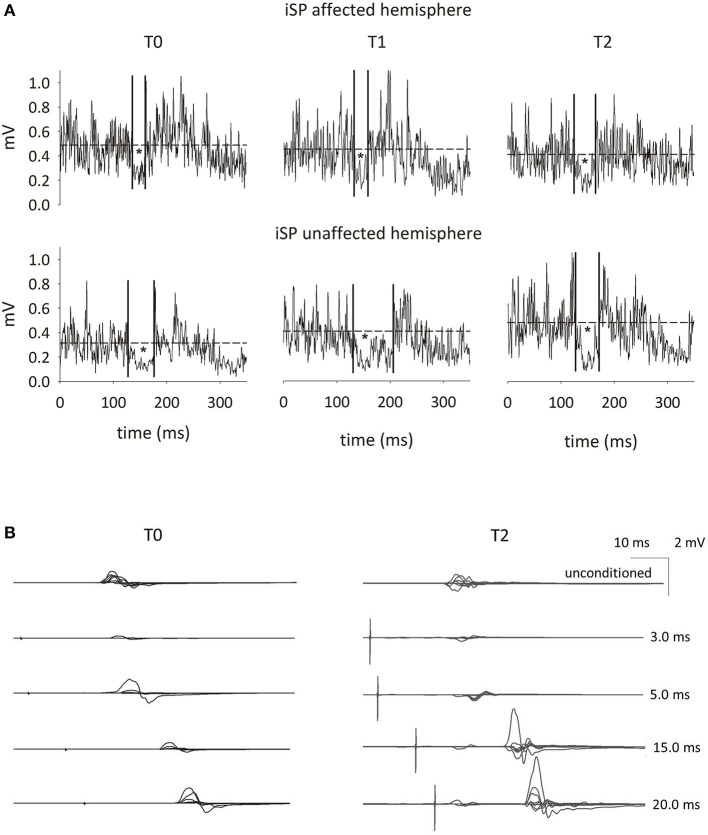
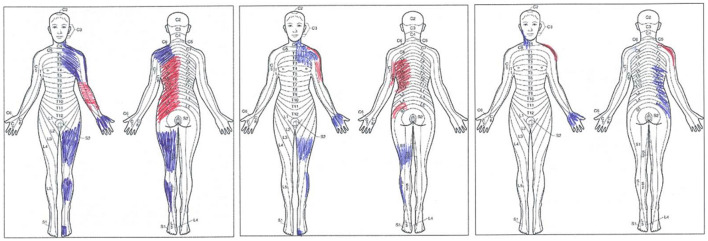
Although rare, central post-stroke pain remains one of the most refractory forms of neuropathic pain. Repetitive transcranial magnetic stimulation (rTMS) has been reported to be effective in chronic cases. However, there are no data on the effects in the acute and subacute phases after stroke. In this study, we present a case of a patient with thalamic stroke with acute onset of pain and paresthesia who was responsive to rTMS. After a right thalamic stroke, a 32-year-old woman presented with drug-resistant pain and paresthesia on the left side of the body. There were no motor or sensory deficits, except for blunted thermal sensation and allodynia on light touch. Ten daily sessions were performed, where 10 Hz rTMS was applied to the hand area of the right primary motor cortex, 40 days after stroke. Before rTMS treatment (T0), immediately after treatment conclusion (T1), and 1 month after treatment (T2), three pain questionnaires were administered, and cortical responses to single and paired-pulse TMS were assessed. Eight healthy participants served as controls. At T0, when the patient was experiencing the worst pain, the excitability of the ipsilesional motor cortex was reduced. At T1 and T2, the pain scores and paresthesia' spread decreased. The clinical improvement was paralleled by the recovery in motor cortex excitability of the affected hemisphere, in terms of both intra- and inter-hemispheric connections. In this subacute central post-stroke pain case, rTMS treatment was associated with decreased pain and motor cortex excitability changes.
尽管罕见,但中风后中枢性疼痛仍然是最难治疗的神经性疼痛形式之一。据报道,重复经颅磁刺激(rTMS)对慢性病例有效。然而,目前尚无关于中风后急性期和亚急性期效果的数据。在本研究中,我们报告了一例丘脑中风后急性出现疼痛和感觉异常且对rTMS有反应的患者。一名32岁女性在右侧丘脑中风后,出现了身体左侧的耐药性疼痛和感觉异常。除了热感觉迟钝和轻触性痛觉过敏外,没有运动或感觉缺陷。在中风后40天,对右侧初级运动皮层的手部区域进行了10次每日疗程的10Hz rTMS治疗。在rTMS治疗前(T0)、治疗结束后立即(T1)以及治疗后1个月(T2),进行了三项疼痛问卷调查,并评估了对单脉冲和双脉冲TMS的皮层反应。八名健康参与者作为对照。在T0时,患者疼痛最严重,患侧运动皮层的兴奋性降低。在T1和T2时,疼痛评分和感觉异常的范围减小。在半球内和半球间连接方面,临床改善与患侧半球运动皮层兴奋性的恢复并行。在这个亚急性中风后中枢性疼痛病例中,rTMS治疗与疼痛减轻和运动皮层兴奋性变化有关。