
用于早期癌症治疗的多功能金纳米细胞传感器,具有快速捕获、电化学检测和循环肿瘤细胞的无创释放功能。
Multifunctional Gold Nano-Cytosensor With Quick Capture, Electrochemical Detection, and Non-Invasive Release of Circulating Tumor Cells for Early Cancer Treatment.
作者信息
Zhang Rui, You Qiannan, Cheng Mingming, Ge Mingfeng, Mei Qian, Yang Li, Dong Wen-Fei, Chang Zhimin
机构信息
School of Biomedical Engineering (Suzhou), Division of Life Sciences and Medicine, University of Science and Technology of China, Hefei, China.
CAS Key Laboratory of Biomedical Diagnostics, Suzhou Institute of Biomedical Engineering and Technology, Chinese Academy of Science (CAS), Suzhou, China.
出版信息
Front Bioeng Biotechnol. 2021 Nov 11;9:783661. doi: 10.3389/fbioe.2021.783661. eCollection 2021.
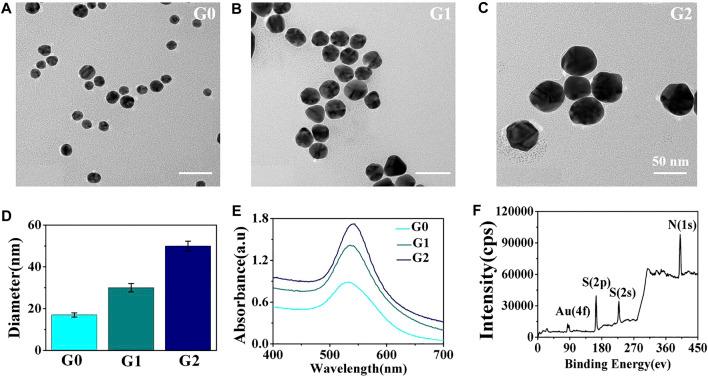
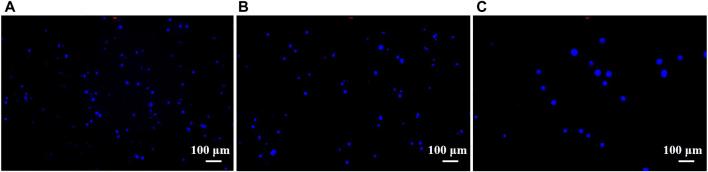
Circulating tumor cells (CTCs) are metastatic tumor cells that shed into the blood from solid primary tumors, and their existence significantly increases the risk of metastasis and recurrence. The timely discovery and detection of CTCs are of considerable importance for the early diagnosis and treatment of metastasis. However, the low number of CTCs hinders their detection. In the present study, an ultrasensitive electrochemical cytosensor for specific capture, quantitative detection, and noninvasive release of EpCAM-positive tumor cells was developed. The biosensor was manufactured using gold nanoparticles (AuNPs) to modify the electrode. Three types of AuNPs with controllable sizes and conjugated with a targeting molecule of monoclonal anti-EpCAM antibody were used in this study. Electrochemical impedance spectroscopy (EIS) and differential pulse voltammetry (DPV) of the cytosensors were performed to evaluate the cell capture efficiency and performance. The captured 4T1 cells by the AuNPs hindered electron transport efficiency, resulting in increased EIS responses. The cell capture response recorded using EIS or DPV indicated that the optimal AuNPs size should be 17 nm. The cell capture response changed linearly with the concentration range from 8.0 × 10 to 1 × 10 cells/mL, and the limit of detection was 50 cells/mL. After these measurements, glycine-HCl (Gly-HCl) was used as an antibody eluent to destroy the binding between antigen and antibody to release the captured tumor cells without compromising their viability for further clinical research. This protocol realizes rapid detection of CTCs with good stability, acceptable assay precision, significant fabrication reproducibility with a relative standard deviation of 2.09%, and good recovery of cells. Our results indicate that the proposed biosensor is promising for the early monitoring of CTCs and may help customize personalized treatment options.
循环肿瘤细胞(CTCs)是从实体原发性肿瘤脱落进入血液的转移性肿瘤细胞,它们的存在显著增加了转移和复发的风险。及时发现和检测CTCs对于转移的早期诊断和治疗至关重要。然而,CTCs数量稀少阻碍了它们的检测。在本研究中,开发了一种用于特异性捕获、定量检测和无创释放EpCAM阳性肿瘤细胞的超灵敏电化学细胞传感器。该生物传感器采用金纳米颗粒(AuNPs)修饰电极制成。本研究使用了三种尺寸可控且与单克隆抗EpCAM抗体靶向分子偶联的AuNPs。对细胞传感器进行电化学阻抗谱(EIS)和差分脉冲伏安法(DPV)以评估细胞捕获效率和性能。AuNPs捕获的4T1细胞阻碍了电子传输效率,导致EIS响应增加。使用EIS或DPV记录的细胞捕获响应表明,最佳AuNPs尺寸应为17 nm。细胞捕获响应在8.0×10至1×10个细胞/mL的浓度范围内呈线性变化,检测限为50个细胞/mL。这些测量完成后,使用甘氨酸 - 盐酸(Gly - HCl)作为抗体洗脱剂破坏抗原与抗体之间的结合,以释放捕获的肿瘤细胞,同时不影响其活力以便进行进一步的临床研究。该方案实现了对CTCs的快速检测,具有良好的稳定性、可接受的测定精度、显著的制备重现性(相对标准偏差为2.09%)以及良好的细胞回收率。我们的结果表明,所提出的生物传感器在CTCs的早期监测方面具有潜力,可能有助于定制个性化治疗方案。





 Zotero 插件