Program in Medical and Population Genetics, Broad Institute of MIT and Harvard, Cambridge, MA, USA.
Division of Genetics and Genomics, Boston Children's Hospital, Harvard Medical School, Boston, MA, USA.
Hum Mutat. 2022 Aug;43(8):1012-1030. doi: 10.1002/humu.24309. Epub 2021 Dec 16.
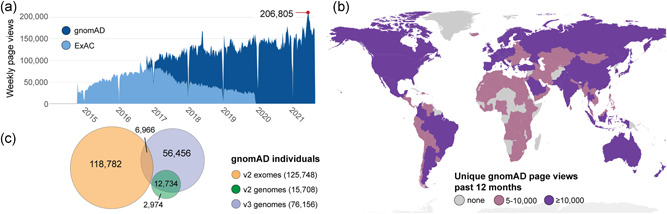
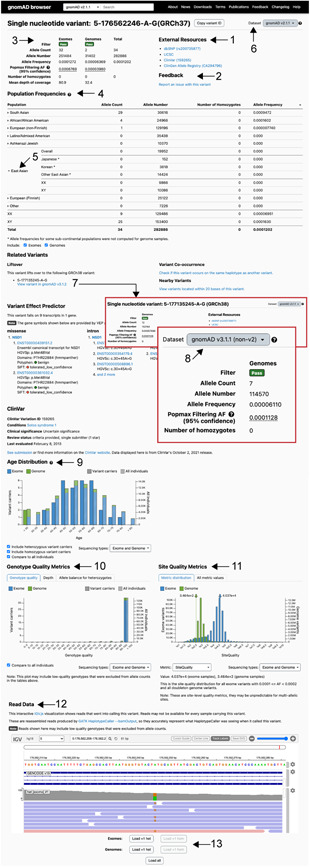
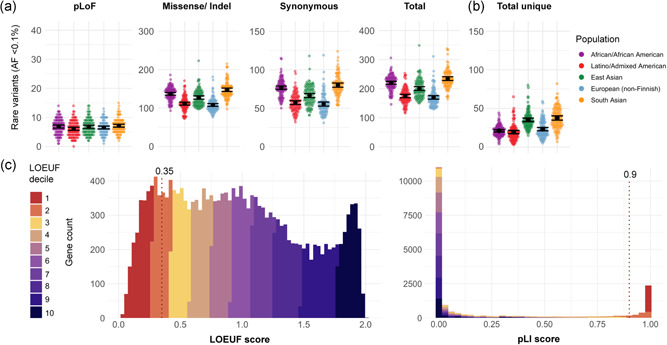
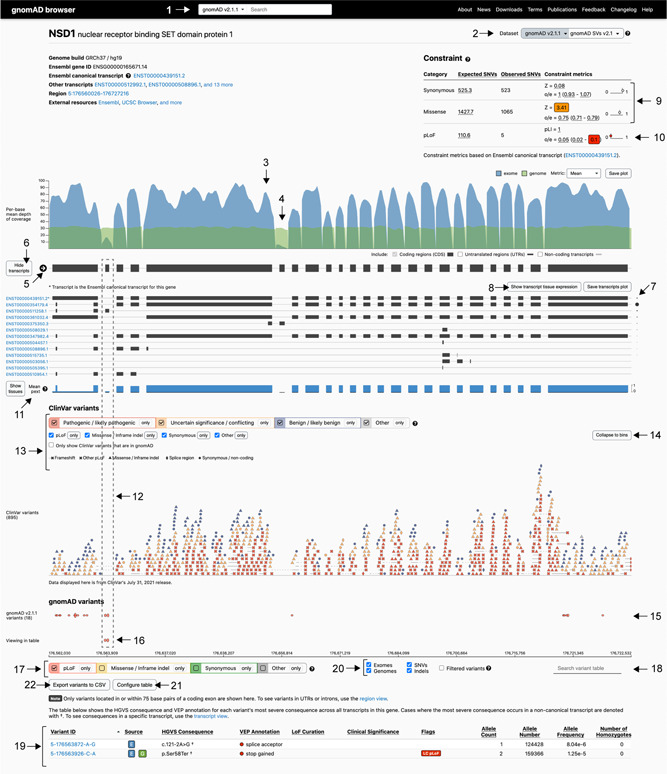
Reference population databases are an essential tool in variant and gene interpretation. Their use guides the identification of pathogenic variants amidst the sea of benign variation present in every human genome, and supports the discovery of new disease-gene relationships. The Genome Aggregation Database (gnomAD) is currently the largest and most widely used publicly available collection of population variation from harmonized sequencing data. The data is available through the online gnomAD browser (https://gnomad.broadinstitute.org/) that enables rapid and intuitive variant analysis. This review provides guidance on the content of the gnomAD browser, and its usage for variant and gene interpretation. We introduce key features including allele frequency, per-base expression levels, constraint scores, and variant co-occurrence, alongside guidance on how to use these in analysis, with a focus on the interpretation of candidate variants and novel genes in rare disease.
参考人群数据库是变异和基因解读的重要工具。它们的使用有助于在每个人类基因组中存在的大量良性变异中识别致病性变异,并支持新的疾病-基因关系的发现。基因组聚集数据库(gnomAD)是目前最大和使用最广泛的人群变异公共数据集,来源于协调的测序数据。该数据集可通过在线 gnomAD 浏览器(https://gnomad.broadinstitute.org/)获取,该浏览器支持快速直观的变异分析。本综述提供了 gnomAD 浏览器内容及其在变异和基因解读方面的使用指南。我们介绍了关键特性,包括等位基因频率、每个碱基的表达水平、约束分数和变异共现,并提供了如何在分析中使用这些特性的指导,重点是对罕见病候选变异和新基因的解读。