Center for Environmental Medicine, Asthma and Lung Biology, University of North Carolina, Chapel Hill, North Carolina, USA.
Department of Medicine, University of North Carolina, Chapel Hill, North Carolina, USA.
Immun Inflamm Dis. 2022 Mar;10(3):e575. doi: 10.1002/iid3.575. Epub 2021 Dec 3.
Asthma is a heterogenous disease that can be classified into eosinophilic (type 2-high) and noneosinophilic (type 2-low) endotypes. The type 2-low endotype of asthma can be characterized by the presence of neutrophilic airway inflammation that is poorly responsive to corticosteroids. Dysregulated innate immune responses to microbial products including Toll-like receptor (TLR) ligands have been associated with the pathogenesis of neutrophilic asthma. The key molecules that regulate inflammatory responses in individuals with neutrophilic asthma remain unclear. We previously reported that the immunoregulatory receptor neuropilin-2 (NRP2) is expressed by murine and human alveolar macrophage (AM) and suppresses lipopolysaccharide (LPS)-induced neutrophilic airway inflammation.
Here, we investigated the immunoregulatory role of NRP2 in a mouse model of neutrophilic asthma.
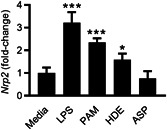
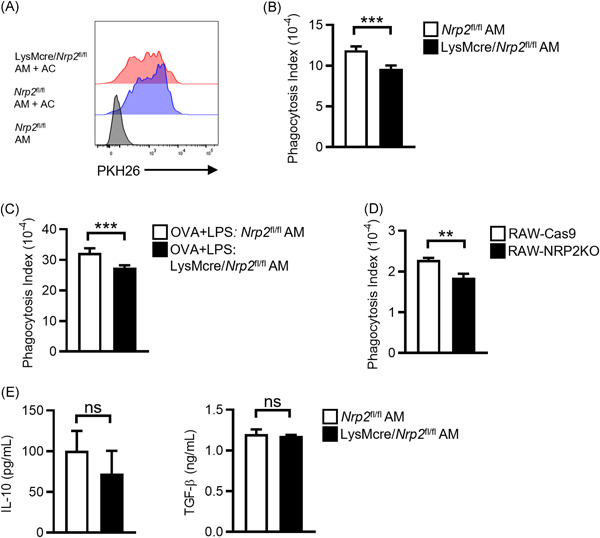
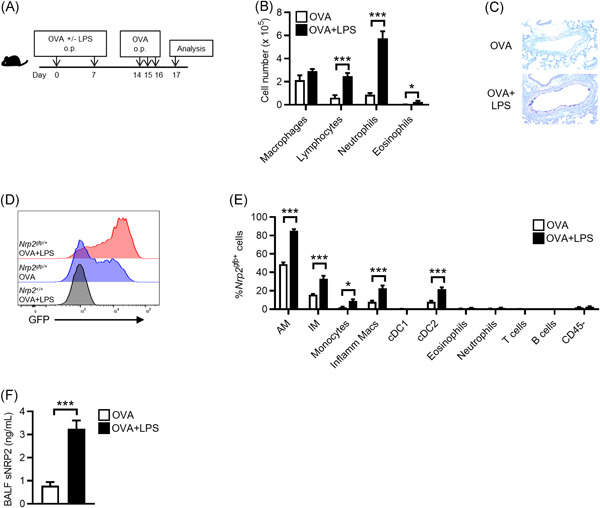
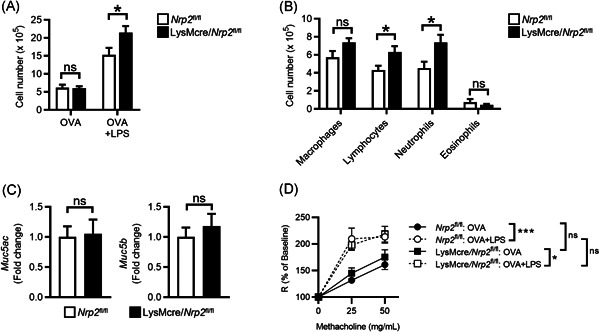
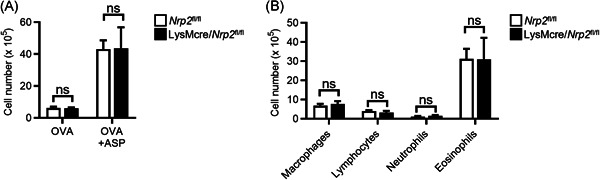
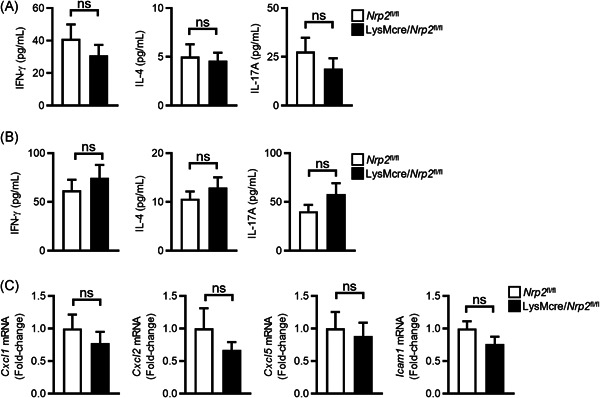
We found that TLR ligands, but not T helper 2 (Th2)-promoting adjuvants, induced NRP2 expression by AM. Using an LPS-mediated model of neutrophilic asthma, we demonstrate that NRP2 was increased in AM and other lung antigen-presenting cells following airway challenge with antigen. Conditional deletion of NRP2 in myeloid cells exacerbated airway inflammation in a neutrophilic asthma model. In contrast, myeloid-specific ablation of NRP2 did not affect airway inflammation in a Th2-mediated eosinophilic asthma model. Myeloid-specific ablation of NRP2 did not affect Th1/Th17 responses to inhaled antigens or expression of neutrophil chemokines but rather resulted in impaired efferocytosis by AM, which is necessary for effective resolution of airway inflammation.
Our findings suggest that NRP2 is a negative regulator of airway inflammation associated with neutrophilic asthma.
哮喘是一种异质性疾病,可以分为嗜酸性粒细胞(2 型高)和非嗜酸性粒细胞(2 型低)表型。哮喘的 2 型低表型的特征可以是中性粒细胞性气道炎症,对皮质类固醇反应不佳。对微生物产物(包括 Toll 样受体(TLR)配体)的调节先天免疫反应与中性粒细胞性哮喘的发病机制有关。调节中性粒细胞性哮喘患者炎症反应的关键分子仍不清楚。我们之前报道过,免疫调节受体神经纤毛蛋白-2(NRP2)在鼠和人肺泡巨噬细胞(AM)中表达,并抑制脂多糖(LPS)诱导的中性粒细胞性气道炎症。
在这里,我们研究了 NRP2 在中性粒细胞性哮喘小鼠模型中的免疫调节作用。
我们发现,TLR 配体,但不是促进 Th2 的佐剂,诱导 AM 中 NRP2 的表达。使用 LPS 介导的中性粒细胞性哮喘模型,我们证明在气道挑战抗原后,NRP2 在 AM 和其他肺抗原呈递细胞中增加。髓样细胞中 NRP2 的条件性缺失加剧了中性粒细胞性哮喘模型中的气道炎症。相比之下,髓样细胞特异性消融 NRP2 对 Th2 介导的嗜酸性粒细胞性哮喘模型中的气道炎症没有影响。髓样细胞特异性消融 NRP2 不影响吸入抗原的 Th1/Th17 反应或中性粒细胞趋化因子的表达,但导致 AM 的吞噬作用受损,这对于有效解决气道炎症是必要的。
我们的研究结果表明,NRP2 是与中性粒细胞性哮喘相关的气道炎症的负调节剂。