Public Health Institute, UAE University, Abu Dhabi, 15551, UAE.
Independent Researcher, New York, USA.
Harm Reduct J. 2021 Dec 4;18(1):123. doi: 10.1186/s12954-021-00557-6.
The objective was to systematically review studies on health outcomes from smokeless tobacco (SLT) products.
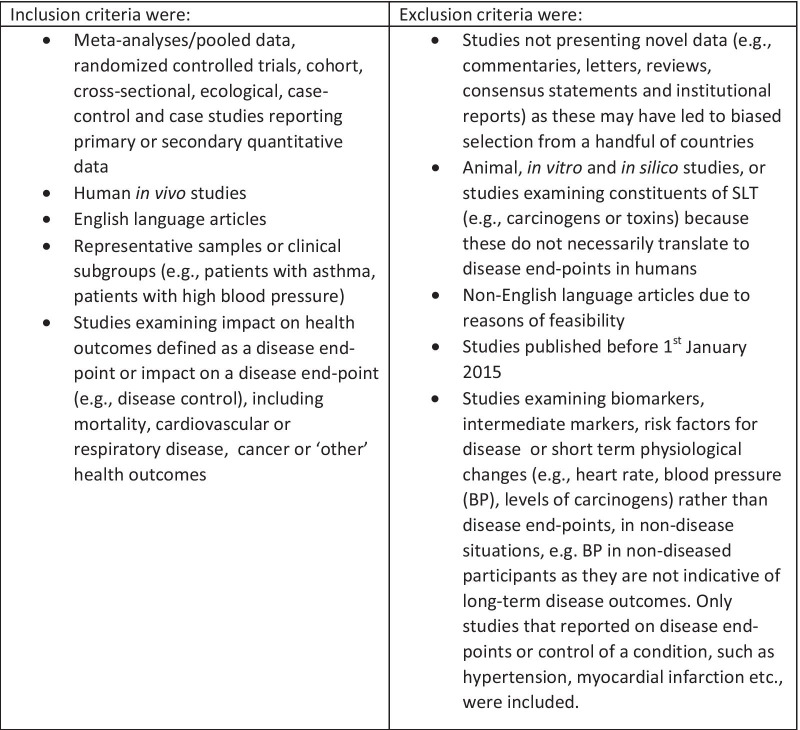
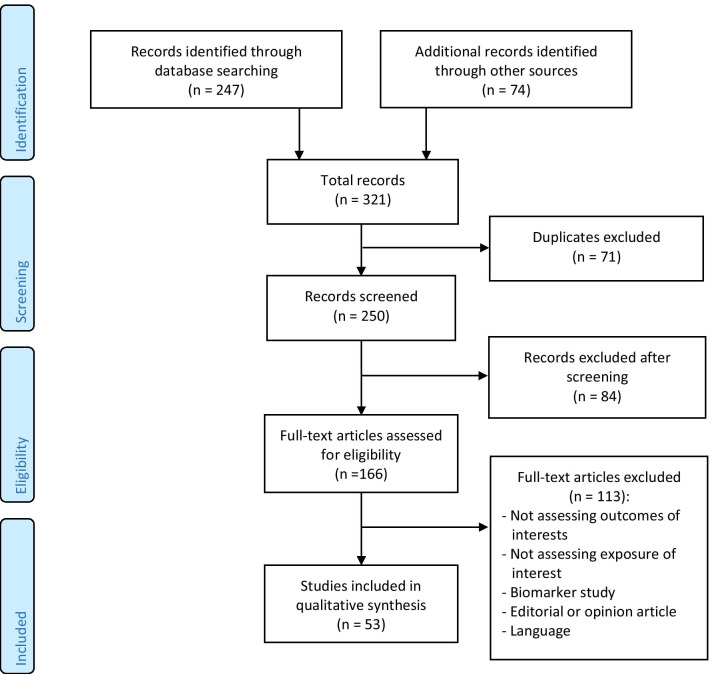
We analysed published literature on the health outcomes from SLT use between 01/01/2015 to 01/02/2020, following Preferred Reporting Items for Systematic Reviews and Meta-Analyses (PRISMA) protocol using PubMed, Embase, Scopus, and Google Scholar.
Of 53 studies included, six were global, 32 from Asia, Middle East and Africa (AMEA), nine from USA and six from Europe. 'Poor'-rated studies predominated (23;43%), in particular, for global (4;66%) and AMEA (16;50%). Health outcomes differed between SLT-products and regions; those in AMEA were associated with higher mortality (overall, cancer, Coronary heart disease (CHD), respiratory but not cardiovascular disease (CVD)), and morbidity (CVD, oral and head and neck cancers), with odds ratios up to 38.7. European studies showed no excess mortality (overall, CVD, from cancers) or morbidity (ischemic heart disease (IHD), stroke, oral, head and neck, pancreatic or colon cancers) from several meta-analyses; single studies reported elevated risk of rectal cancer and respiratory disorders. Pooled study data showed protection against developing Parkinson's disease. US studies showed mixed results for mortality (raised overall, CHD, cancer and smoking-related cancer mortality; no excess risk of respiratory or CVD mortality). Morbidity outcomes were also mixed, with some evidence of increased IHD, stroke and cancer risk (oral, head and neck). No studies reported on switching from cigarettes to SLT-products.
Our review demonstrates stark differences between different SLT-products in different regions, ranging from zero harm from European snus to greatly increased health risks in AMEA. The literature on the safety profile for SLT-products for harm reduction is incomplete and potentially misinforming policy and regulation.
本研究旨在系统综述无烟烟草制品(SLT)对健康影响的研究。
我们按照系统综述和荟萃分析的首选报告项目(PRISMA)协议,使用 PubMed、Embase、Scopus 和 Google Scholar,分析了 2015 年 1 月 1 日至 2020 年 2 月 1 日期间发表的关于 SLT 使用对健康影响的文献。
在纳入的 53 项研究中,有 6 项为全球性研究,32 项来自亚洲、中东和非洲(AMEA)地区,9 项来自美国,6 项来自欧洲。以“差”级评价为主(23 项;43%),特别是全球性研究(4 项;66%)和 AMEA 地区研究(16 项;50%)。不同 SLT 制品和地区的健康结局存在差异;AMEA 地区的 SLT 制品与较高的死亡率(总体、癌症、冠心病(CHD)、呼吸但非心血管疾病(CVD))和发病率(CVD、口腔和头颈部癌症)相关,比值比高达 38.7。欧洲的研究表明,在多项荟萃分析中,SLT 制品不会增加总体死亡率(CVD、癌症)或发病率(缺血性心脏病(IHD)、中风、口腔、头颈部、胰腺或结肠癌);个别研究报告直肠癌症和呼吸道疾病风险增加。汇总研究数据显示,SLT 制品可预防帕金森病的发生。美国的研究表明,死亡率结果存在差异(总体、CHD、癌症和与吸烟相关的癌症死亡率升高;呼吸或 CVD 死亡率无超额风险)。发病率结果也存在差异,一些证据表明 IHD、中风和癌症风险增加(口腔、头颈部)。没有研究报告关于从香烟转为 SLT 制品的情况。
本研究表明,不同地区的不同 SLT 制品之间存在显著差异,从欧洲鼻烟的零危害到 AMEA 地区的健康风险大幅增加。关于 SLT 制品减少危害的安全性特征的文献不完整,可能会对政策和法规产生误导。