Department of Internal Medicine 1, Friedrich-Alexander-University Erlangen-Nuremberg, Ulmenweg 18, 91054, Erlangen, Germany.
Institute of Pathology, Friedrich-Alexander-University Erlangen-Nuremberg, Ulmenweg 18, 91054, Erlangen, Germany.
Int J Colorectal Dis. 2022 Feb;37(2):381-391. doi: 10.1007/s00384-021-04072-9. Epub 2021 Dec 4.
Patients with inflammatory bowel disease (IBD) have an increased risk for colorectal cancer (CRC). In IBD patients, cancer is often diagnosed in advanced stages and conflicting data on survival compared to sporadic CRC have been reported. The aim of this study was to directly compare clinical characteristics and prognosis of patients with IBD-CRC and sporadic CRC.
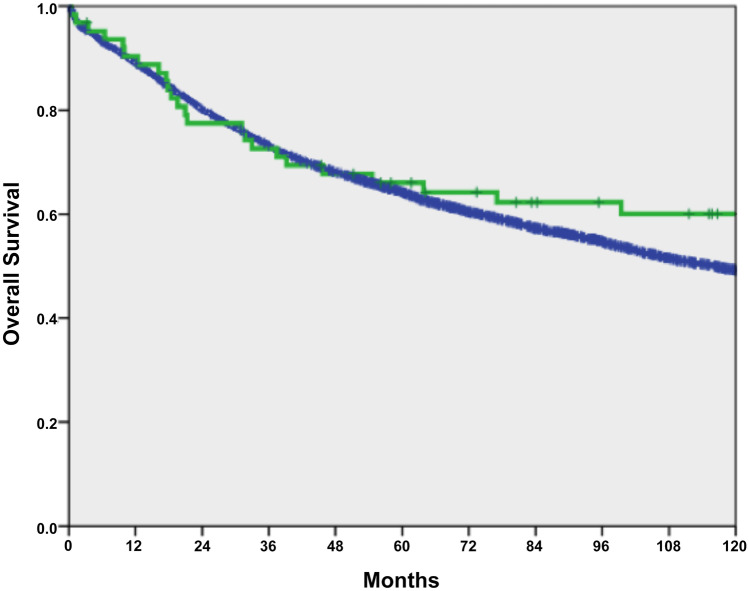
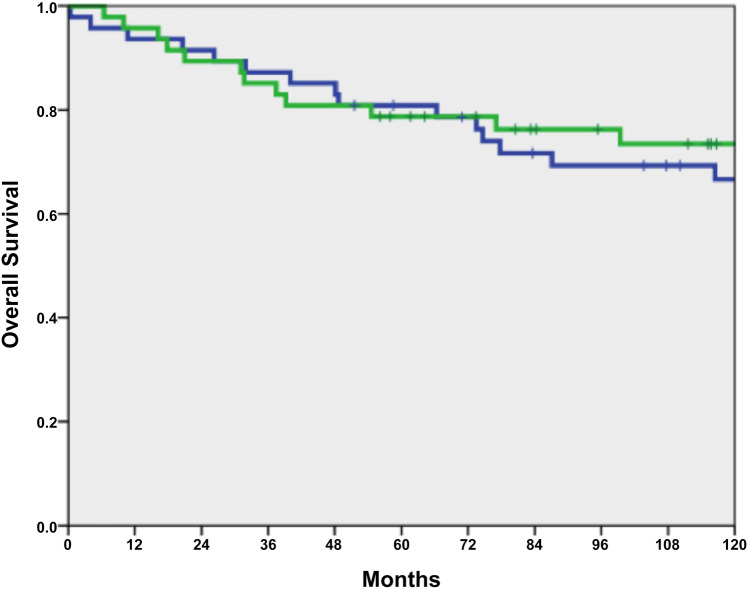
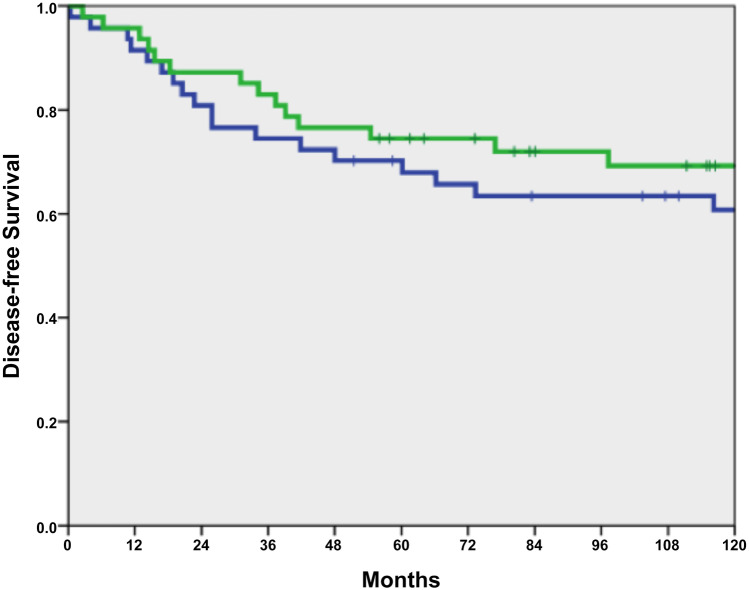
The clinical and pathological data of 63 patients with IBD-CRC and 3710 patients with sporadic CRC treated at the University Hospital of Erlangen between 1995 and 2015 were compared. Forty-seven M0 patients with IBD were matched with sporadic CRC patients after curative resection (R0) according to tumor localization, stage, sex, and year of treatment. Overall and disease-free survival were compared.
Sixty-three patients presented IBD-CRC. Fifty were affected with ulcerative colitis (UC) and 13 with Crohn's disease (CD). CRC was diagnosed within 1.45 years since last endoscopic surveillance. Twelve patients (19%) had a diagnosis of primary sclerosing cholangitis. In matched analysis, IBD patients were diagnosed with CRC at younger age compared to sporadic CRC and were more likely to have right-sided CRC (40% versus 23.3%) and rare histological subtypes (19% versus 9.2%). No differences in 5-year overall (78.7 versus 80.9 months) and 5-year disease-free survival (74.5 versus 70.2 months) were noted.
IBD-CRC patients were younger and more frequently had right-sided carcinomas compared to sporadic CRC. CRC in IBD patients did not show survival difference compared to matched-pair sporadic CRC patients without distant metastases after curative resection. Surveillance might be important for early detection of CRC in IBD patients.
炎症性肠病(IBD)患者结直肠癌(CRC)的风险增加。在 IBD 患者中,癌症通常在晚期诊断,与散发性 CRC 相比,生存数据存在冲突。本研究旨在直接比较 IBD-CRC 患者和散发性 CRC 患者的临床特征和预后。
比较了 1995 年至 2015 年在埃尔兰根大学医院治疗的 63 例 IBD-CRC 患者和 3710 例散发性 CRC 患者的临床和病理数据。47 例 M0 IBD 患者根据肿瘤定位、分期、性别和治疗年份与根治性切除(R0)后的散发性 CRC 患者匹配。比较总生存期和无病生存期。
63 例患者表现为 IBD-CRC。50 例为溃疡性结肠炎(UC),13 例为克罗恩病(CD)。CRC 在最后一次内镜监测后 1.45 年内诊断。12 例患者(19%)患有原发性硬化性胆管炎。在匹配分析中,与散发性 CRC 相比,IBD 患者诊断 CRC 的年龄更小,更可能发生右侧 CRC(40%比 23.3%)和罕见的组织学亚型(19%比 9.2%)。5 年总生存期(78.7 比 80.9 个月)和 5 年无病生存期(74.5 比 70.2 个月)无差异。
与散发性 CRC 相比,IBD-CRC 患者更年轻,更常发生右侧癌。在根治性切除后无远处转移的情况下,IBD 患者的 CRC 与匹配的散发性 CRC 患者的生存无差异。监测对于早期发现 IBD 患者的 CRC 可能很重要。