Department of Applied Health Research, UCL, London, UK.
BMC Med Res Methodol. 2021 Dec 5;21(1):274. doi: 10.1186/s12874-021-01466-9.
The relationship between ethnography and healthcare improvement has been the subject of methodological concern. We conducted a scoping review of ethnographic literature on healthcare improvement topics, with two aims: (1) to describe current ethnographic methods and practices in healthcare improvement research and (2) to consider how these may affect habit and skill formation in the service of healthcare improvement.
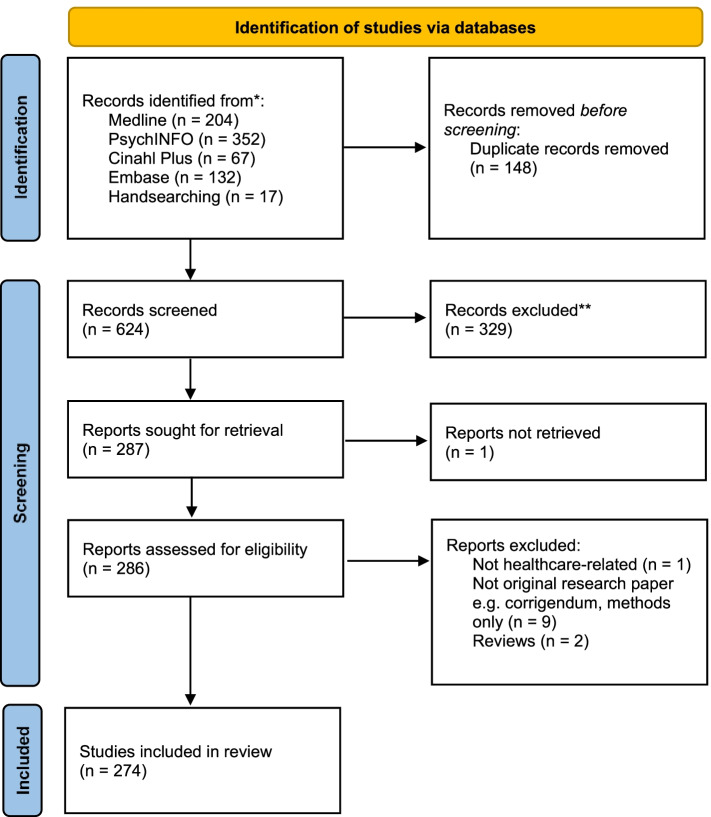
We used a scoping review methodology drawing on Arksey and O'Malley's methods and more recent guidance. We systematically searched electronic databases including Medline, PsychINFO, EMBASE and CINAHL for papers published between April 2013 - April 2018, with an update in September 2019. Information about study aims, methodology and recommendations for improvement were extracted. We used a theoretical framework outlining the habits and skills required for healthcare improvement to consider how ethnographic research may foster improvement skills.
We included 283 studies covering a wide range of healthcare topics and methods. Ethnography was commonly used for healthcare improvement research about vulnerable populations, e.g. elderly, psychiatry. Focussed ethnography was a prominent method, using a rapid feedback loop into improvement through focus and insider status. Ethnographic approaches such as the use of theory and focus on every day practices can foster improvement skills and habits such as creativity, learning and systems thinking.
We have identified that a variety of ethnographic approaches can be relevant to improvement. The skills and habits we identified may help ethnographers reflect on their approaches in planning healthcare improvement studies and guide peer-review in this field. An important area of future research will be to understand how ethnographic findings are received by decision-makers.
民族志与医疗保健改善之间的关系一直是方法学关注的主题。我们对关于医疗保健改善主题的民族志文献进行了范围界定审查,目的有二:(1)描述医疗保健改善研究中当前的民族志方法和实践;(2)考虑这些方法和实践如何影响医疗保健改善服务中的习惯和技能形成。
我们使用了一种范围界定审查方法,借鉴了 Arksey 和 O'Malley 的方法和最近的指导意见。我们系统地检索了电子数据库,包括 Medline、PsychINFO、EMBASE 和 CINAHL,以获取 2013 年 4 月至 2018 年 4 月期间发表的论文,并于 2019 年 9 月进行了更新。提取了关于研究目的、方法和改进建议的信息。我们使用了一个概述医疗保健改善所需习惯和技能的理论框架,以考虑民族志研究如何促进改善技能。
我们纳入了 283 项研究,涵盖了广泛的医疗保健主题和方法。民族志通常用于研究弱势群体的医疗保健改善问题,例如老年人、精神病学。聚焦民族志是一种突出的方法,通过聚焦和内部人士地位,快速反馈到改善中。民族志方法,如使用理论和关注日常实践,可以培养创造力、学习和系统思维等改善技能和习惯。
我们已经确定了多种民族志方法可以与改善相关。我们确定的技能和习惯可以帮助民族志学家在规划医疗保健改善研究时反思他们的方法,并指导该领域的同行评审。未来的一个重要研究领域将是了解决策者如何接受民族志研究结果。