Zhu Chaojun, Wang Zihuan, Cai Jianqun, Pan Chunqiu, Lin Simin, Zhang Yue, Chen Yuting, Leng Mengxin, He Chengcheng, Zhou Peirong, Wu Changjie, Fang Yuxin, Li Qingyuan, Li Aimin, Liu Side, Lai Qiuhua
Guangdong Provincial Key Laboratory of Gastroenterology, Department of Gastroenterology, Nanfang Hospital, Southern Medical University, Guangzhou, China.
Department of Emergency Medicine, Nanfang Hospital, Southern Medical University, Guangzhou, China.
Front Pharmacol. 2021 Nov 16;12:727704. doi: 10.3389/fphar.2021.727704. eCollection 2021.
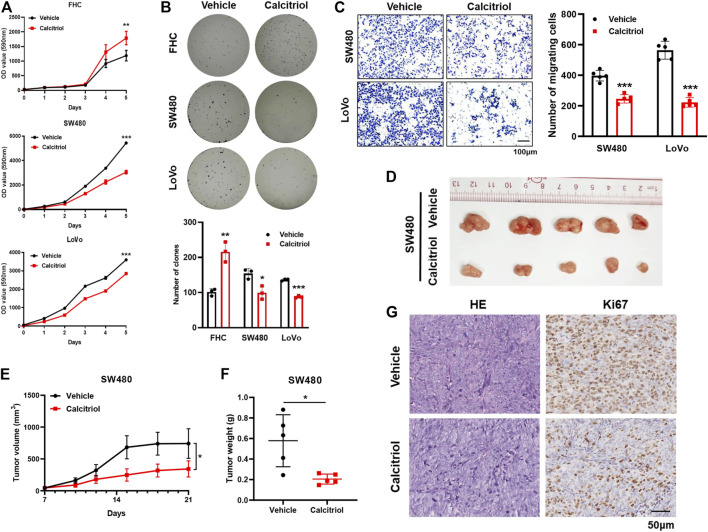
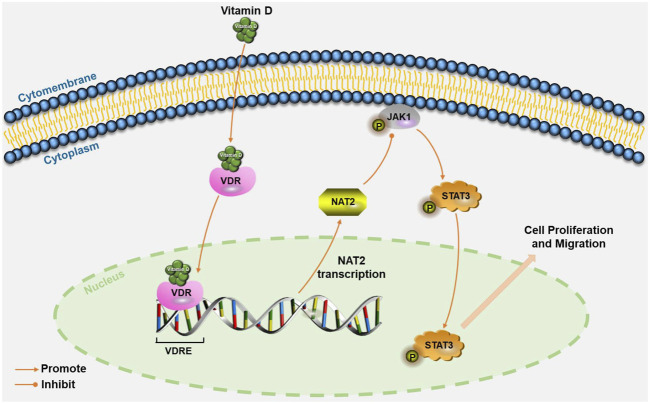
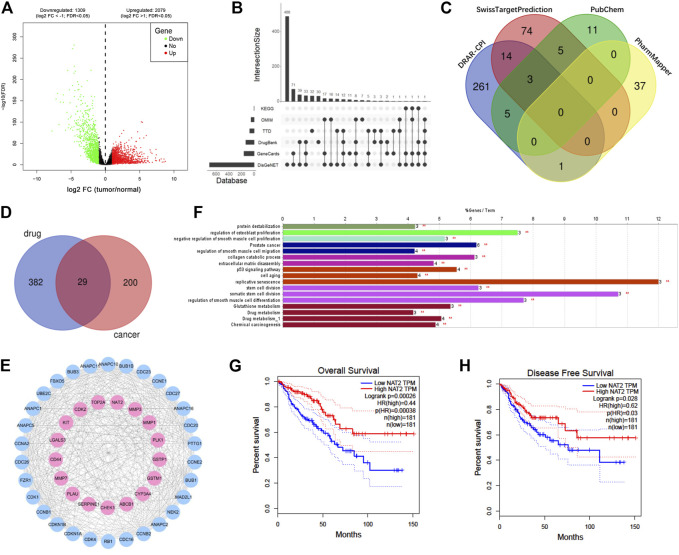
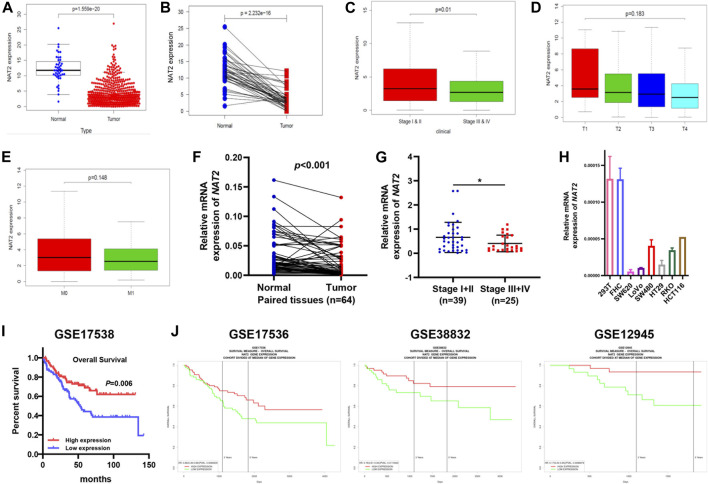
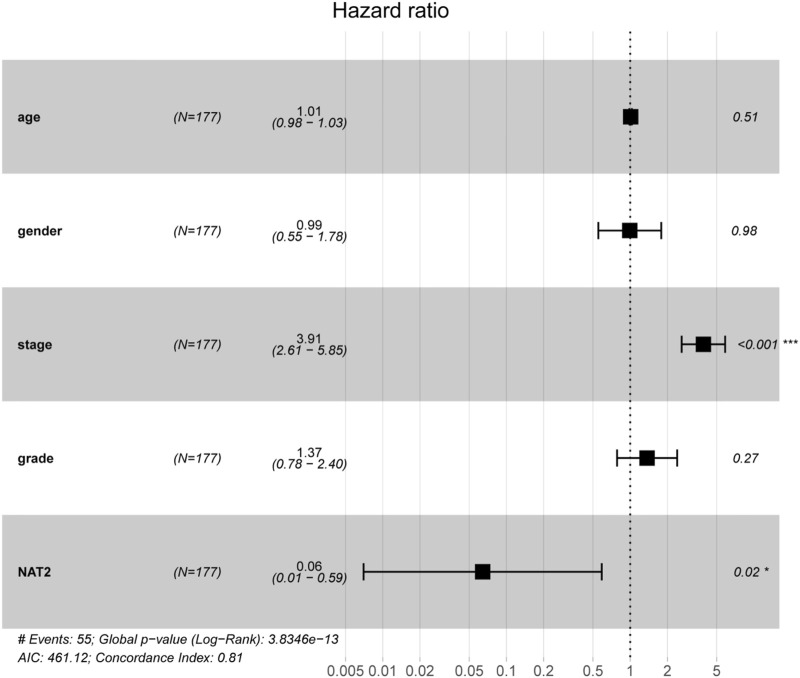
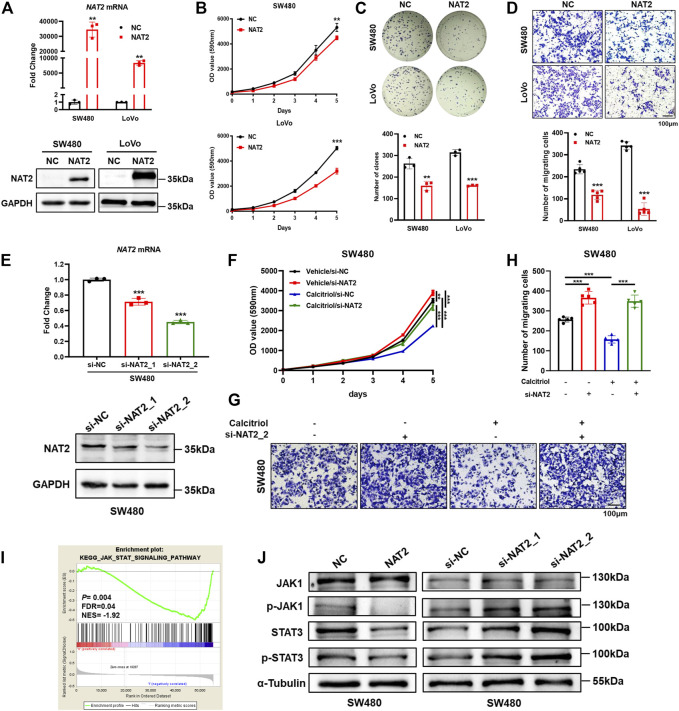
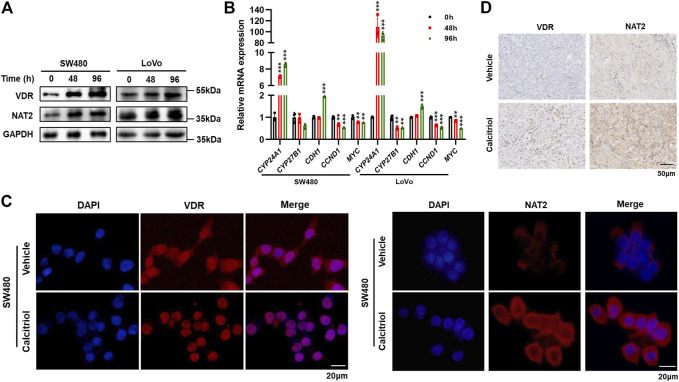
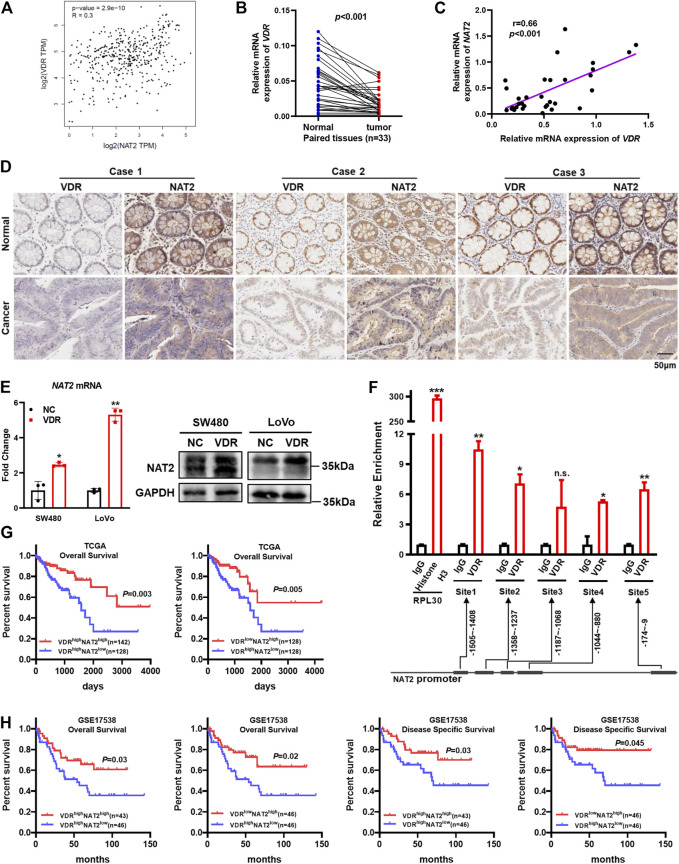
Recent epidemiological and preclinical evidence indicates that vitamin D inhibits colorectal cancer (CRC) progression, but the mechanism has not been completely elucidated. This study was designed to determine the protective effects of vitamin D and identify crucial targets and regulatory mechanisms in CRC. First, we confirmed that 1,25(OH)D, the active form of vitamin D, suppressed the aggressive phenotype of CRC and . Based on a network pharmacological analysis, N-acetyltransferase 2 (NAT2) was identified as a potential target of vitamin D against CRC. Clinical data of CRC patients from our hospital and bioinformatics analysis by online databases indicated that NAT2 was downregulated in CRC specimens and that the lower expression of NAT2 was correlated with a higher metastasis risk and lower survival rate of CRC patients. Furthermore, we found that NAT2 suppressed the proliferation and migration capacity of CRC cells, and the JAK1/STAT3 signaling pathway might be the underlying mechanism. Moreover, Western blot and immunofluorescence staining assays demonstrated that 1,25(OH)D promoted NAT2 expression, and the chromatin immunoprecipitation assay indicated that the vitamin D receptor (VDR) transcriptionally regulated NAT2. These findings expand the potential uses of vitamin D against CRC and introduce VDR signaling via the enzyme NAT2 as a potential diagnostic and therapeutic target for CRC.
近期的流行病学和临床前证据表明,维生素D可抑制结直肠癌(CRC)进展,但其机制尚未完全阐明。本研究旨在确定维生素D的保护作用,并确定CRC中的关键靶点和调控机制。首先,我们证实维生素D的活性形式1,25(OH)D可抑制CRC的侵袭性表型。基于网络药理学分析,N-乙酰基转移酶2(NAT2)被确定为维生素D抗CRC的潜在靶点。我院CRC患者的临床数据以及在线数据库的生物信息学分析表明,NAT2在CRC标本中表达下调,且NAT2的低表达与CRC患者的高转移风险和低生存率相关。此外,我们发现NAT2可抑制CRC细胞的增殖和迁移能力,JAK1/STAT3信号通路可能是其潜在机制。此外,蛋白质免疫印迹和免疫荧光染色分析表明,1,25(OH)D可促进NAT2表达,染色质免疫沉淀分析表明维生素D受体(VDR)可转录调控NAT2。这些发现拓展了维生素D抗CRC的潜在用途,并引入了通过酶NAT2的VDR信号通路作为CRC潜在的诊断和治疗靶点。