Vaccine and Gene Therapy Institute, Oregon Health and Science University, Portland, OR, United States.
Oregon National Primate Research Center, Oregon Health and Science University, Portland, OR, United States.
Front Immunol. 2021 Nov 19;12:794638. doi: 10.3389/fimmu.2021.794638. eCollection 2021.
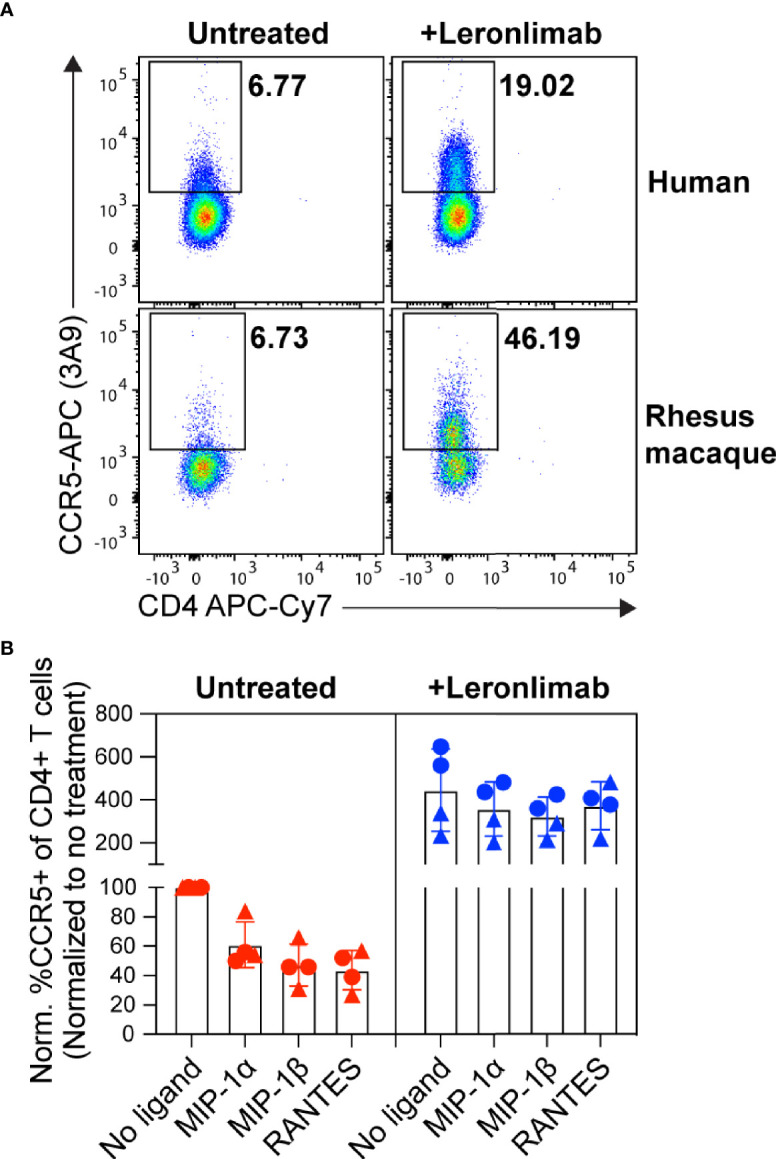
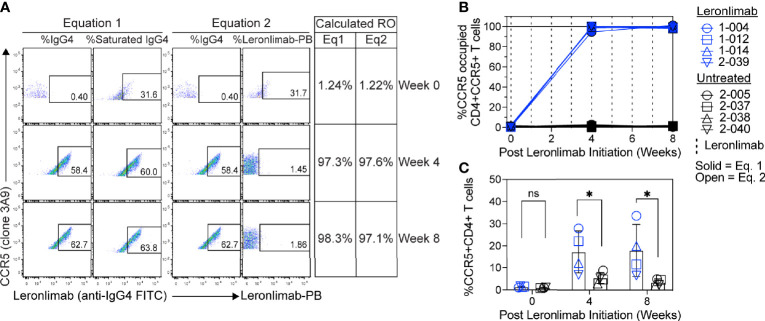
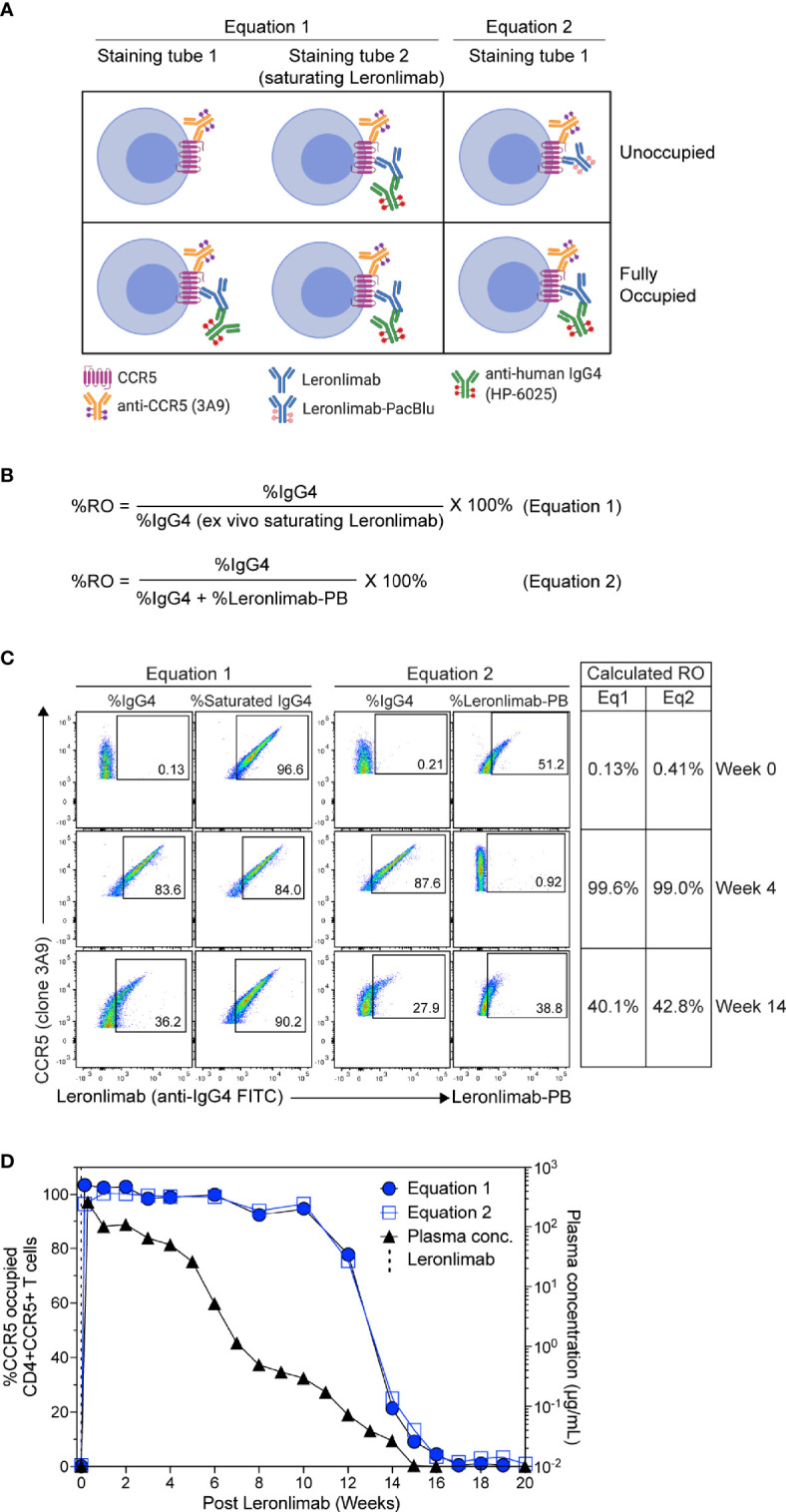
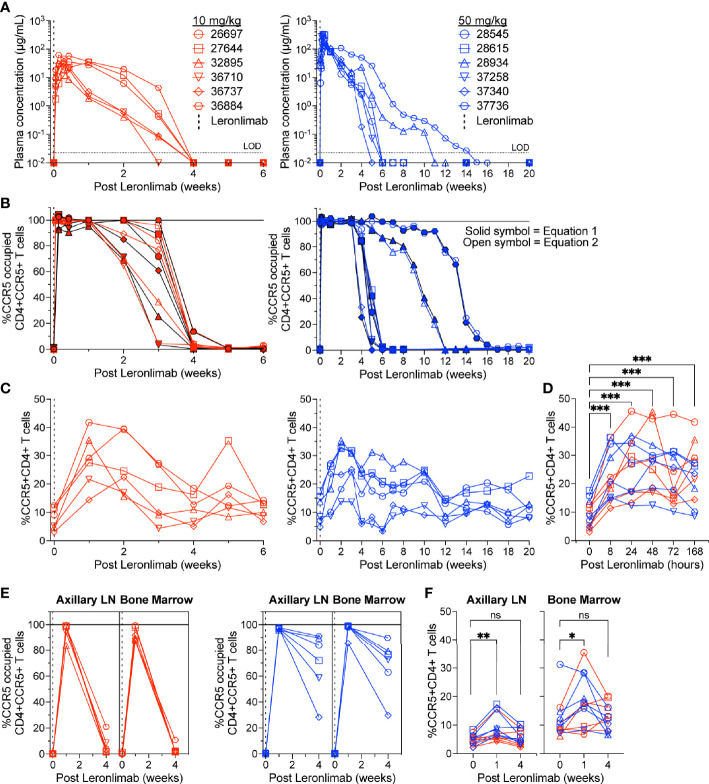
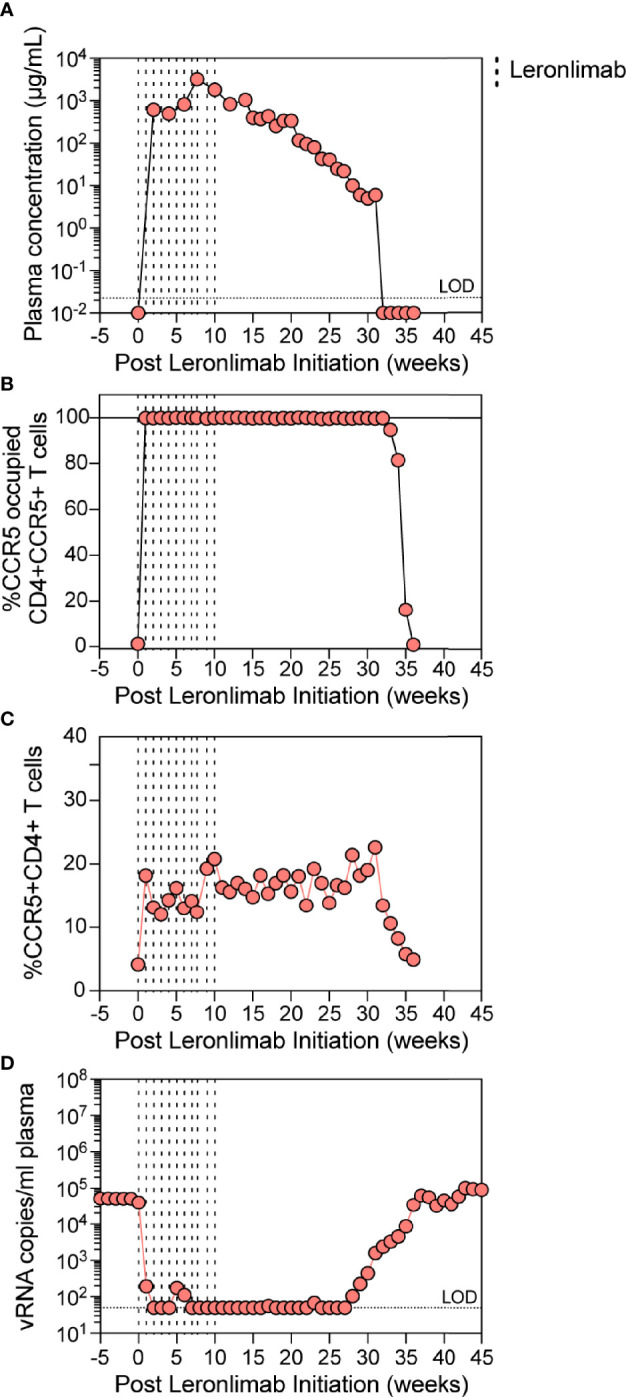
CCR5 plays a central role in infectious disease, host defense, and cancer progression, thereby making it an ideal target for therapeutic development. Notably, CCR5 is the major HIV entry co-receptor, where its surface density correlates with HIV plasma viremia. The level of CCR5 receptor occupancy (RO) achieved by a CCR5-targeting therapeutic is therefore a critical predictor of its efficacy. However, current methods to measure CCR5 RO lack sensitivity, resulting in high background and overcalculation. Here, we report on two independent, flow cytometric methods of calculating CCR5 RO using the anti-CCR5 antibody, Leronlimab. We show that both methods led to comparable CCR5 RO values, with low background on untreated CCR5+CD4+ T cells and sensitive measurements of occupancy on both blood and tissue-resident CD4+ T cells that correlated longitudinally with plasma concentrations in Leronlimab-treated macaques. Using these assays, we found that Leronlimab stabilized cell surface CCR5, leading to an increase in the levels of circulating and tissue-resident CCR5+CD4+ T cells in Leronlimab-treated macaques. Weekly Leronlimab treatment in a chronically SIV-infected macaque led to increased CCR5+CD4+ T cells levels and fully suppressed plasma viremia, both concomitant with full CCR5 RO on peripheral blood CD4+ T cells, demonstrating that CCR5+CD4+ T cells were protected from viral replication by Leronlimab binding. Finally, we extended these results to Leronlimab-treated humans and found that weekly 700 mg Leronlimab led to complete CCR5 RO on peripheral blood CD4+ T cells and a statistically significant increase in CCR5+CD4+ T cells in peripheral blood. Collectively, these results establish two RO calculation methods for longitudinal monitoring of anti-CCR5 therapeutic antibody blockade efficacy in both macaques and humans, demonstrate that CCR5+CD4+ T cell levels temporarily increase with Leronlimab treatment, and facilitate future detailed investigations into the immunological impacts of CCR5 inhibition in multiple pathophysiological processes.
CCR5 在传染病、宿主防御和癌症进展中发挥核心作用,因此成为治疗开发的理想靶点。值得注意的是,CCR5 是 HIV 进入的主要共受体,其表面密度与 HIV 血浆病毒血症相关。因此,靶向 CCR5 的治疗药物的 CCR5 受体占有率(RO)水平是其疗效的关键预测指标。然而,目前测量 CCR5 RO 的方法缺乏灵敏度,导致背景高且计算过度。在这里,我们报告了两种独立的、使用抗 CCR5 抗体 Leronlimab 计算 CCR5 RO 的流式细胞术方法。我们表明,这两种方法都导致了可比的 CCR5 RO 值,未经处理的 CCR5+CD4+T 细胞的背景低,并且对血液和组织驻留的 CD4+T 细胞的占有率具有敏感性测量,这些测量与接受 Leronlimab 治疗的猕猴中的血浆浓度呈纵向相关。使用这些测定法,我们发现 Leronlimab 稳定了细胞表面 CCR5,导致接受 Leronlimab 治疗的猕猴中循环和组织驻留的 CCR5+CD4+T 细胞水平增加。在慢性 SIV 感染的猕猴中每周给予 Leronlimab 治疗导致 CCR5+CD4+T 细胞水平升高,血浆病毒血症完全抑制,同时外周血 CD4+T 细胞的 CCR5 RO 完全,证明 CCR5+CD4+T 细胞受到 Leronlimab 结合的保护而免受病毒复制的影响。最后,我们将这些结果扩展到接受 Leronlimab 治疗的人类,发现每周给予 700mg Leronlimab 可导致外周血 CD4+T 细胞完全 CCR5 RO,并在外周血中 CCR5+CD4+T 细胞的数量上有统计学意义的增加。总的来说,这些结果为在猕猴和人类中纵向监测抗 CCR5 治疗性抗体阻断效果建立了两种 RO 计算方法,证明 Leronlimab 治疗后 CCR5+CD4+T 细胞水平暂时升高,并促进了未来对 CCR5 抑制在多种病理生理过程中的免疫影响的详细研究。