Joseph Jacquleen, Irshad S Mohammed, Alex Allan Mathew
Jamsetji Tata School of Disaster Studies, Tata Institute of Social Sciences, Mumbai, India.
Int J Disaster Risk Reduct. 2021 Dec;66:102555. doi: 10.1016/j.ijdrr.2021.102555.
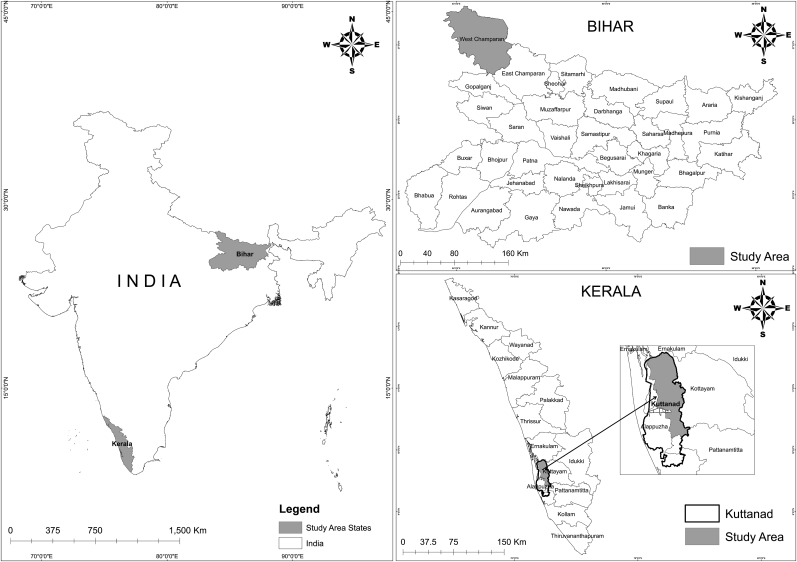
Formal interventions are rationalized to be irreplaceable, especially with marginalized communities that are presumed to lack capacity. It is event centric and differ considerably from the community's experience of disaster risk and recovery within the everyday context. Thus, community engagement with multiple formal institutions that often fail to address recovery needs of the most marginalized, is inevitable. These contradictions lead to varied forms of community assertion towards addressing structural inequalities and injustices. In this paper we explore these contradictions by drawing from the work of scholars who recognize the limits of procedural justice and push for distributive justice, especially by focusing on grassroots processes using the lens of the politics of neo-liberalism and ontology of possibilities. Using a multi-sited instrumental case study approach the paper explores community's lived experiences, factors contributing to the persistence of structural inequality and injustice, and the alternate conception of justice and their assertions, in the disaster recovery context. The two case studies - Vistapit Mukti Vahini and Thayillam, inform an alternate theoretical conception of disaster recovery embedded in structural inequalities and injustices through the following three perspectives: Firstly how disaster risk and recovery emerge from historical and everyday lived reality of marginalized communities, their social relations and resulting material conditions; Secondly how challenging everyday social relations, processes and injustices is central to the community's alternate conception and assertion for disaster recovery; and finally how community assertion and recovery relies on the mobilization of vulnerability, which could mean being exposed and agentic at the same time.
正式干预措施被认为是不可替代的,尤其是对于那些被认为缺乏能力的边缘化社区。它以事件为中心,与社区在日常环境中对灾害风险和恢复的体验有很大不同。因此,社区与多个往往无法满足最边缘化群体恢复需求的正式机构的接触是不可避免的。这些矛盾导致了社区为解决结构性不平等和不公正问题而采取的各种形式的主张。在本文中,我们借鉴了一些学者的研究成果来探讨这些矛盾,这些学者认识到程序正义的局限性,并推动分配正义,特别是通过新自由主义政治视角和可能性本体论关注基层进程。本文采用多地点工具性案例研究方法,探讨了在灾害恢复背景下社区的生活经历、导致结构性不平等和不公正持续存在的因素,以及正义的替代概念及其主张。两个案例研究——维斯塔皮特·穆克蒂·瓦希尼和泰伊拉姆,通过以下三个视角,形成了一种嵌入结构性不平等和不公正的灾害恢复替代理论概念:首先,灾害风险和恢复如何从边缘化社区的历史和日常生活现实、他们的社会关系以及由此产生的物质条件中产生;其次,挑战日常社会关系、过程和不公正如何是社区对灾害恢复的替代概念和主张的核心;最后,社区的主张和恢复如何依赖于对脆弱性的动员,这可能意味着同时既暴露又有能动性。