Zhao Ziyi, Zeng Jinhao, Guo Qiang, Pu Kunming, Yang Yi, Chen Nianzhi, Zhang Gang, Zhao Maoyuan, Zheng Qiao, Tang Jianyuan, Hu Qiongying
Traditional Chinese Medicine (TCM) Regulating Metabolic Diseases Key Laboratory of Sichuan Province, Chengdu, China.
Hospital of Chengdu University of Traditional Chinese Medicine, Chengdu, China.
Front Oncol. 2021 Nov 15;11:775418. doi: 10.3389/fonc.2021.775418. eCollection 2021.
Cancer stem cells (CSCs) are able to survive after cancer therapies, resulting in tumor progression and recurrence, as is seen in colorectal cancer. Therapies targeting CSCs are regarded as novel and promising strategies for efficiently eradicating tumors. Berberine, an isoquinoline alkaloid extracted from the Chinese herbal medicine Coptis chinensis, was found to have antitumor activities against colorectal cancer, without knowing whether it exerts inhibitory effects on colorectal CSCs and the potential mechanisms.
In this study, we examined the inhibitory roles of Berberine on CSCs derived from HCT116 and HT29 by culturing in serum-free medium. We also examined the effects of Berberine on mA methylation regulating fat mass and obesity-associated protein (FTO), by downregulating β-catenin.
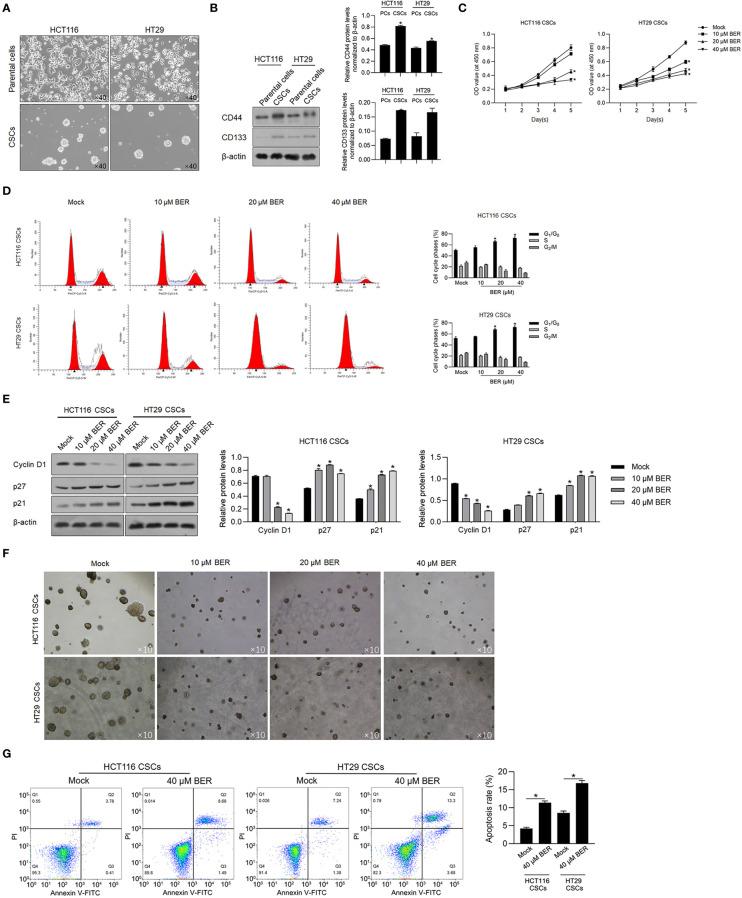
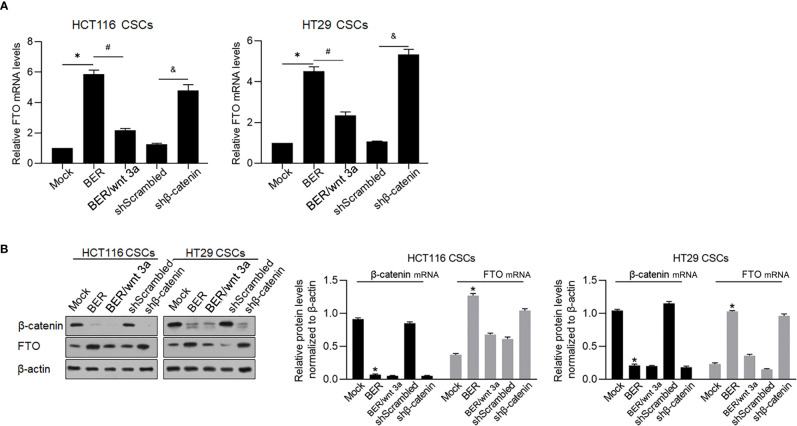
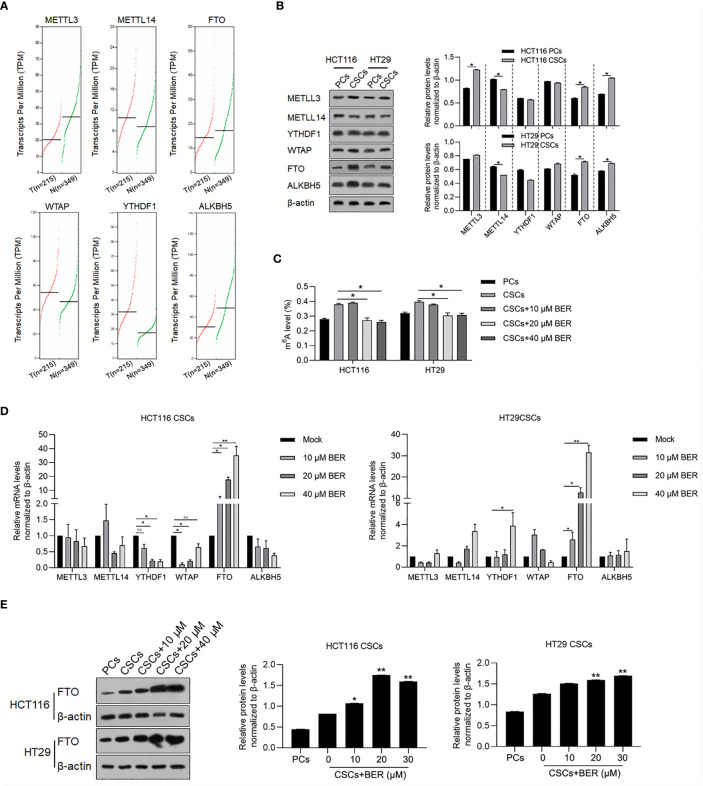
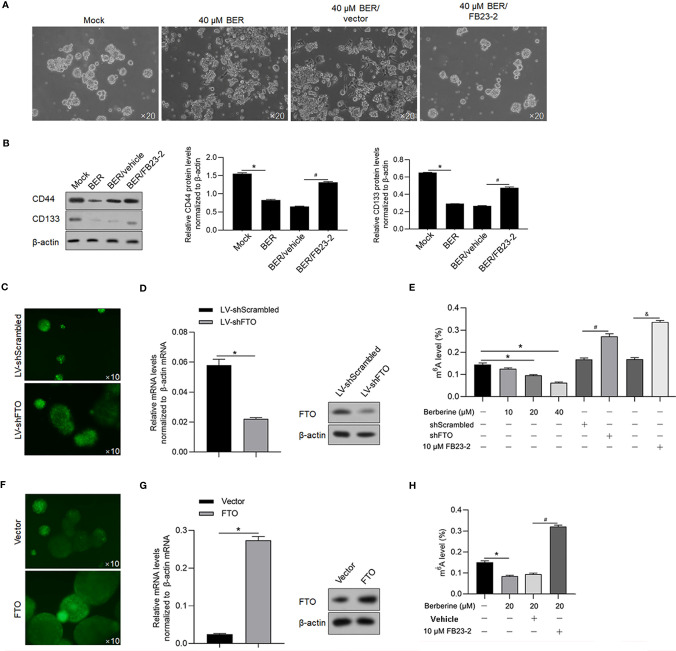
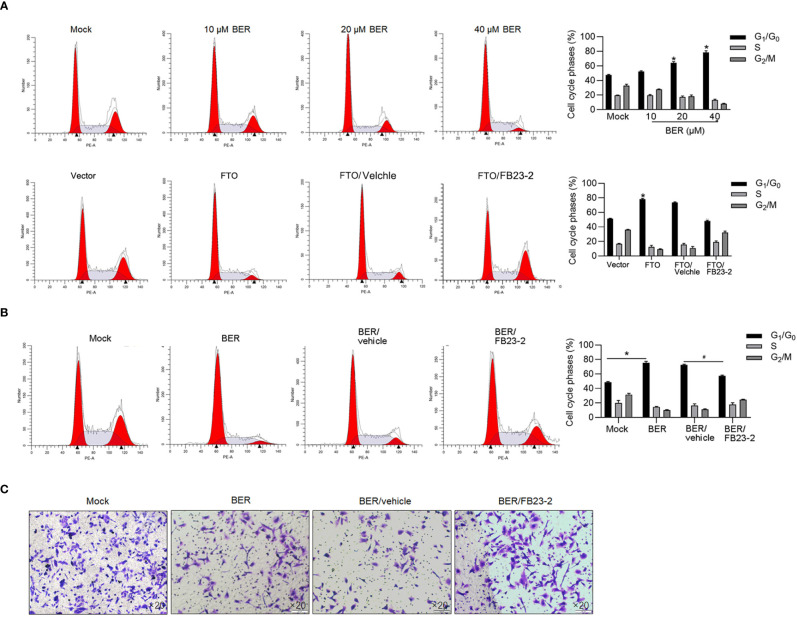
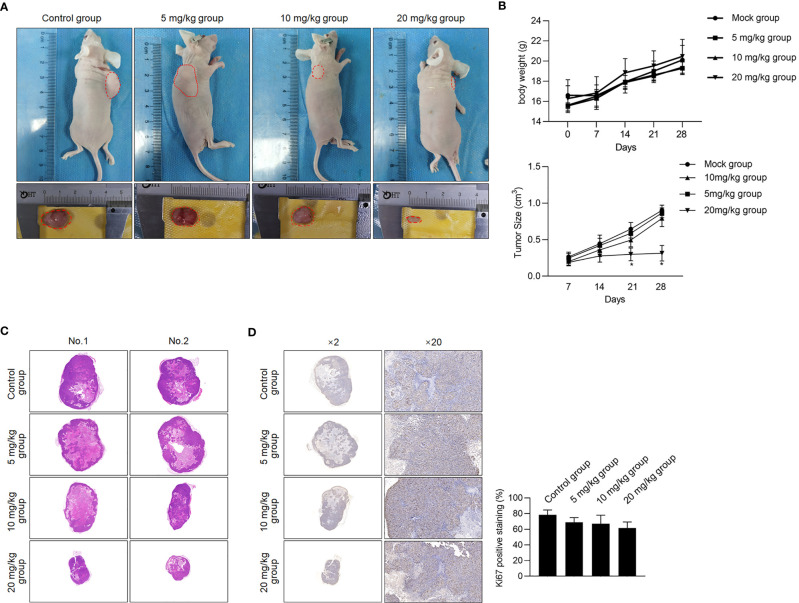
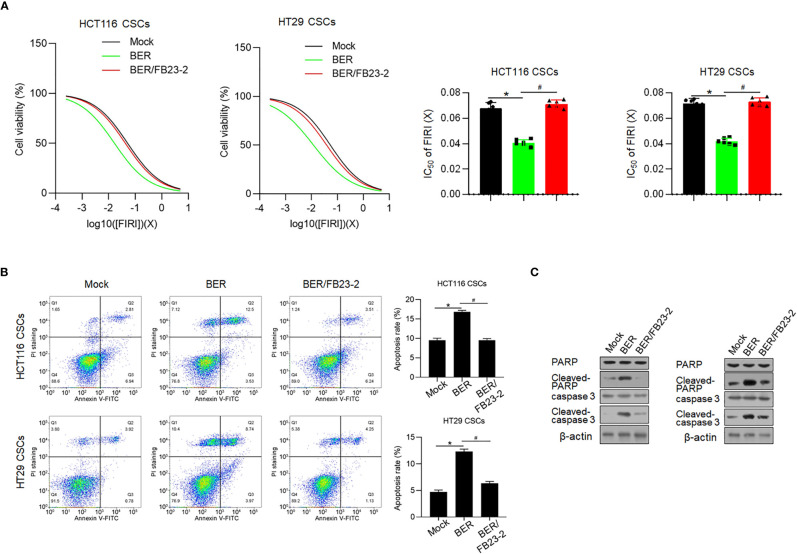
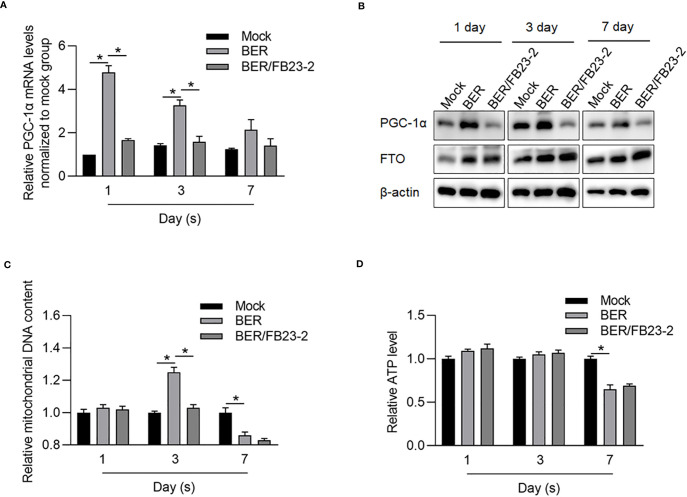
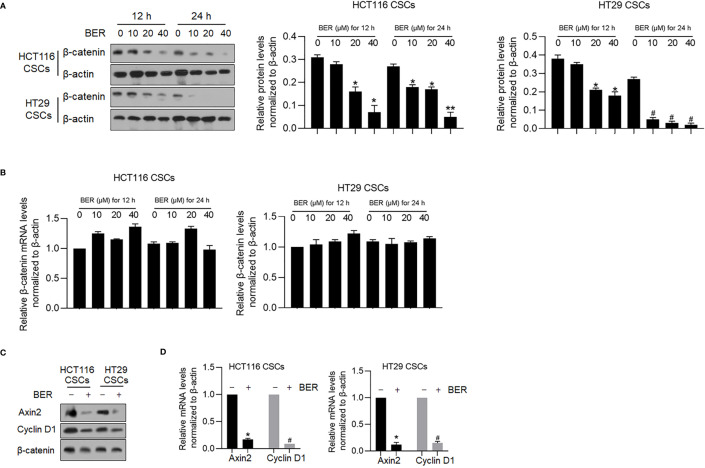
We examined the effects of Berberine on the tumorigenicity, growth, and stemness of colorectal cancer stem-like cells. The regulatory effect of Berberine on N6-methyladenosine (mA), an abundant mRNA modification, was also examined. Berberine treatment decreased cell proliferation by decreasing cyclin D1 and increasing p27 and p21 and subsequently induced cell cycle arrest at the G/G phase. Berberine treatment also decreased colony formation and induced apoptosis. Berberine treatment transcriptionally increased FTO and thus decreased mA methylation, which was reversed by both FTO knockdown and the addition of the FTO inhibitor FB23-2. Berberine induced FTO-related decreases in stemness in HCT116 and HT29 CSCs. Berberine treatment also increased chemosensitivity in CSCs and promoted chemotherapy agent-induced apoptosis. Moreover, we also found that Berberine treatment increased FTO by decreasing β-catenin, which is a negative regulator of FTO.
Our observation that Berberine effectively decreased mA methylation by decreasing β-catenin and subsequently increased FTO suggests a role of Berberine in modulating stemness and malignant behaviors in colorectal CSCs.
癌症干细胞(CSCs)能够在癌症治疗后存活,导致肿瘤进展和复发,这在结直肠癌中很常见。靶向CSCs的治疗方法被认为是有效根除肿瘤的新颖且有前景的策略。黄连素是从中药黄连中提取的一种异喹啉生物碱,已发现其对结直肠癌具有抗肿瘤活性,但尚不清楚它是否对结直肠癌CSCs发挥抑制作用及其潜在机制。
在本研究中,我们通过在无血清培养基中培养来检测黄连素对源自HCT116和HT29的CSCs的抑制作用。我们还通过下调β-连环蛋白来检测黄连素对调节脂肪量和肥胖相关蛋白(FTO)的m⁶A甲基化的影响。
我们检测了黄连素对结直肠癌干细胞样细胞的致瘤性、生长和干性的影响。还检测了黄连素对丰富的mRNA修饰N⁶-甲基腺苷(m⁶A)的调节作用。黄连素处理通过降低细胞周期蛋白D1并增加p27和p21来减少细胞增殖,随后诱导细胞周期停滞在G₀/G₁期。黄连素处理还减少了集落形成并诱导了细胞凋亡。黄连素处理在转录水平上增加了FTO,从而降低了m⁶A甲基化,FTO敲低和添加FTO抑制剂FB23-2均可逆转这种情况。黄连素诱导HCT116和HT29 CSCs中与FTO相关的干性降低。黄连素处理还增加了CSCs对化疗的敏感性并促进了化疗药物诱导的细胞凋亡。此外,我们还发现黄连素处理通过降低作为FTO负调节因子的β-连环蛋白来增加FTO。
我们观察到黄连素通过降低β-连环蛋白有效降低m⁶A甲基化,随后增加FTO,这表明黄连素在调节结直肠癌CSCs的干性和恶性行为中发挥作用。