Department of Epidemiology and Health Statistics, School of Public Health, Cheeloo College of Medicine, Shandong University, Jinan, China.
Clinical Epidemiology Unit, Qilu Hospital of Shandong University, 107 Wenhuaxi Road, Jinan, Shandong 250012, China; Clinical Research Center of Shandong University, Qilu Hospital, Cheeloo College of Medicine, Shandong University, Jinan, China.
Neoplasia. 2022 Jan;24(1):12-21. doi: 10.1016/j.neo.2021.11.013. Epub 2021 Dec 3.
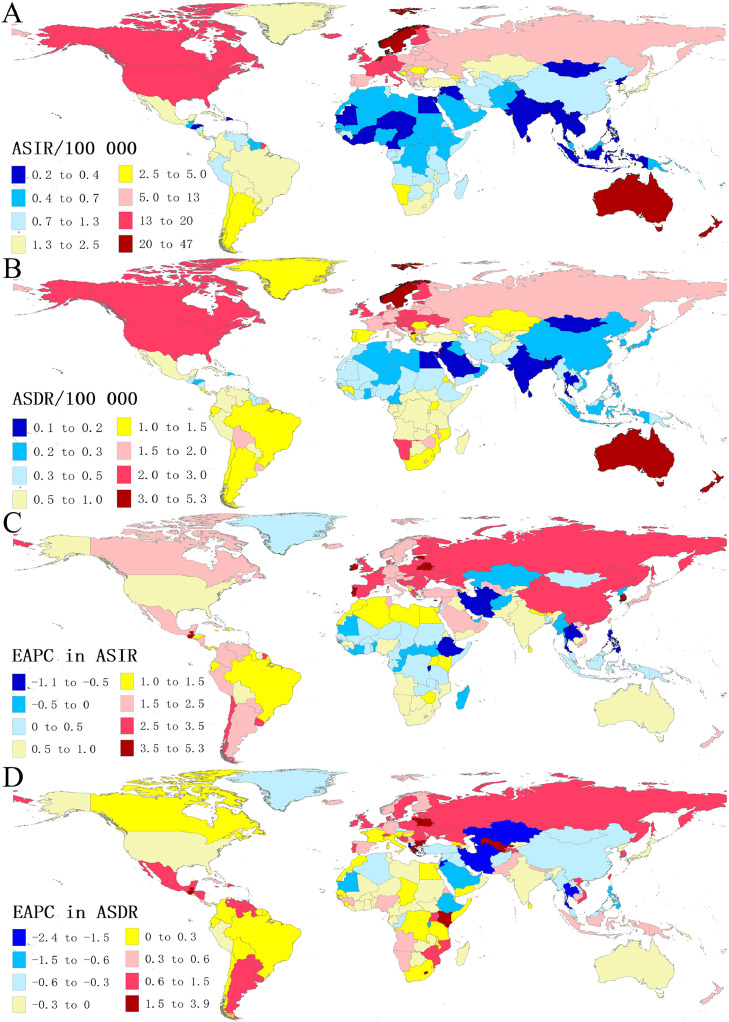
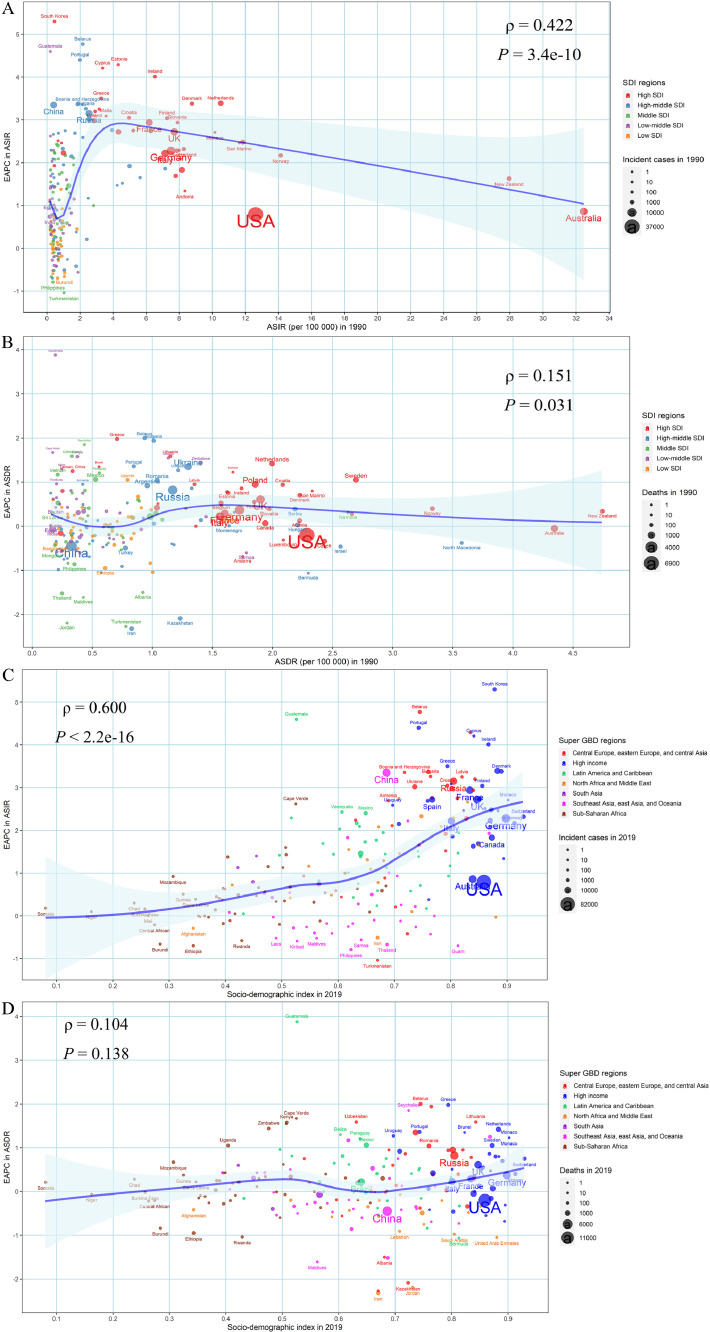
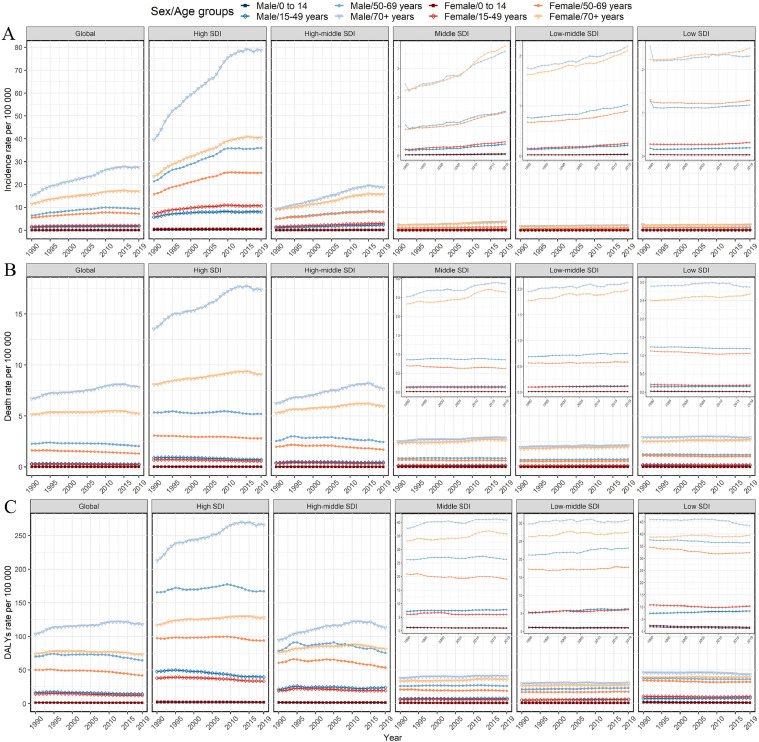
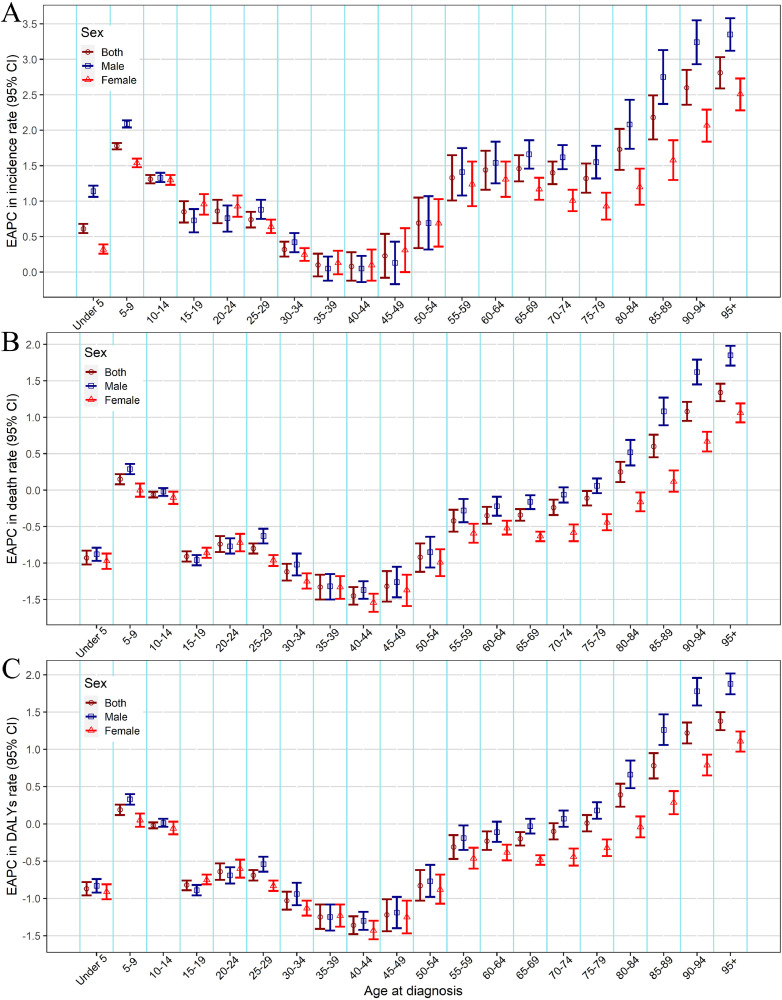
This study aimed to estimate the latest magnitudes and temporal trends of melanoma burden at the national, regional, and global levels. The data on melanoma incidence, deaths, and disability-adjusted life-years (DALYs) in 204 countries and territories between 1990 and 2019 came from the Global Burden of Disease 2019 Study. Estimated annual percentage change (EAPC) was calculated to depict the temporal trends and Spearman rank correlation was used to analyze the influential factors of EAPC. From 1990 to 2019, the incident cases of melanoma increased by 170% to 289,950, death increased by 90% to 62,840, and DALYs increased by 67% to 1,707,800 globally. The age-standardized incidence rate (ASIR) of melanoma increased globally by an average of 1.13 [95% confidence interval (CI): 0.93-1.32], while the age-standardized rates of death and DALYs both declined with the EAPC of -0.27 (95% CI: -0.36 to -0.19) and -0.49 (95% CI: -0.57 to -0.41). In 2019, the highest burden of melanoma was observed in Australasia, followed by high-income North America and Europe regions, which all presented an incremental growth in ASIR. The positive association between the EAPC in ASIR and socio-demographic index (SDI) in 2019 (ρ = 0.600, P < 0.001) suggested that countries with higher SDI have experienced a more rapid increase in ASIR of melanoma. In conclusion, the burden of melanoma is increasing globally but differed greatly across the world. Notably, the high burden areas are facing a continuing increase in incidence, which implies more targeted strategies should be taken for reducing the increasing melanoma burden.
本研究旨在估算全球、地区和国家层面上黑色素瘤负担的最新规模和时间趋势。204 个国家和地区 1990 年至 2019 年间黑色素瘤发病率、死亡率和伤残调整生命年(DALY)的数据来源于 2019 年全球疾病负担研究。采用估计年度百分比变化(EAPC)来描述时间趋势,并采用 Spearman 秩相关分析来分析 EAPC 的影响因素。1990 年至 2019 年期间,全球黑色素瘤的发病例数增加了 170%至 289950 例,死亡人数增加了 90%至 62840 人,伤残调整生命年增加了 67%至 1707800 年。全球黑色素瘤的年龄标准化发病率(ASIR)平均每年增加 1.13%(95%置信区间[CI]:0.93-1.32),而年龄标准化死亡率和伤残调整生命年均呈下降趋势,EAPC 分别为-0.27(95%CI:-0.36 至-0.19)和-0.49(95%CI:-0.57 至-0.41)。2019 年,黑色素瘤负担最高的地区是澳大拉西亚,其次是高收入的北美和欧洲地区,这些地区的 ASIR 均呈递增趋势。2019 年 ASIR 的 EAPC 与社会人口指数(SDI)呈正相关(ρ=0.600,P<0.001),表明 SDI 较高的国家黑色素瘤的 ASIR 增长更快。总之,黑色素瘤的负担在全球范围内呈上升趋势,但在世界范围内差异很大。值得注意的是,高负担地区的发病率仍在持续上升,这意味着需要采取更有针对性的策略来降低不断增加的黑色素瘤负担。