Department of Pediatrics I, Neonatology, Pediatric Intensive Care Medicine, and Pediatric Neurology, University Hospital Essen, University of Duisburg-Essen, Essen, Germany.
Westdeutsches Zentrum für Infektiologie, University of Duisburg-Essen, Essen, Germany.
Pediatr Res. 2022 Jan;91(2):440-446. doi: 10.1038/s41390-021-01878-9. Epub 2021 Dec 6.
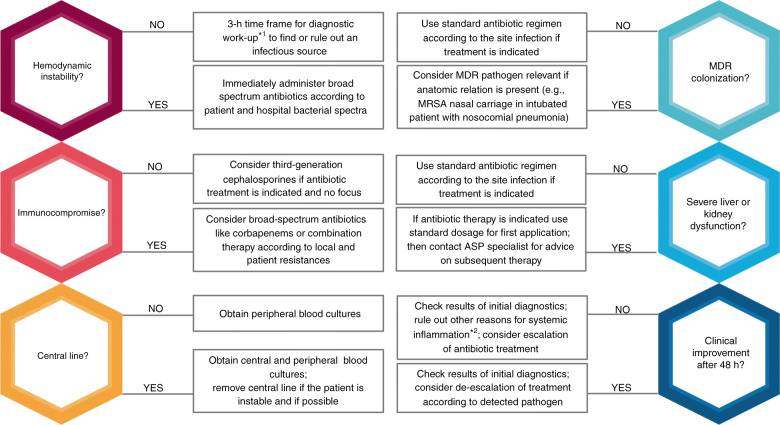
Especially critically ill children are exposed to antibiotic overtreatment, mainly caused by the fear of missing out a severe bacterial infection. Potential adverse effects and selection of multi-drug resistant bacteria play minor roles in decision making. This narrative review first describes harm from antibiotics and second focuses on different aspects that could help to reduce antibiotic overtreatment without harming the patient: harm from antibiotic treatment, diagnostic approaches, role of biomarkers, timing of antibiotic therapy, empiric therapy, targeted therapy, and therapeutic drug monitoring. Wherever possible, we linked the described evidence to the current Surviving Sepsis Campaign guidelines. Antibiotic stewardship programs should help guiding antibiotic therapy for critically ill children. IMPACT: Critically ill children can be harmed by inadequate or overuse of antibiotics. Hemodynamically unstable children with a suspicion of infection should be immediately treated with broad-spectrum antibiotics. In contrast, in hemodynamically stable children with sepsis and organ dysfunction, a time frame of 3 h for proper diagnostics may be adequate before starting antibiotics if necessary. Less and more targeted antibiotic treatment can be achieved via antibiotic stewardship programs.
特别危重症患儿面临抗生素过度治疗的风险,主要是因为担心漏诊严重细菌感染。潜在的不良反应和多药耐药菌的选择在决策中作用较小。本综述首先描述了抗生素的危害,其次重点关注了有助于减少抗生素过度治疗而又不损害患者的几个方面:抗生素治疗的危害、诊断方法、生物标志物的作用、抗生素治疗时机、经验性治疗、靶向治疗和治疗药物监测。在可能的情况下,我们将描述的证据与当前的《拯救脓毒症运动指南》联系起来。抗生素管理计划应有助于指导危重症患儿的抗生素治疗。意义:抗生素使用不足或过度都会对危重症患儿造成危害。怀疑感染且血流动力学不稳定的患儿应立即给予广谱抗生素治疗。相反,对于血流动力学稳定但有败血症和器官功能障碍的患儿,如果需要,在开始抗生素治疗之前,有 3 小时的时间进行适当的诊断可能就足够了。通过抗生素管理计划可以实现更少和更有针对性的抗生素治疗。