Department of Cardiology, Erasmus MC, University Medical Center Rotterdam, P.O. Box 2040, 3000, CA, Rotterdam, The Netherlands.
Department of Cardiology, Yeditepe University Hospital, Istanbul, Turkey.
Cardiovasc Ultrasound. 2021 Dec 8;19(1):38. doi: 10.1186/s12947-021-00269-8.
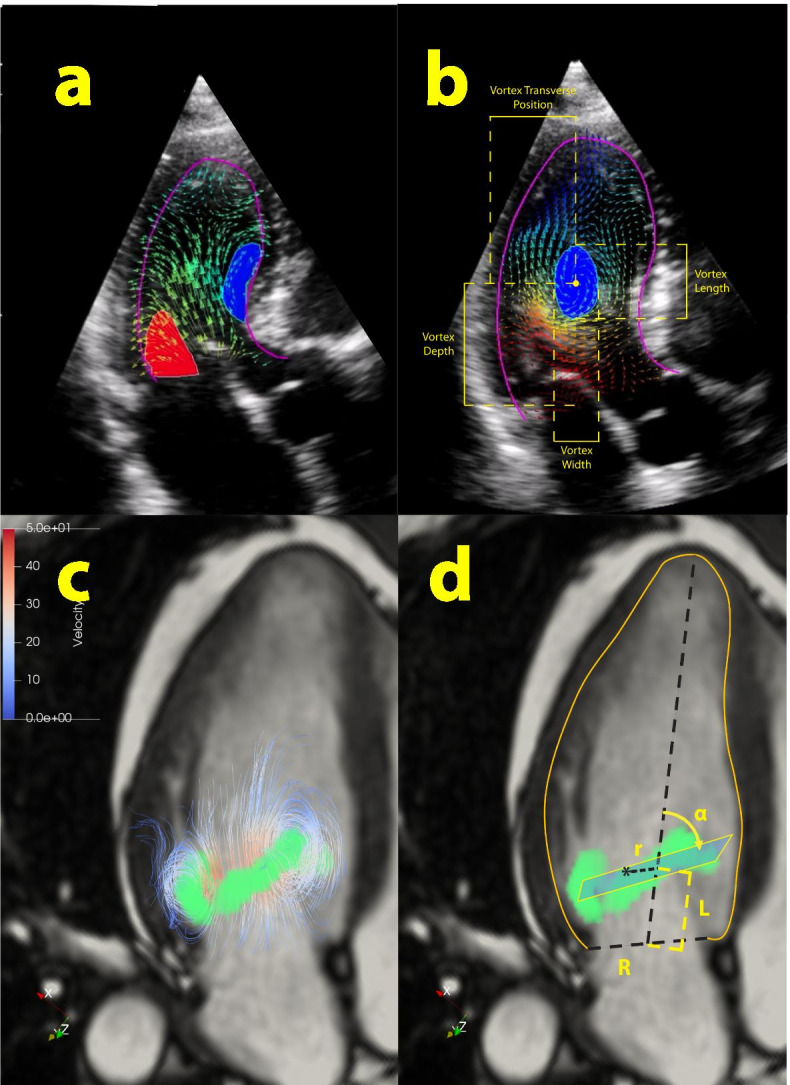
The aim of this systematic review was to evaluate current inter-modality agreement of noninvasive clinical intraventricular flow (IVF) assessment with 3 emerging imaging modalities: echocardiographic particle image velocimetry (EPIV), vector flow mapping (VFM), and 4-dimensional flow cardiovascular magnetic resonance imaging (4D flow CMR).
We performed a systematic literature review in the databases EMBASE, Medline OVID and Cochrane Central for identification of studies evaluating left ventricular (LV) flow patterns using one of these flow visualization modalities. Of the 2224 initially retrieved records, 10 EPIV, 23 VFM, and 25 4D flow CMR studies were included in the final analysis.
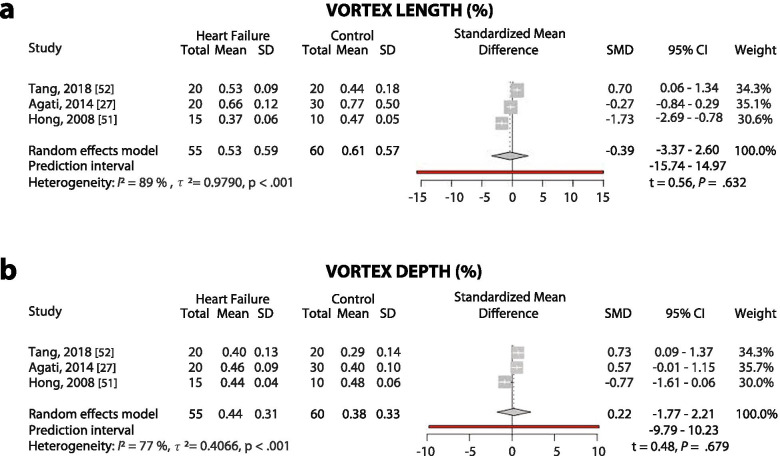
Vortex parameters were more extensively studied with EPIV, while LV energetics and LV transport mechanics were mainly studied with 4D flow CMR, and LV energy loss and vortex circulation were implemented by VFM studies. Pooled normative values are provided for these parameters. The meta- analysis for the values of two vortex morphology parameters, vortex length and vortex depth, failed to reveal a significant change between heart failure patients and healthy controls.
Agreement between the different modalities studying intraventricular flow is low and different methods of measurement and reporting were used among studies. A multimodality framework with a standardized set of flow parameters is necessary for implementation of noninvasive flow visualization in daily clinical practice. The full potential of noninvasive flow visualization in addition to diagnostics could also include guiding medical or interventional treatment.
本系统评价的目的是评估三种新兴的影像学方法(超声心动图粒子图像测速(EPIV)、向量血流图(VFM)和 4 维血流磁共振成像(4D flow CMR))对非侵入性颅内血流的当前跨模态一致性。
我们在 EMBASE、Medline OVID 和 Cochrane Central 数据库中进行了系统的文献检索,以确定使用这些血流可视化模式之一评估左心室(LV)血流模式的研究。在最初检索到的 2224 条记录中,有 10 项 EPIV、23 项 VFM 和 25 项 4D flow CMR 研究被纳入最终分析。
EPIV 更广泛地研究了涡旋参数,而 4D flow CMR 主要研究了 LV 能量学和 LV 输送力学,VFM 研究则实施了 LV 能量损失和涡旋循环。这些参数提供了汇总的正常值。对两个涡旋形态参数(涡旋长度和涡旋深度)值的荟萃分析未能揭示心力衰竭患者和健康对照组之间的显著变化。
研究颅内血流的不同模态之间的一致性较低,并且研究中使用了不同的测量和报告方法。对于将非侵入性血流可视化应用于日常临床实践,需要采用一种具有标准化血流参数集的多模态框架。除了诊断之外,非侵入性血流可视化的全部潜力还可能包括指导医学或介入治疗。