Zhang Guian, Luo Yong
School of Medicine, South China University of Technology, Guangzhou, 510006, People's Republic of China.
Department of Urology, the Second People's Hospital of Foshan, Affiliated Foshan Hospital of Southern Medical University, Foshan, 528000, People's Republic of China.
Int J Gen Med. 2021 Nov 30;14:9031-9049. doi: 10.2147/IJGM.S336757. eCollection 2021.
This study aims to construct an immune-related signature to provide comprehensive insights into the immune landscape of prostate cancer, which can predict biochemical recurrence (BCR) and clinical treatment.
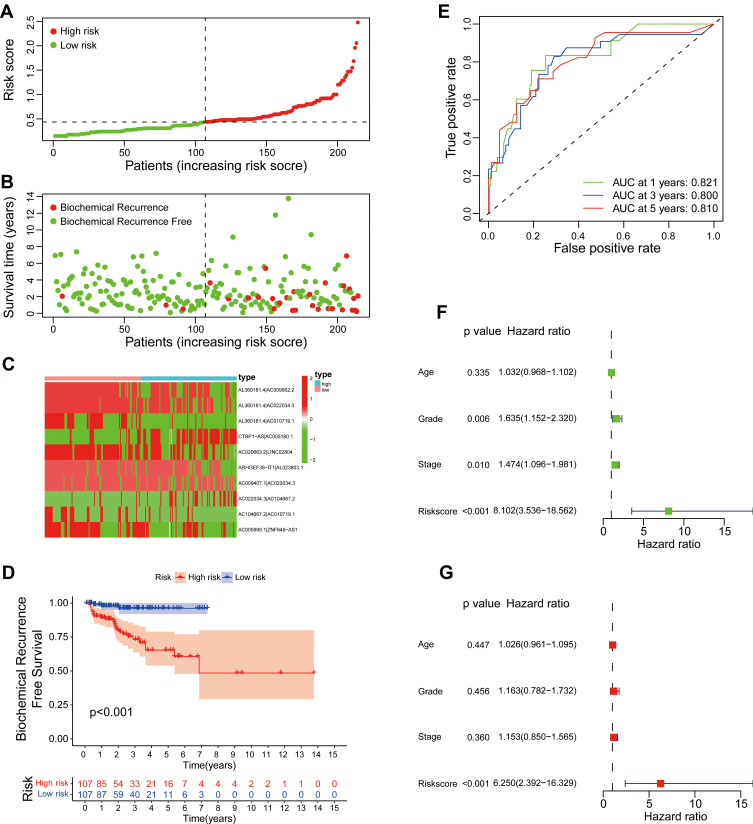
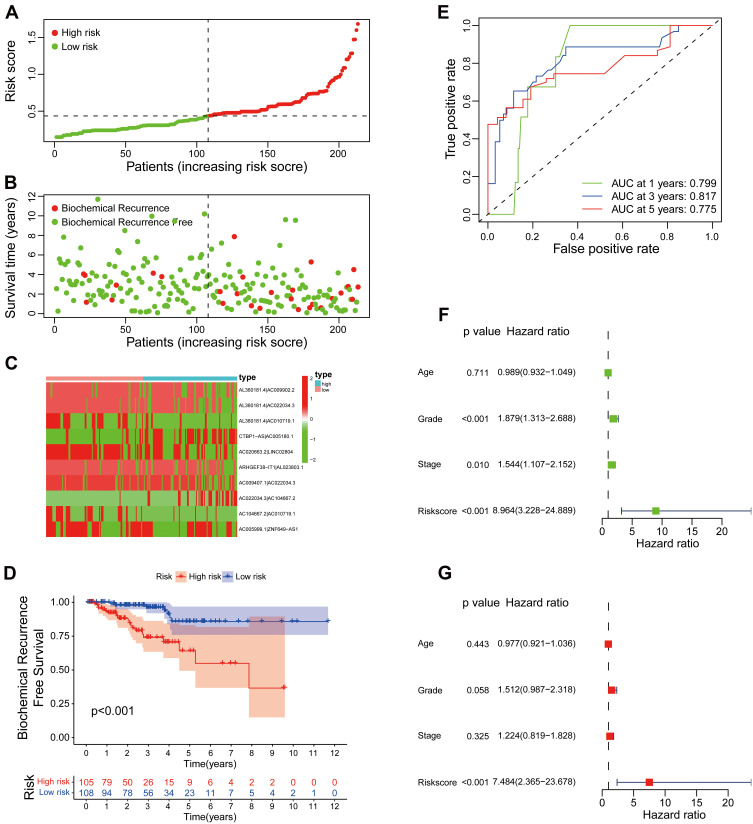
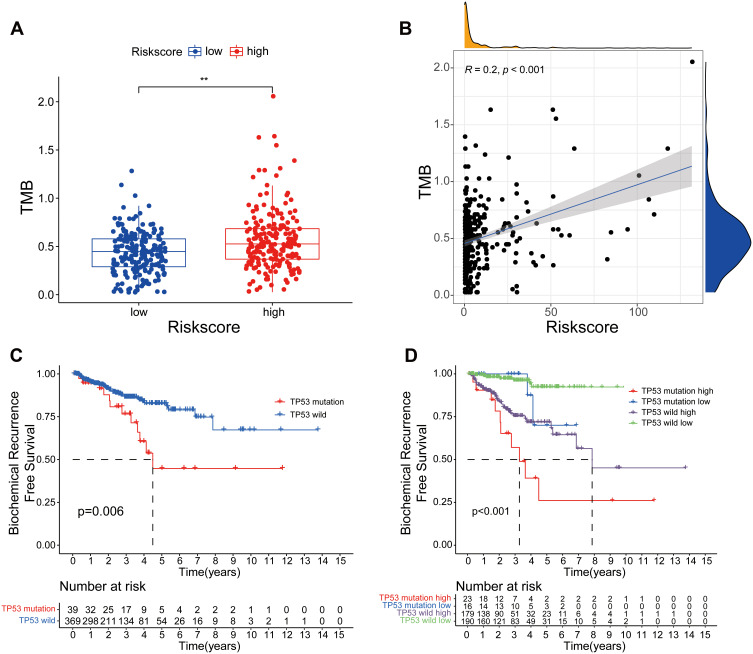
Based on The Cancer Genome Atlas (TCGA) dataset, a signature constructed by DEirlncRNAs pairs was determined. The receiver operating characteristic curve analysis, Kaplan-Meier analysis, nomogram, and decision curve analysis were used to analyze it. Then, immunophenoscore (IPS), immune cell infiltration, tumor mutation burden (TMB), and immune function were investigated. Finally, we evaluated the role of the signature in medical treatment.
A signature constructed by 10 valid DEirlncRNAs pairs was identified in the training set and validated well in the testing and entire set. The signature was a reliable and independent prognostic indicator to predict the BCR of prostate cancer, which was better than the clinicopathological characteristics. After dividing the patients into low- and high-risk groups by median value, we found that the high-risk group had shorter BCR-free time and higher TMB levels. Furthermore, the high-risk group was negatively associated with plasma B cells and CD+8 T cells. IPS and immune functions, such as immune checkpoints and human leukocyte antigen, were significantly different between the two groups. Low-risk group was more sensitive to endocrine therapy and immunotherapy, while high-risk group was more inclined to targeted drugs. Both groups had their own sensitive chemotherapy.
We established a novel signature to predict BCR and validated its role in the immune landscape of prostate cancer, which could help patients receive personalized medical treatment.
本研究旨在构建一种免疫相关特征,以全面洞察前列腺癌的免疫格局,从而预测生化复发(BCR)及指导临床治疗。
基于癌症基因组图谱(TCGA)数据集,确定由差异表达的长链非编码RNA(DEirlncRNAs)对构建的特征。采用受试者工作特征曲线分析、Kaplan-Meier分析、列线图和决策曲线分析对其进行分析。然后,研究免疫表型评分(IPS)、免疫细胞浸润、肿瘤突变负荷(TMB)和免疫功能。最后,评估该特征在医学治疗中的作用。
在训练集中鉴定出由10对有效DEirlncRNAs构建的特征,并在测试集和全集中得到良好验证。该特征是预测前列腺癌BCR的可靠且独立的预后指标,优于临床病理特征。按中位数将患者分为低风险和高风险组后,发现高风险组的无BCR时间较短且TMB水平较高。此外,高风险组与血浆B细胞和CD+8 T细胞呈负相关。两组之间的IPS和免疫功能,如免疫检查点和人类白细胞抗原,存在显著差异。低风险组对内分泌治疗和免疫治疗更敏感,而高风险组更倾向于靶向药物。两组都有各自敏感的化疗方案。
我们建立了一种预测BCR的新特征,并验证了其在前列腺癌免疫格局中的作用,这有助于患者接受个性化医疗。