Bansal Rashika, Gubbi Sriram, Koch Christian A
National Institute of Diabetes and Digestive and Kidney Diseases, National Institutes of Health, Bethesda, MD, United States.
Department of Medicine, Fox Chase Cancer Center, Philadelphia, PA, United States.
J Clin Transl Endocrinol. 2022 Mar;27:100284. doi: 10.1016/j.jcte.2021.100284. Epub 2021 Dec 3.
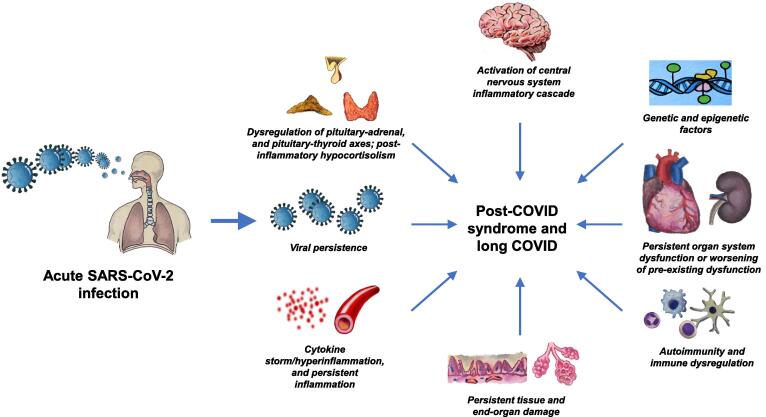
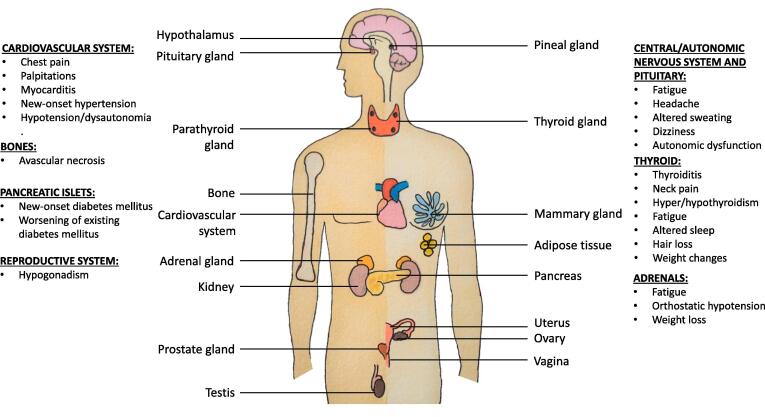
Patients recovering from COVID-19 may have persistent debilitating symptoms requiring long term support through individually tailored cardiopulmonary and psychological rehabilitation programs. Clinicians need to be aware about the likely long-term complications and their diagnostic assessments to help identify any occult problems requiring additional help. Endocrinological evaluations should be considered as part of the armamentarium in the management of such individuals with diligent cognizance about the involvement of the hypothalamo-pituitary-adrenal (HPA) axis, adrenal and thyroid function. We here review the literature and potential pathophysiological mechanisms involved in and related to post COVID-19 symptoms with an emphasis on endocrine function.
新冠病毒感染康复患者可能会出现持续的衰弱症状,需要通过个性化的心肺和心理康复计划获得长期支持。临床医生需要了解可能出现的长期并发症及其诊断评估方法,以帮助识别任何需要额外帮助的隐匿问题。在内分泌评估时,应充分认识下丘脑 - 垂体 - 肾上腺(HPA)轴、肾上腺和甲状腺功能的受累情况,将其作为此类患者管理手段的一部分。我们在此回顾与新冠病毒感染后症状相关的文献及潜在病理生理机制,重点关注内分泌功能。