Department of Radiology, The Affiliated Hospital of Southwest Medical University, Taiping Street, Luzhou, 646000, Sichuan, China.
Key Laboratory of Industrial Dust Prevention and Control and Occupational Health and Safety, Ministry of Education, Huainan, China.
BMC Med Imaging. 2021 Dec 8;21(1):189. doi: 10.1186/s12880-021-00723-z.
The objective of this study is to construct a computer aided diagnosis system for normal people and pneumoconiosis using X-raysand deep learning algorithms.
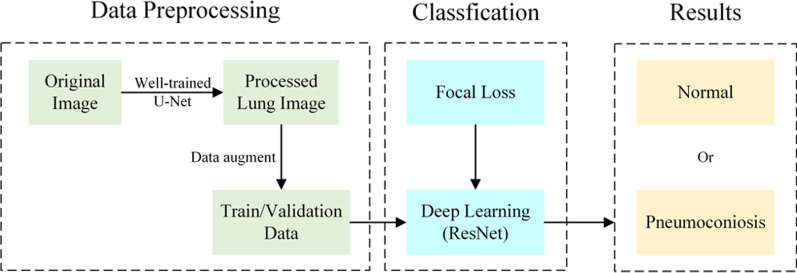
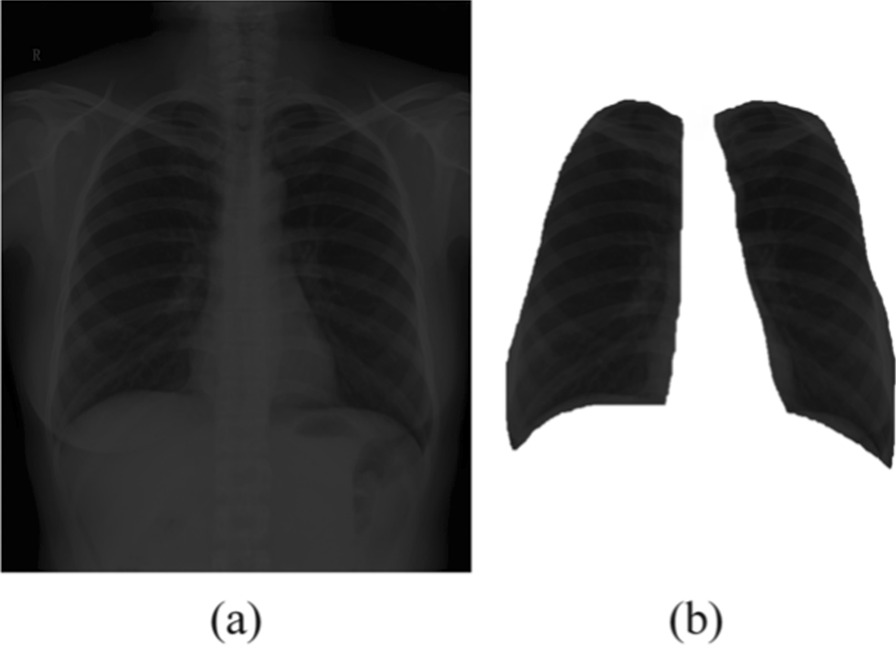
1760 anonymous digital X-ray images of real patients between January 2017 and June 2020 were collected for this experiment. In order to concentrate the feature extraction ability of the model more on the lung region and restrain the influence of external background factors, a two-stage pipeline from coarse to fine was established. First, the U-Net model was used to extract the lung regions on each sides of the collection images. Second, the ResNet-34 model with transfer learning strategy was implemented to learn the image features extracted in the lung region to achieve accurate classification of pneumoconiosis patients and normal people.
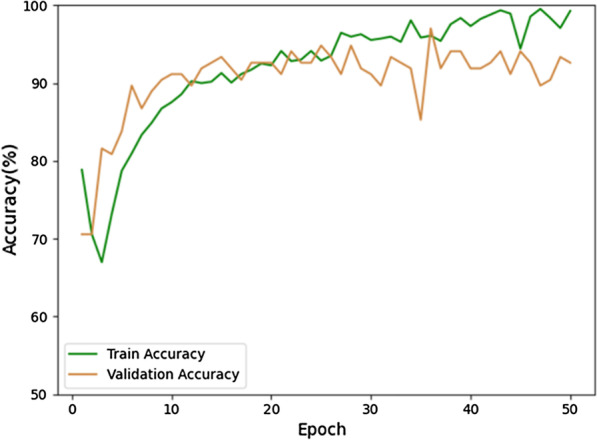
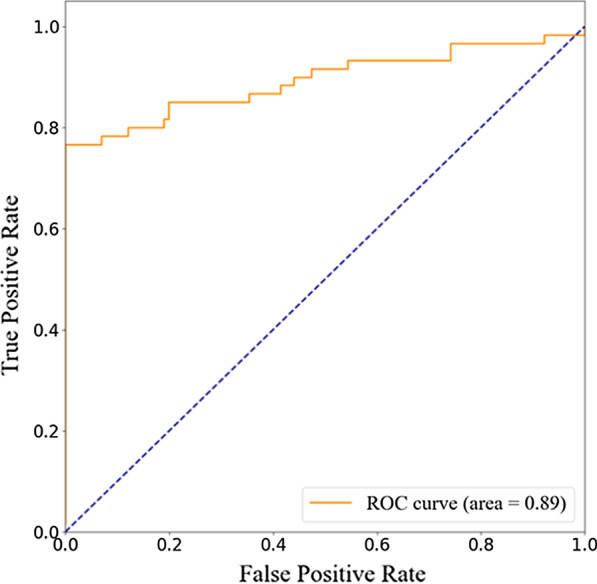
Among the 1760 cases collected, the accuracy and the area under curve of the classification model were 92.46% and 89% respectively.
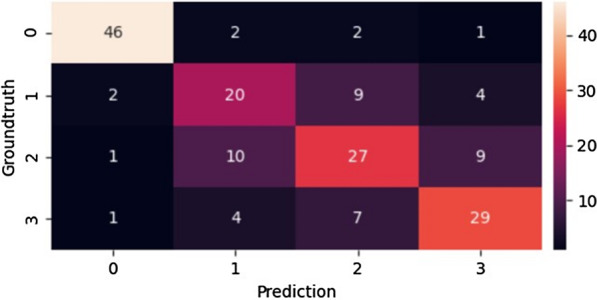
The successful application of deep learning in the diagnosis of pneumoconiosis further demonstrates the potential of medical artificial intelligence and proves the effectiveness of our proposed algorithm. However, when we further classified pneumoconiosis patients and normal subjects into four categories, we found that the overall accuracy decreased to 70.1%. We will use the CT modality in future studies to provide more details of lung regions.
本研究旨在构建一个使用 X 射线和深度学习算法对正常人及尘肺病进行计算机辅助诊断的系统。
本实验共收集了 2017 年 1 月至 2020 年 6 月期间 1760 名匿名真实患者的数字 X 射线图像。为了使模型的特征提取能力更集中于肺部区域,并抑制外部背景因素的影响,我们建立了一个从粗到细的两阶段流水线。首先,使用 U-Net 模型提取所采集图像两侧的肺部区域。其次,采用带有迁移学习策略的 ResNet-34 模型来学习从肺部区域提取的图像特征,从而实现对尘肺病患者和正常人的准确分类。
在所收集的 1760 例中,分类模型的准确率和曲线下面积分别为 92.46%和 89%。
深度学习在尘肺病诊断中的成功应用进一步证明了医学人工智能的潜力,并验证了我们所提出算法的有效性。然而,当我们进一步将尘肺病患者和正常人细分为四类时,发现整体准确率下降至 70.1%。我们将在未来的研究中使用 CT 模态来提供肺部区域的更多细节。