Beijing Neurosurgical Institute, Capital Medical University, 100070, Beijing, China.
Chinese Glioma Genome Atlas Network (CGGA) and Asian Glioma Genome Atlas Network (AGGA), 100070, Beijing, China.
Cell Death Dis. 2021 Dec 8;12(12):1140. doi: 10.1038/s41419-021-04427-8.
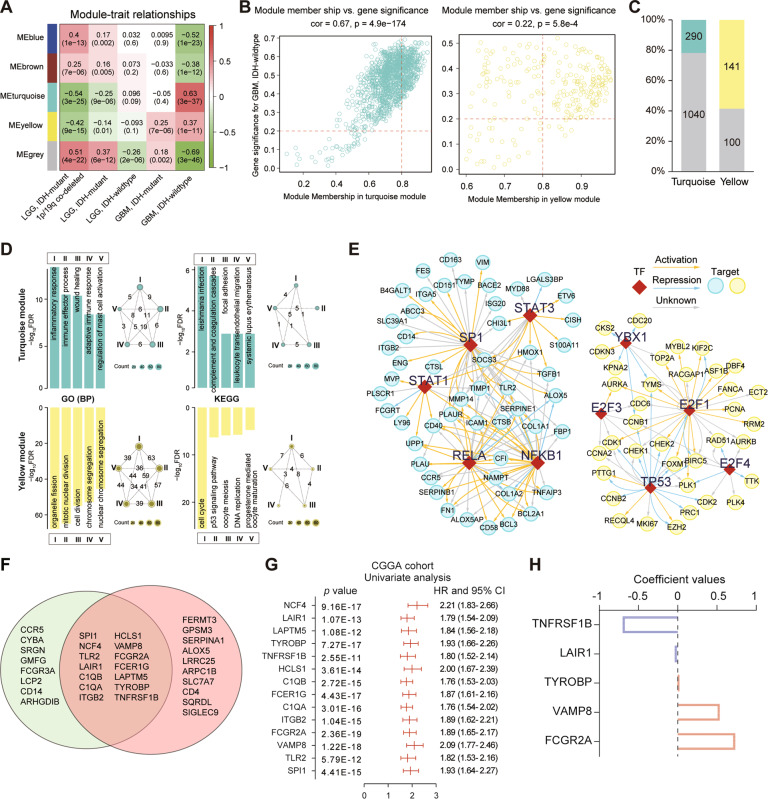
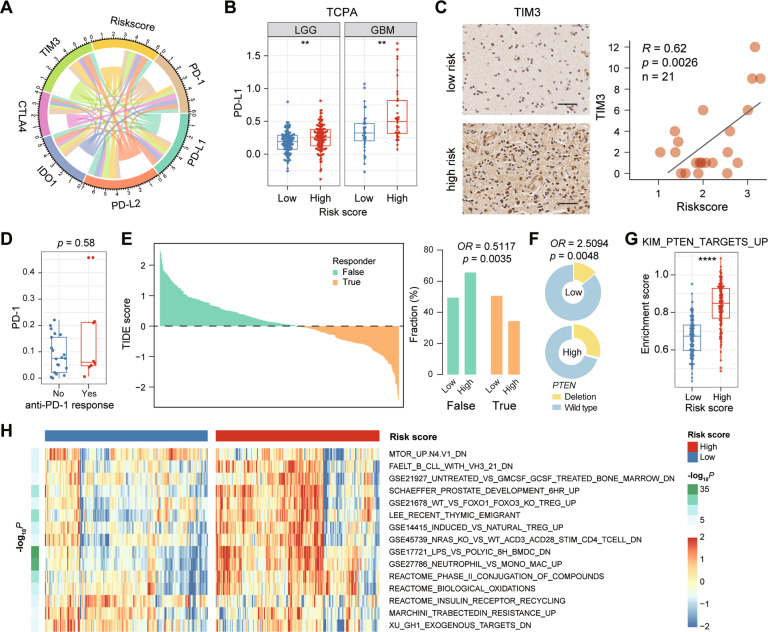
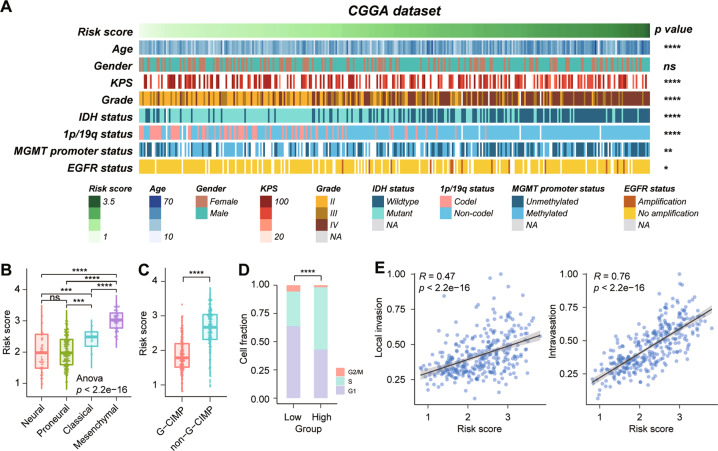
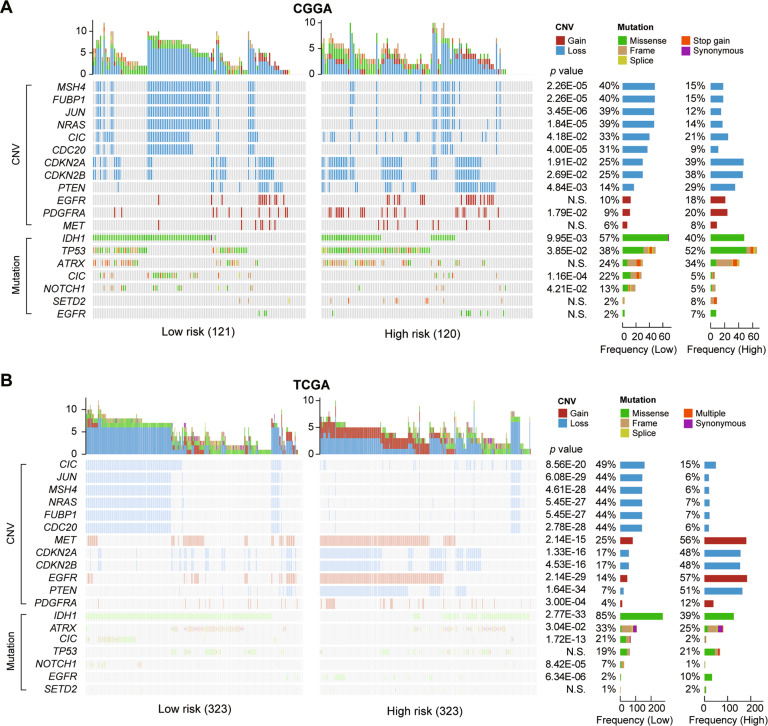
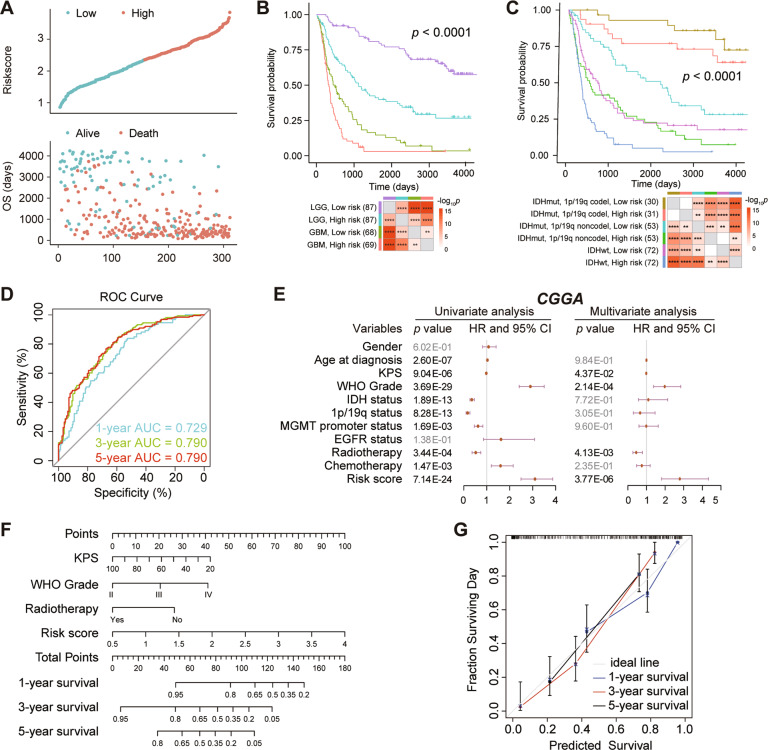
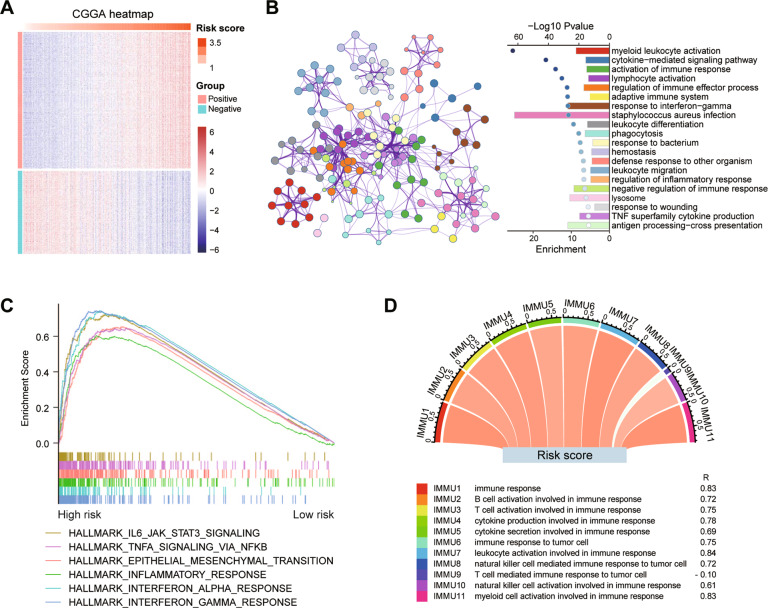
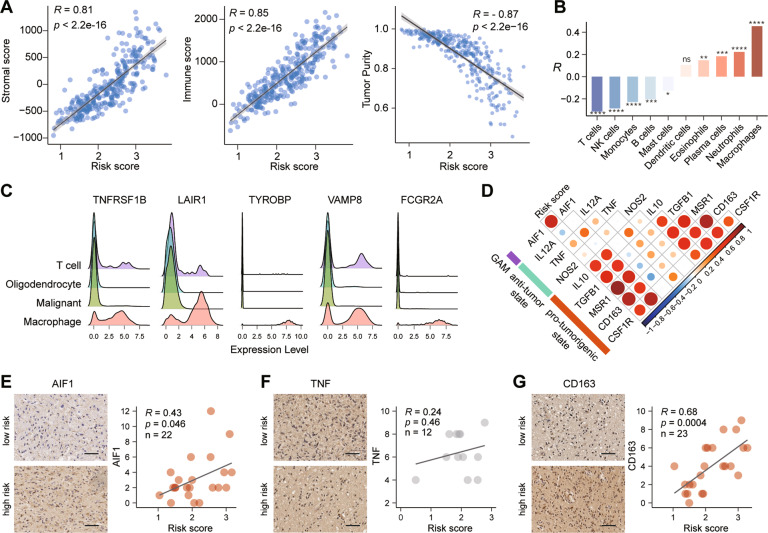
Glioma is the most common primary malignant brain tumor with limited treatment options and poor prognosis. To investigate the potential relationships between transcriptional characteristics and clinical phenotypes, we applied weighted gene co-expression network analysis (WGCNA) to construct a free-scale gene co-expression network yielding four modules in gliomas. Turquoise and yellow modules were positively correlated with the most malignant glioma subtype (IDH-wildtype glioblastomas). Of them, genes in turquoise module were mainly involved in immune-related terms and were regulated by NFKB1, RELA, SP1, STAT1 and STAT3. Meanwhile, genes in yellow module mainly participated in cell-cycle and division processes and were regulated by E2F1, TP53, E2F4, YBX1 and E2F3. Furthermore, 14 genes in turquoise module were screened as hub genes. Among them, five prognostic hub genes (TNFRSF1B, LAIR1, TYROBP, VAMP8, and FCGR2A) were selected to construct a prognostic risk score model via LASSO method. The risk score of this immune-related gene signature is associated with clinical features, malignant phenotype, and somatic alterations. Moreover, this signature showed an accurate prediction of prognosis across different clinical and pathological subgroups in three independent datasets including 1619 samples. Our results showed that the high-risk group was characterized by active immune-related activities while the low-risk group enriched in neurophysiological-related pathway. Importantly, the high-risk score of our immune signature predicts an enrichment of glioma-associated microglia/macrophages and less response to immune checkpoint blockade (ICB) therapy in gliomas. This study not only provides new insights into the molecular pathogenesis of glioma, but may also help optimize the immunotherapies for glioma patients.
神经胶质瘤是最常见的原发性恶性脑肿瘤,治疗选择有限,预后较差。为了研究转录特征与临床表型之间的潜在关系,我们应用加权基因共表达网络分析(WGCNA)构建了一个自由尺度的基因共表达网络,在神经胶质瘤中生成了四个模块。绿松石和黄色模块与最恶性的神经胶质瘤亚型(IDH 野生型胶质母细胞瘤)呈正相关。其中,绿松石模块中的基因主要参与免疫相关术语,受 NFKB1、RELA、SP1、STAT1 和 STAT3 调控。同时,黄色模块中的基因主要参与细胞周期和分裂过程,受 E2F1、TP53、E2F4、YBX1 和 E2F3 调控。此外,筛选出 14 个绿松石模块中的基因作为枢纽基因。其中,TNFRSF1B、LAIR1、TYROBP、VAMP8 和 FCGR2A 这 5 个预后枢纽基因通过 LASSO 方法被选入构建预后风险评分模型。该免疫相关基因特征的风险评分与临床特征、恶性表型和体细胞改变相关。此外,该特征在三个独立数据集(包括 1619 个样本)的不同临床和病理亚组中都能准确预测预后。结果表明,高风险组的特征是活跃的免疫相关活性,而低风险组则富含神经生理相关途径。重要的是,我们的免疫特征的高风险评分预测了神经胶质瘤相关的小胶质细胞/巨噬细胞的富集,以及对免疫检查点阻断(ICB)治疗的反应减少。这项研究不仅为神经胶质瘤的分子发病机制提供了新的见解,而且可能有助于优化神经胶质瘤患者的免疫治疗。