The Fourth School of Clinical Medicine, Zhejiang Chinese Medical University, Hangzhou, China.
Department of Oncology, Affiliated Hangzhou First People's Hospital, Zhejiang University School of Medicine, Hangzhou, China.
Front Immunol. 2021 Nov 22;12:785400. doi: 10.3389/fimmu.2021.785400. eCollection 2021.
Pancreatic cancer has a poor prognosis, and it is traditionally treated with chemotherapy. Fortunately, immunotherapy has rapidly changed the landscape of solid tumor treatment, and improving the survival of cancer patients. However, pancreatic cancer is non-immunogenic, and single agent immunotherapies are unfavorable to its prognosis.
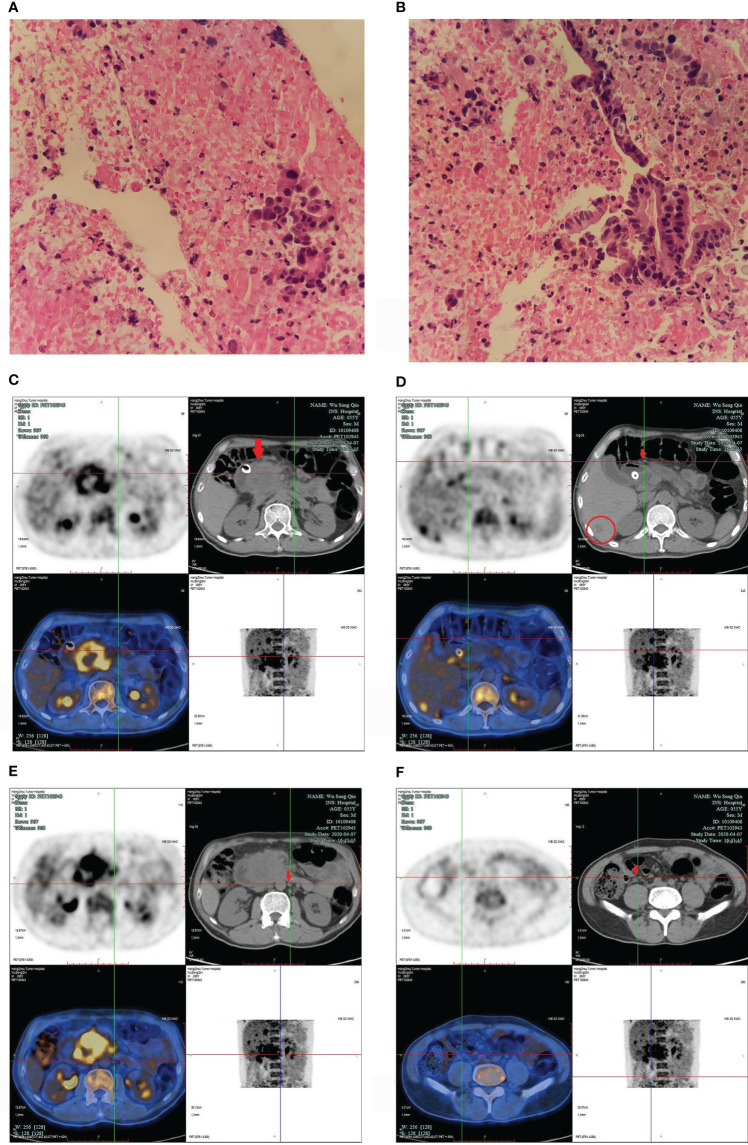
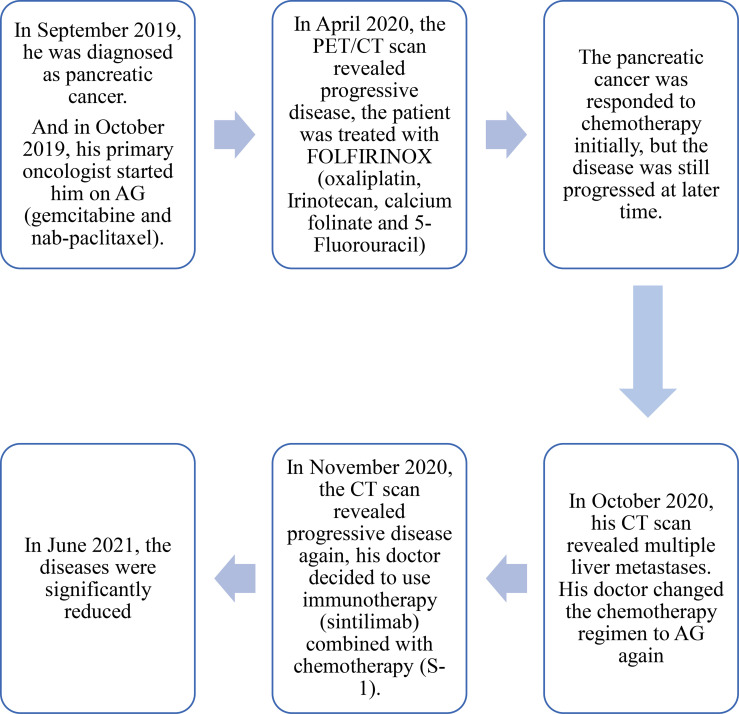
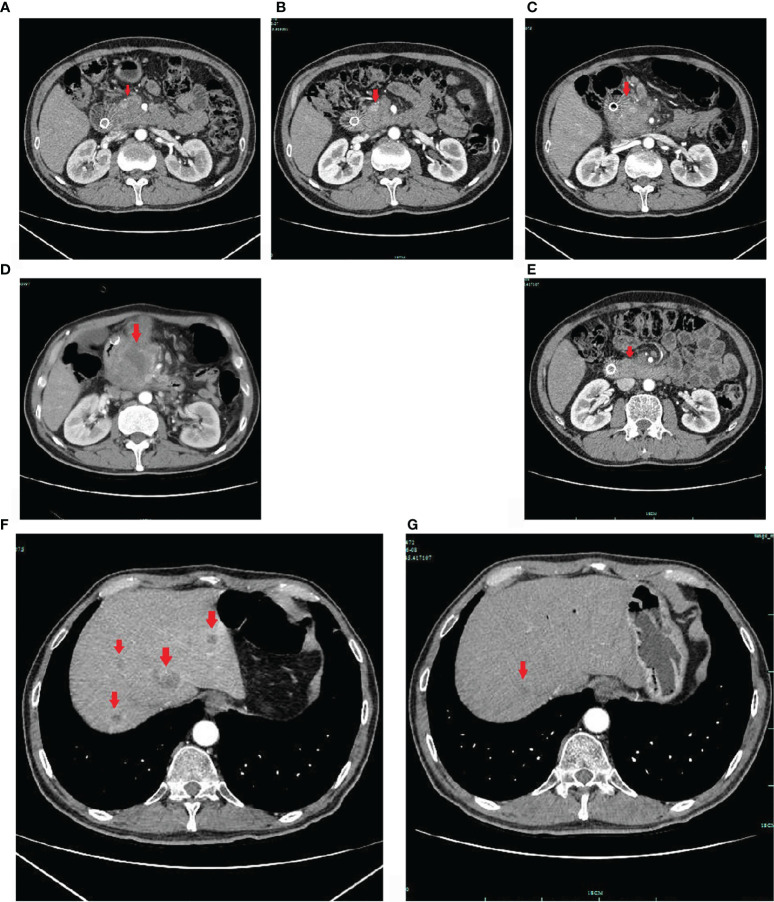
Here, we report a case of stage IV pancreatic cancer in a patient with TSC2 and SMAD4 mutations treated with immunotherapy when the disease progressed after multi-line chemotherapy. Next generation sequencing (NGS) confirmed the presence of TSC2 and SMAD4 mutations and microsatellite stability (MSS). When the disease progressed after chemotherapy, a combination strategy was devised consisting of chemotherapy (S-1) and sintilimab. The patient had a partial response to therapy with this regimen, the lesions were significantly reduced and nearly disappeared. In metastatic pancreatic cancer, responses of this magnitude are rarely seen.
This outcome reveals that this combination can be effective in treating metastatic pancreatic cancer, especially in pancreatic cancer patients with SMAD4 and TSC2 mutations. This may help increase the use of this therapy in large-scale clinical research.
胰腺癌预后较差,传统上采用化疗治疗。幸运的是,免疫疗法迅速改变了实体瘤治疗的格局,改善了癌症患者的生存。然而,胰腺癌是非免疫原性的,单一的免疫疗法对其预后不利。
在这里,我们报告了一例 TSC2 和 SMAD4 突变的 IV 期胰腺癌患者,在多线化疗后疾病进展时接受免疫治疗。下一代测序(NGS)证实存在 TSC2 和 SMAD4 突变和微卫星稳定性(MSS)。当化疗后疾病进展时,设计了一种联合化疗(S-1)和信迪利单抗的方案。该患者对该方案的治疗有部分反应,病变明显缩小,几乎消失。在转移性胰腺癌中,很少见到如此大的反应。
这一结果表明,这种联合治疗可能对转移性胰腺癌有效,特别是对携带 SMAD4 和 TSC2 突变的胰腺癌患者有效。这可能有助于增加这种治疗在大规模临床研究中的应用。