Al-Qarqaz Firas, Bodoor Khaldon, Baba Ala, Al-Yousef Ali, Muhaidat Jihan, Alshiyab Diala
Department of Dermatology, Jordan University of Science and Technology, Irbid.
Department of Biotechnology and Genetic Engineering, Faculty of Science, Jordan University of Science and Technology, Irbid.
Dermatol Reports. 2021 Oct 6;13(3):8223. doi: 10.4081/dr.2021.8223. eCollection 2021 Nov 17.
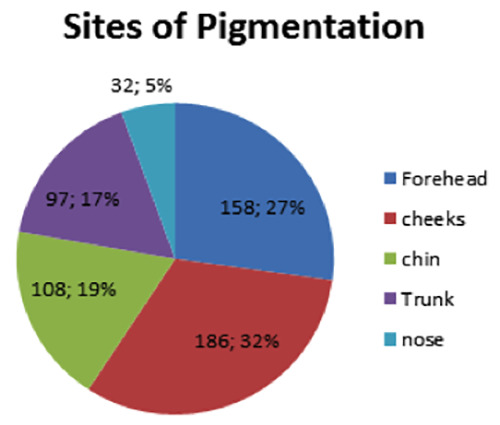
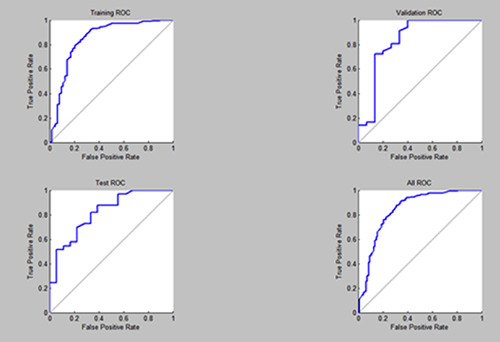
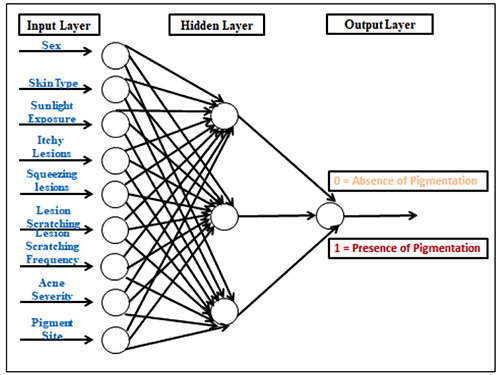
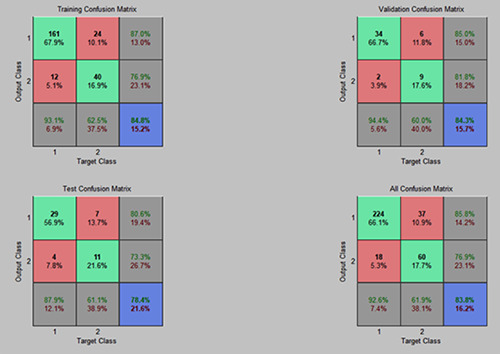
Acne is common among young individuals. People with dark skin have a higher risk for developing pigmentary complications. Inflammation is an important factor in post-acne hyperpigmentation however other factors are also involved in developing this complication however these factors are not well studied. The aim of this study is to identify risk factors involved in post-acne hyperpigmentation. Clinical data related to acne, acne- related hyperpigmentation were collected. Data was analyzed for risk factors associated with acne pigmentation. Artificial neural network was used as predictive disease classifier for the outcome of pigmentation. Majority of patients in this study (339 patients) had dark skin phototypes (3 and 4). Post- acne hyperpigmentation was seen in more than 80% of patients. Females, darker skin color, severe acne, facial sites, and excessive sunlight exposure, squeezing or scratching lesions are important risk factors for post-acne hyperpigmentation. Post-acne hyperpigmentation is multifactorial. Several factors implicated in PAH are modifiable by adequate patient education (lesion trauma, excessive sunlight exposure). The use of ANN was helpful in predicting appearance of post-acne hyperpigmentation based on identified risk factors.
痤疮在年轻人中很常见。肤色较深的人发生色素沉着并发症的风险更高。炎症是痤疮后色素沉着的一个重要因素,然而其他因素也与这种并发症的发生有关,不过这些因素尚未得到充分研究。本研究的目的是确定痤疮后色素沉着的危险因素。收集了与痤疮、痤疮相关色素沉着有关的临床数据。对数据进行分析,以找出与痤疮色素沉着相关的危险因素。人工神经网络被用作色素沉着结果的预测疾病分类器。本研究中的大多数患者(339例)为深色皮肤光型(3型和4型)。超过80%的患者出现痤疮后色素沉着。女性、肤色较深、重度痤疮、面部部位、过度阳光照射、挤压或搔抓皮损是痤疮后色素沉着的重要危险因素。痤疮后色素沉着是多因素的。通过适当的患者教育(皮损创伤、过度阳光照射),可改变与痤疮后色素沉着相关的几个因素。人工神经网络的使用有助于根据已确定的危险因素预测痤疮后色素沉着的出现。