Division of Gastroenterology and Hepatology, Department of Medicine, The Pennsylvania State University-Milton S. Hershey Medical Center, Hershey, Pennsylvania, USA.
Department of Public Health Sciences, The Pennsylvania State University-College of Medicine, Hershey, Pennsylvania, USA.
Hepatology. 2022 Jul;76(1):172-185. doi: 10.1002/hep.32274. Epub 2022 Jan 22.
NASH is a common disease associated with increased rates of thromboembolism (TE). Although exercise training can lessen thrombotic risk in patients with vascular disease, whether similar findings are observed in patients with NASH is open for study.
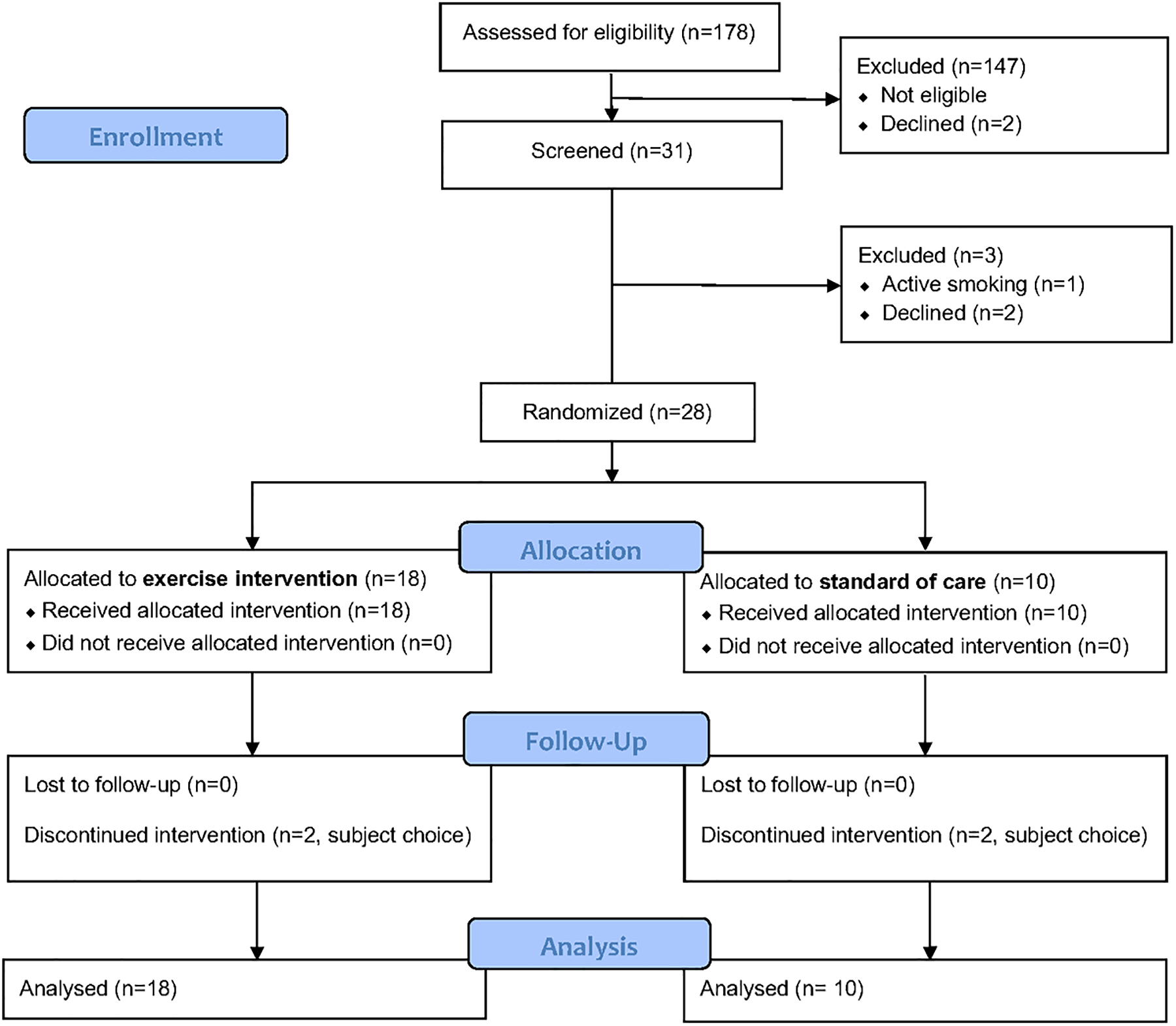
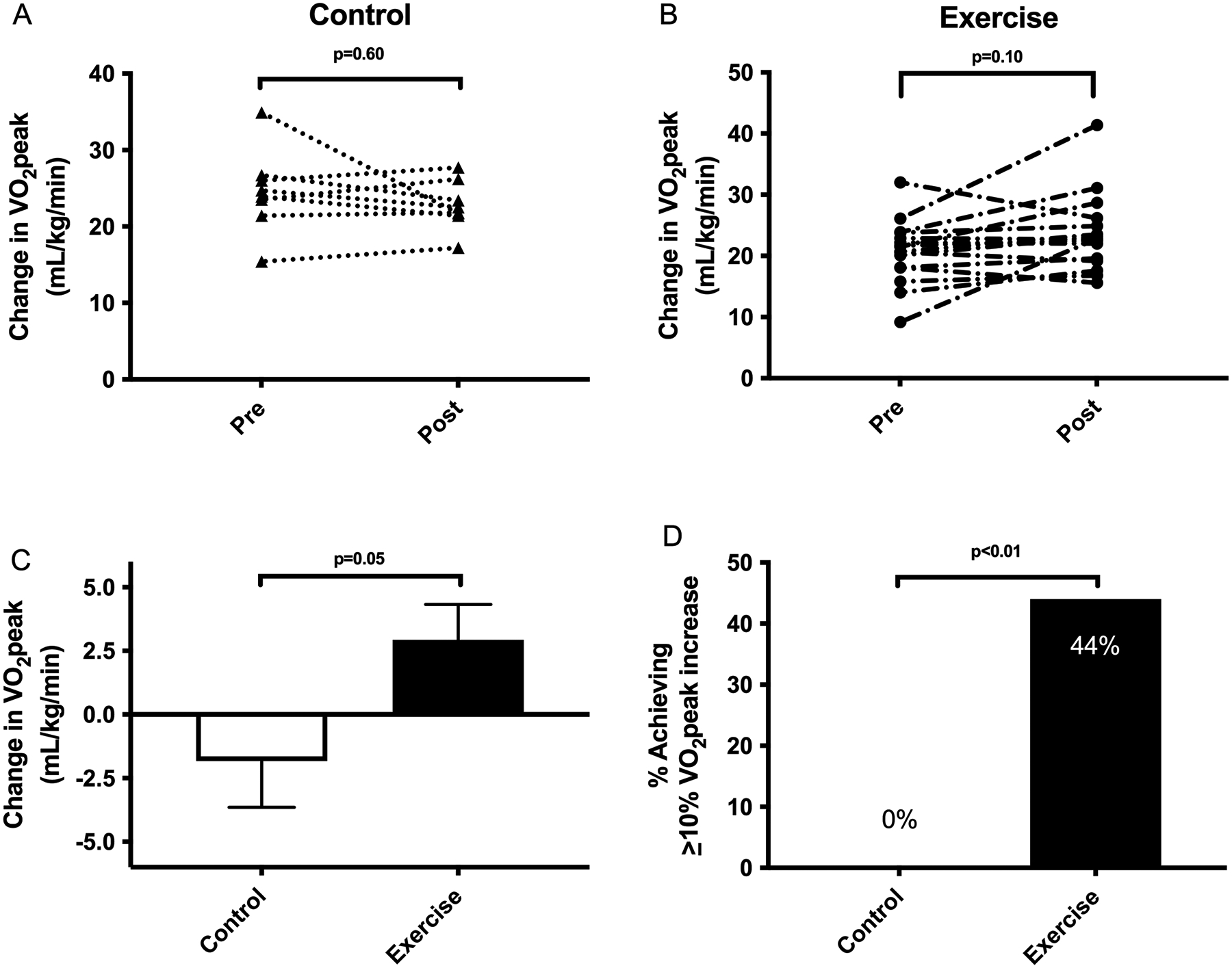
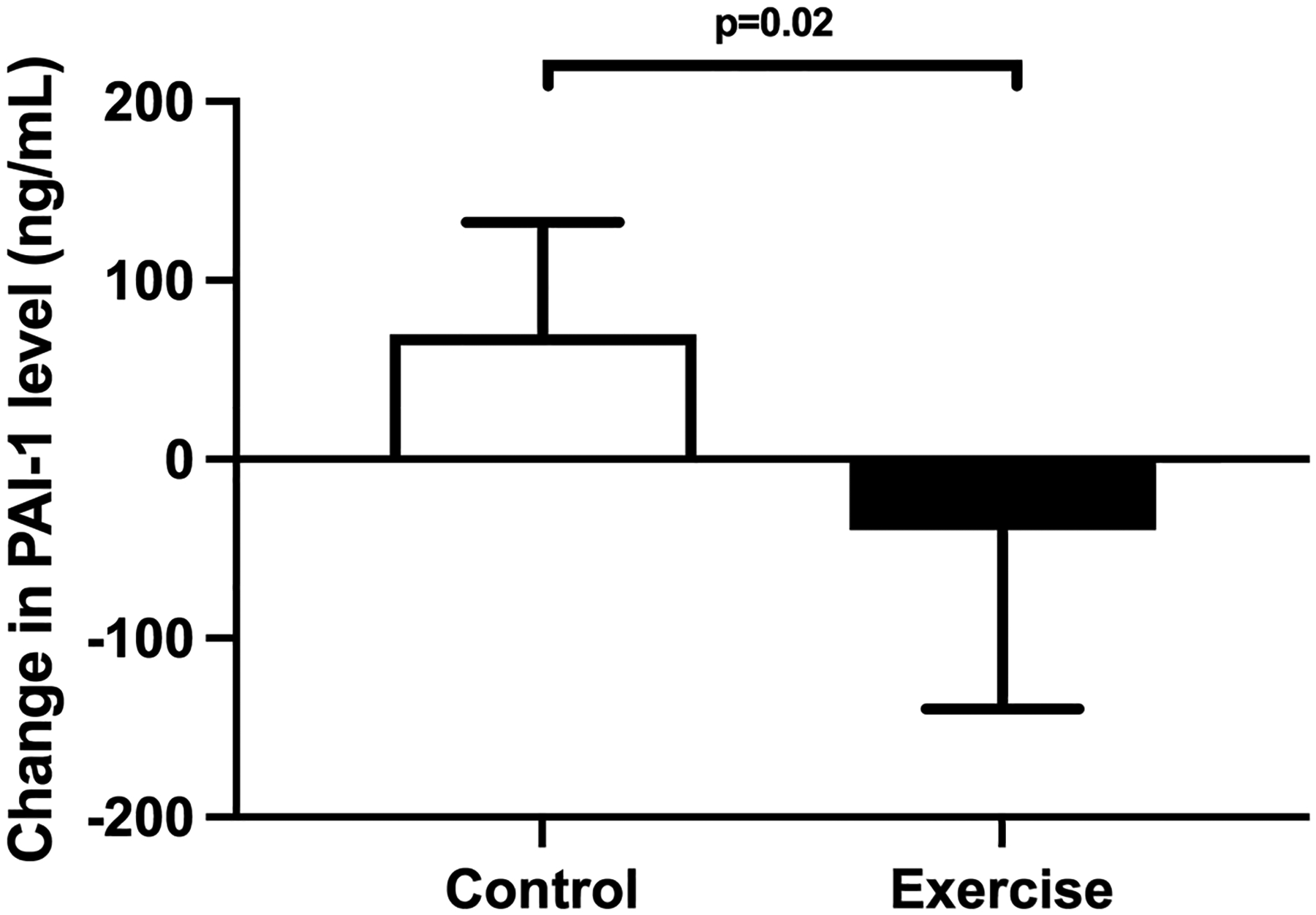
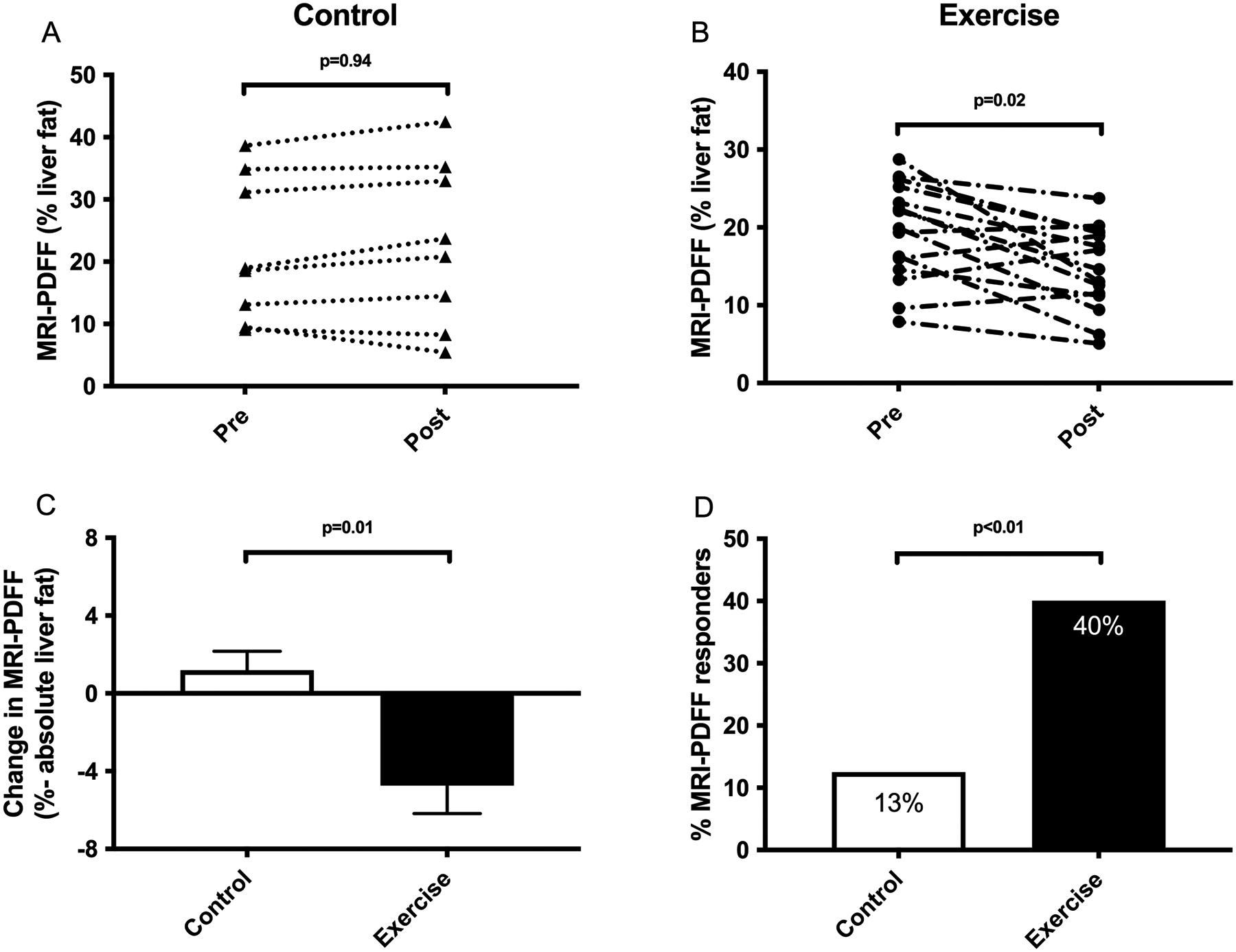
We conducted a 20-week randomized controlled clinical trial involving patients with biopsy-confirmed NASH. Patients were randomly assigned (2:1 ratio) to receive either an exercise training program or standard clinical care. The primary endpoint was change in plasminogen activator inhibitor 1 (PAI-1) level, an established thrombotic biomarker. Twenty-eight patients were randomly assigned (18 exercise training and 10 standard clinical care). PAI-1 level was significantly decreased by exercise training when compared to standard clinical care (-40 ± 100 vs. +70 ± 63 ng/ml; p = 0.02). Exercise training decreased MRI proton density fat fraction (MRI-PDFF; -4.7 ± 5.6 vs. 1.2 ± 2.8% absolute liver fat; p = 0.01); 40% of exercise subjects had a ≥30% relative reduction in MRI-PDFF (histological response threshold) compared to 13% for standard of care (p < 0.01). Exercise training improved fitness (VO peak, +3.0 ± 5.6 vs. -1.8 ± 5.1 ml/kg/min; p = 0.05) in comparison to standard clinical care.
This clinical trial showed that, independent of weight loss or dietary change, exercise training resulted in a significantly greater decrease in thrombotic risk than standard clinical care in patients with NASH, in parallel with MRI-PDFF reduction and improvement in fitness. Future studies are required to determine whether exercise training can directly impact patient outcomes and lower rates of TE.
NASH 是一种常见的疾病,与血栓栓塞(TE)发生率增加有关。尽管运动训练可以降低血管疾病患者的血栓风险,但 NASH 患者是否存在类似的发现尚待研究。
我们进行了一项为期 20 周的随机对照临床试验,纳入了经活检证实的 NASH 患者。患者被随机分配(2:1 比例)接受运动训练计划或标准临床护理。主要终点是纤溶酶原激活物抑制剂 1(PAI-1)水平的变化,这是一种已确立的血栓生物标志物。28 名患者被随机分配(18 名运动训练,10 名标准临床护理)。与标准临床护理相比,运动训练可显著降低 PAI-1 水平(-40±100 与+70±63ng/ml;p=0.02)。运动训练还降低了 MRI 质子密度脂肪分数(MRI-PDFF;-4.7±5.6 与 1.2±2.8%绝对肝脂肪;p=0.01);与标准护理相比,40%的运动组患者的 MRI-PDFF 相对降低≥30%(组织学反应阈值),而标准护理组为 13%(p<0.01)。与标准临床护理相比,运动训练改善了体能(VO2 峰值,+3.0±5.6 与-1.8±5.1ml/kg/min;p=0.05)。
这项临床试验表明,与标准临床护理相比,运动训练可独立于体重减轻或饮食改变,显著降低 NASH 患者的血栓风险,同时降低 MRI-PDFF,并改善体能。需要进一步的研究来确定运动训练是否可以直接影响患者的结局并降低 TE 发生率。