Riaz Moeen, Mattisson Jonas, Polekhina Galina, Bakshi Andrew, Halvardson Jonatan, Danielsson Marcus, Ameur Adam, McNeil John, Forsberg Lars A, Lacaze Paul
Department of Epidemiology and Preventive Medicine, School of Public Health and Preventive Medicine, Monash University, Melbourne, Australia.
Department of Immunology, Genetics and Pathology, Science for Life Laboratory, Uppsala University, Uppsala, Sweden.
Cell Biosci. 2021 Dec 12;11(1):205. doi: 10.1186/s13578-021-00716-z.
Mosaic loss of Y chromosome (LOY) is the most common somatic change that occurs in circulating white blood cells of older men. LOY in leukocytes is associated with increased risk for all-cause mortality and a range of common disease such as hematological and non-hematological cancer, Alzheimer's disease, and cardiovascular events. Recent genome-wide association studies identified up to 156 germline variants associated with risk of LOY. The objective of this study was to use these variants to calculate a novel polygenic risk score (PRS) for LOY, and to assess the predictive performance of this score in a large independent population of older men.
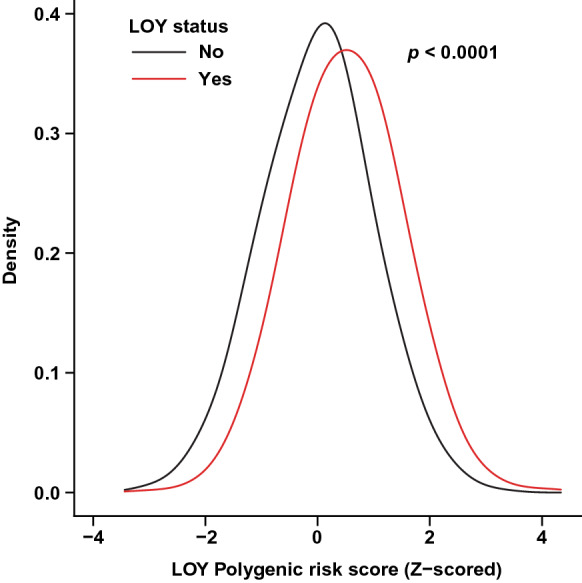
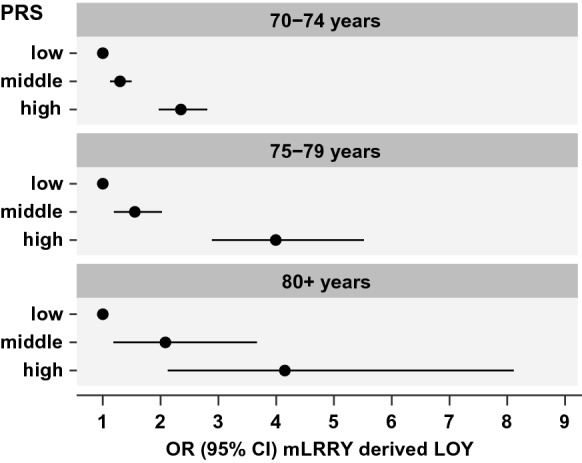
We calculated a PRS for LOY in 5131 men aged 70 years and older. Levels of LOY were estimated using microarrays and validated by whole genome sequencing. After adjusting for covariates, the PRS was a significant predictor of LOY (odds ratio [OR] = 1.74 per standard deviation of the PRS, 95% confidence intervals [CI] 1.62-1.86, p < 0.001). Men in the highest quintile of the PRS distribution had > fivefold higher risk of LOY than the lowest (OR = 5.05, 95% CI 4.05-6.32, p < 0.001). Adding the PRS to a LOY prediction model comprised of age, smoking and alcohol consumption significantly improved prediction (AUC = 0.628 [CI 0.61-0.64] to 0.695 [CI 0.67-0.71], p < 0.001).
Our results suggest that a PRS for LOY could become a useful tool for risk prediction and targeted intervention for common disease in men.
Y染色体镶嵌性缺失(LOY)是老年男性循环白细胞中最常见的体细胞变化。白细胞中的LOY与全因死亡率增加以及一系列常见疾病相关,如血液系统和非血液系统癌症、阿尔茨海默病和心血管事件。最近的全基因组关联研究确定了多达156个与LOY风险相关的种系变异。本研究的目的是利用这些变异计算一种新的LOY多基因风险评分(PRS),并在一个大型独立的老年男性群体中评估该评分的预测性能。
我们计算了5131名70岁及以上男性的LOY PRS。使用微阵列估计LOY水平,并通过全基因组测序进行验证。在调整协变量后,PRS是LOY的显著预测因子(优势比[OR]=每标准差PRS为1.74,95%置信区间[CI]为1.62 - 1.86,p<0.001)。PRS分布最高五分位数的男性患LOY的风险比最低五分位数的男性高五倍以上(OR = 5.05,95% CI为4.05 - 6.32,p<0.001)。将PRS添加到由年龄、吸烟和饮酒组成的LOY预测模型中显著改善了预测效果(曲线下面积[AUC]=从0.628[CI 0.61 - 0.64]提高到0.695[CI 0.67 - 0.71],p<0.001)。
我们的结果表明,LOY的PRS可能成为男性常见疾病风险预测和靶向干预的有用工具。